«
California

Sonoma County
Sonoma County
Sonoma County
Laid-back Coastal Kingdom
If Napa is the guy in the tuxedo, Sonoma is the cool friend in designer jeans and a flannel shirt. It is huge, spanning valleys and coastlines, offering a dizzying array of styles for every palate.
If Napa is the guy in the tuxedo, Sonoma is the cool friend in designer jeans and a flannel shirt. It is huge, spanning valleys and coastlines, offering a dizzying array of styles for every palate.
If Napa is the guy in the tuxedo, Sonoma is the cool friend in designer jeans and a flannel shirt. It is huge, spanning valleys and coastlines, offering a dizzying array of styles for every palate.
LEADERS



HELPERS










Why it's unique
Diverse Microclimates
Relaxed Vibe
Massive Scale
Diversity is the name of the game here. Unlike its famous neighbor, this massive county isn't a one-trick pony. We are talking about everything from fog-drenched Pinot Noir sites to sun-baked Zinfandel vineyards. It feels more like a collection of distinct little nations than a single region, with a relaxed vibe that invites you to slow down and actually taste the dirt.
Diversity is the name of the game here. Unlike its famous neighbor, this massive county isn't a one-trick pony. We are talking about everything from fog-drenched Pinot Noir sites to sun-baked Zinfandel vineyards. It feels more like a collection of distinct little nations than a single region, with a relaxed vibe that invites you to slow down and actually taste the dirt.
Diversity is the name of the game here. Unlike its famous neighbor, this massive county isn't a one-trick pony. We are talking about everything from fog-drenched Pinot Noir sites to sun-baked Zinfandel vineyards. It feels more like a collection of distinct little nations than a single region, with a relaxed vibe that invites you to slow down and actually taste the dirt.
Terroir
Pacific Fog
Volcanic Ash
Marine Layers
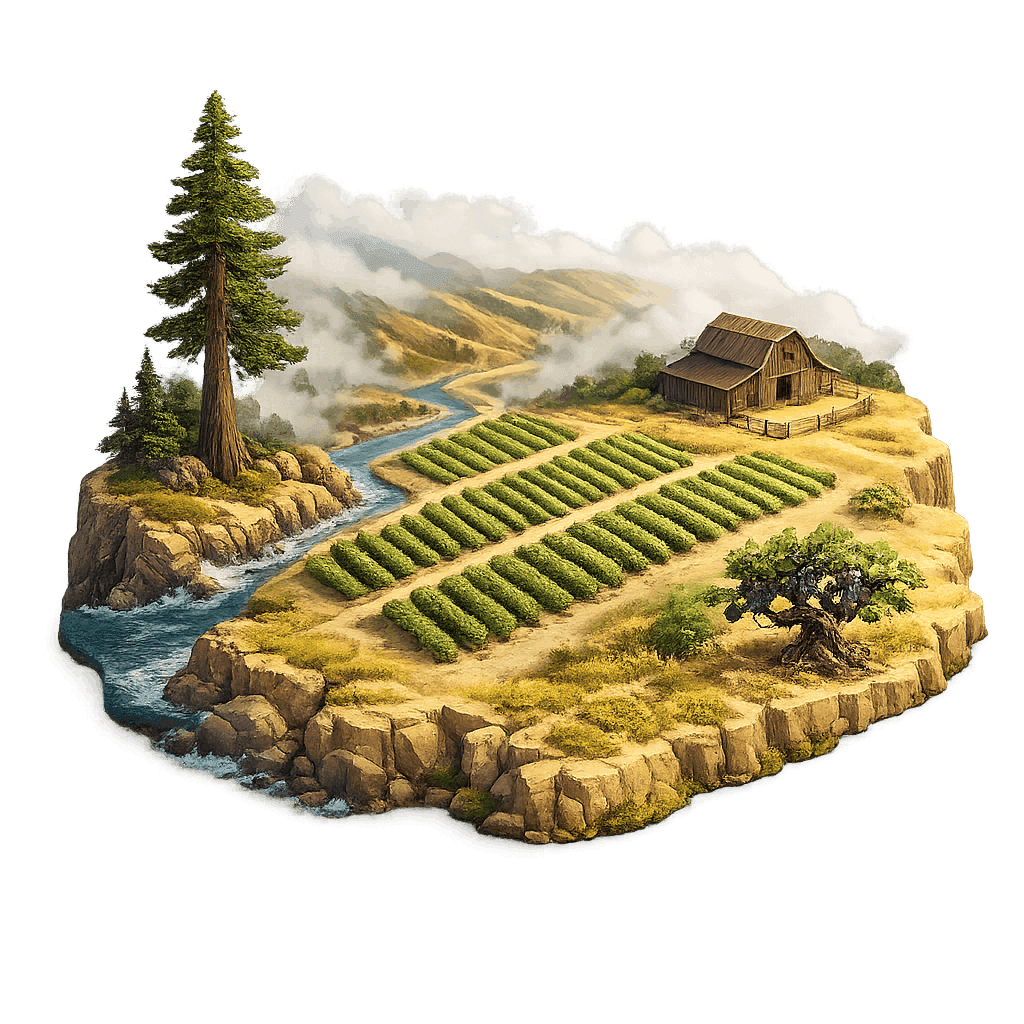
Ocean influence defines everything here. The Pacific acts like a giant air conditioner, pumping cooling fog through the Petaluma Gap and Russian River Valley to keep acidity high. Move inland or uphill, and the heat cranks up, allowing tougher skins to ripen fully. The soil map looks like a jigsaw puzzle dropped on the floor, featuring volcanic ash, uplifted seabed, and ancient riverbeds all mixed together.
Ocean influence defines everything here. The Pacific acts like a giant air conditioner, pumping cooling fog through the Petaluma Gap and Russian River Valley to keep acidity high. Move inland or uphill, and the heat cranks up, allowing tougher skins to ripen fully. The soil map looks like a jigsaw puzzle dropped on the floor, featuring volcanic ash, uplifted seabed, and ancient riverbeds all mixed together.
Ocean influence defines everything here. The Pacific acts like a giant air conditioner, pumping cooling fog through the Petaluma Gap and Russian River Valley to keep acidity high. Move inland or uphill, and the heat cranks up, allowing tougher skins to ripen fully. The soil map looks like a jigsaw puzzle dropped on the floor, featuring volcanic ash, uplifted seabed, and ancient riverbeds all mixed together.
You gotta try
Coastal Pinot
Old-vine Zin
Crisp Chardonnay
Grab a bottle of Pinot Noir from the extreme coast if you crave savory, forest-floor magic. For those needing something bolder, Zinfandel from Dry Creek Valley is non-negotiable - it is basically history in a glass. Don't overlook Chardonnay either, especially the crisp, mineral-driven styles that prove California isn't just about butter bombs.
Grab a bottle of Pinot Noir from the extreme coast if you crave savory, forest-floor magic. For those needing something bolder, Zinfandel from Dry Creek Valley is non-negotiable - it is basically history in a glass. Don't overlook Chardonnay either, especially the crisp, mineral-driven styles that prove California isn't just about butter bombs.
Grab a bottle of Pinot Noir from the extreme coast if you crave savory, forest-floor magic. For those needing something bolder, Zinfandel from Dry Creek Valley is non-negotiable - it is basically history in a glass. Don't overlook Chardonnay either, especially the crisp, mineral-driven styles that prove California isn't just about butter bombs.
LOCAL TALES
The Bear Flag Rebellion
The Bear Flag Rebellion
The Bear Flag Rebellion
Before it was wine country, Sonoma was the stage for a short-lived revolution. In 1846, a ragtag group of American settlers stormed the Sonoma Barracks, arrested the Mexican General Vallejo, and hoisted a homemade flag featuring a bear that looked suspiciously like a pig. This was the birth of the California Republic. While the republic only lasted twenty-five days before the US military took over, that grizzly bear stuck around on the state flag. General Vallejo wasn't too bitter, though. He actually helped pioneer viticulture in the area, proving that while flags change, good wine is forever. It is a rebellious spirit that still flows through the local winemakers today.
Before it was wine country, Sonoma was the stage for a short-lived revolution. In 1846, a ragtag group of American settlers stormed the Sonoma Barracks, arrested the Mexican General Vallejo, and hoisted a homemade flag featuring a bear that looked suspiciously like a pig. This was the birth of the California Republic. While the republic only lasted twenty-five days before the US military took over, that grizzly bear stuck around on the state flag. General Vallejo wasn't too bitter, though. He actually helped pioneer viticulture in the area, proving that while flags change, good wine is forever. It is a rebellious spirit that still flows through the local winemakers today.
Before it was wine country, Sonoma was the stage for a short-lived revolution. In 1846, a ragtag group of American settlers stormed the Sonoma Barracks, arrested the Mexican General Vallejo, and hoisted a homemade flag featuring a bear that looked suspiciously like a pig. This was the birth of the California Republic. While the republic only lasted twenty-five days before the US military took over, that grizzly bear stuck around on the state flag. General Vallejo wasn't too bitter, though. He actually helped pioneer viticulture in the area, proving that while flags change, good wine is forever. It is a rebellious spirit that still flows through the local winemakers today.
The Count's Crocodile End
The Count's Crocodile End
The Count's Crocodile End
Meet the self-proclaimed Count Agoston Haraszthy, a Hungarian adventurer who arguably kickstarted the California wine industry. He founded Buena Vista Winery in 1857, but his methods were as wild as his title. He traveled to Europe and brought back over 100,000 cuttings of European vines, planting them with wild enthusiasm to see what stuck. While he didn't exactly keep great notes on what was what, his enthusiasm was infectious. Sadly, his story ended mysteriously in Nicaragua, where he vanished crossing a crocodile-infested river. He disappeared without a trace, but the vines he championed in Sonoma are still thriving. He proved that this wild west soil could rival the best of the Old World.
Meet the self-proclaimed Count Agoston Haraszthy, a Hungarian adventurer who arguably kickstarted the California wine industry. He founded Buena Vista Winery in 1857, but his methods were as wild as his title. He traveled to Europe and brought back over 100,000 cuttings of European vines, planting them with wild enthusiasm to see what stuck. While he didn't exactly keep great notes on what was what, his enthusiasm was infectious. Sadly, his story ended mysteriously in Nicaragua, where he vanished crossing a crocodile-infested river. He disappeared without a trace, but the vines he championed in Sonoma are still thriving. He proved that this wild west soil could rival the best of the Old World.
Meet the self-proclaimed Count Agoston Haraszthy, a Hungarian adventurer who arguably kickstarted the California wine industry. He founded Buena Vista Winery in 1857, but his methods were as wild as his title. He traveled to Europe and brought back over 100,000 cuttings of European vines, planting them with wild enthusiasm to see what stuck. While he didn't exactly keep great notes on what was what, his enthusiasm was infectious. Sadly, his story ended mysteriously in Nicaragua, where he vanished crossing a crocodile-infested river. He disappeared without a trace, but the vines he championed in Sonoma are still thriving. He proved that this wild west soil could rival the best of the Old World.
The Secret Paris Winner
The Secret Paris Winner
The Secret Paris Winner
Everyone talks about the 1976 Judgment of Paris as Napa's big win, but Sonoma holds a secret card in that deck. The white wine that shocked the French judges, the 1973 Chateau Montelena Chardonnay, was actually made largely from grapes grown in Sonoma's Russian River and Alexander Valleys. While the winery address said Napa, the fruit had that distinct Sonoma coastal acidity that blew the Burgundy wines out of the water. It is a classic case of the quiet sibling doing the homework while the loud sibling takes the credit. Today, local growers just smirk when the story comes up, knowing exactly where that legendary flavor really came from.
Everyone talks about the 1976 Judgment of Paris as Napa's big win, but Sonoma holds a secret card in that deck. The white wine that shocked the French judges, the 1973 Chateau Montelena Chardonnay, was actually made largely from grapes grown in Sonoma's Russian River and Alexander Valleys. While the winery address said Napa, the fruit had that distinct Sonoma coastal acidity that blew the Burgundy wines out of the water. It is a classic case of the quiet sibling doing the homework while the loud sibling takes the credit. Today, local growers just smirk when the story comes up, knowing exactly where that legendary flavor really came from.
Everyone talks about the 1976 Judgment of Paris as Napa's big win, but Sonoma holds a secret card in that deck. The white wine that shocked the French judges, the 1973 Chateau Montelena Chardonnay, was actually made largely from grapes grown in Sonoma's Russian River and Alexander Valleys. While the winery address said Napa, the fruit had that distinct Sonoma coastal acidity that blew the Burgundy wines out of the water. It is a classic case of the quiet sibling doing the homework while the loud sibling takes the credit. Today, local growers just smirk when the story comes up, knowing exactly where that legendary flavor really came from.
SUB-REGIONS
Alexander Valley
(
Sonoma County
)
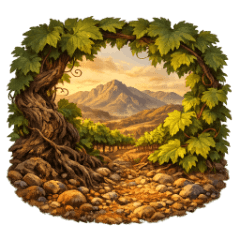
Forget about crossing the mountain for good reds because this valley proves you don't need a Napa zip code for world-class Cabernet Sauvignon. It is hotter than a summer romance here, making big, bold bottles the norm.
Forget about crossing the mountain for good reds because this valley proves you don't need a Napa zip code for world-class Cabernet Sauvignon. It is hotter than a summer romance here, making big, bold bottles the norm.
Bennett Valley
(
Sonoma County
)
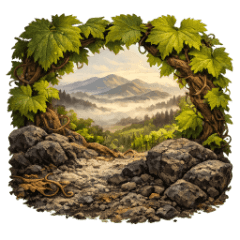
Located right under the nose of Santa Rosa, this appellation acts like a refrigerator with the door left open. It captures all that chilly Pacific fog, creating a haven for grapes that hate getting sunburned.
Located right under the nose of Santa Rosa, this appellation acts like a refrigerator with the door left open. It captures all that chilly Pacific fog, creating a haven for grapes that hate getting sunburned.
LOCAL WINE STYLES
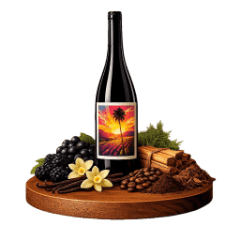
Californian Cabernet Sauvignon
Like a blockbuster movie star, this wine demands attention with muscles on top of muscles. It is big, confident, and fills the room with intense dark fruit and lavish oak that screams success.
Like a blockbuster movie star, this wine demands attention with muscles on top of muscles. It is big, confident, and fills the room with intense dark fruit and lavish oak that screams success.
Like a blockbuster movie star, this wine demands attention with muscles on top of muscles. It is big, confident, and fills the room with intense dark fruit and lavish oak that screams success.
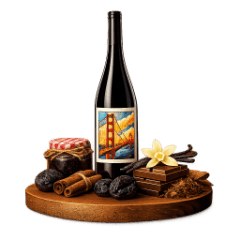
Californian Red Blend
Imagine a winemaker throwing every ripe fruit they can find into a fermentation tank. These wines prioritize smoothness and rich berry flavors over strict rules, resulting in a glass that tastes like liquid red velvet cake.
Imagine a winemaker throwing every ripe fruit they can find into a fermentation tank. These wines prioritize smoothness and rich berry flavors over strict rules, resulting in a glass that tastes like liquid red velvet cake.
Imagine a winemaker throwing every ripe fruit they can find into a fermentation tank. These wines prioritize smoothness and rich berry flavors over strict rules, resulting in a glass that tastes like liquid red velvet cake.
LATEST REVIEWS