«
Denmark

Lolland–Falster
Lolland–Falster
Lolland–Falster
Sunny Southern Islands
Floating below the main landmass, this area serves as the pantry of the nation, where apple orchards are slowly stepping aside to make room for ambitious trellises soaking up the Baltic reflection.
Floating below the main landmass, this area serves as the pantry of the nation, where apple orchards are slowly stepping aside to make room for ambitious trellises soaking up the Baltic reflection.
Floating below the main landmass, this area serves as the pantry of the nation, where apple orchards are slowly stepping aside to make room for ambitious trellises soaking up the Baltic reflection.

LEADERS




Why it's unique
Fruit
Heritage
Infrastructure
It is famously dubbed the South Sea Islands by locals who perhaps dream of Tahiti, but the moniker actually holds water agriculturally. The region boasts the highest density of fruit plantations in the country, and that existing infrastructure for processing apples and cherries gave early winemakers a massive head start compared to their mainland cousins.
It is famously dubbed the South Sea Islands by locals who perhaps dream of Tahiti, but the moniker actually holds water agriculturally. The region boasts the highest density of fruit plantations in the country, and that existing infrastructure for processing apples and cherries gave early winemakers a massive head start compared to their mainland cousins.
It is famously dubbed the South Sea Islands by locals who perhaps dream of Tahiti, but the moniker actually holds water agriculturally. The region boasts the highest density of fruit plantations in the country, and that existing infrastructure for processing apples and cherries gave early winemakers a massive head start compared to their mainland cousins.
Terroir
Sandy
Loam
Maritime
Sandy loam and clay mix under your boots here, providing a fertile bed that demands vigorous canopy management. What really saves the vintage is the surrounding water, which reflects sunlight and creates a stable, frost-resisting blanket. This maritime embrace ensures a long, slow ripening period that preserves acidity while allowing sugar levels to creep up surprisingly high.
Sandy loam and clay mix under your boots here, providing a fertile bed that demands vigorous canopy management. What really saves the vintage is the surrounding water, which reflects sunlight and creates a stable, frost-resisting blanket. This maritime embrace ensures a long, slow ripening period that preserves acidity while allowing sugar levels to creep up surprisingly high.
Sandy loam and clay mix under your boots here, providing a fertile bed that demands vigorous canopy management. What really saves the vintage is the surrounding water, which reflects sunlight and creates a stable, frost-resisting blanket. This maritime embrace ensures a long, slow ripening period that preserves acidity while allowing sugar levels to creep up surprisingly high.
You gotta try
Tropical
Solaris
Cherry
Solaris shines brighter here than almost anywhere else in Scandinavia, often showcasing tropical notes rather than just green apple. Don't skip the fruit wines, though - specifically, the cherry wines from this area are world-class and drink more like a fine Recioto or a heavy red than the sugary juice boxes you might expect.
Solaris shines brighter here than almost anywhere else in Scandinavia, often showcasing tropical notes rather than just green apple. Don't skip the fruit wines, though - specifically, the cherry wines from this area are world-class and drink more like a fine Recioto or a heavy red than the sugary juice boxes you might expect.
Solaris shines brighter here than almost anywhere else in Scandinavia, often showcasing tropical notes rather than just green apple. Don't skip the fruit wines, though - specifically, the cherry wines from this area are world-class and drink more like a fine Recioto or a heavy red than the sugary juice boxes you might expect.
LOCAL TALES
The Cherry Redemption
The Cherry Redemption
The Cherry Redemption
For decades, Danish cherry wine was a sugary punchline, the kind of stuff grandmothers drank from tiny glasses at Christmas before promptly falling asleep. Then came a revolution on the estate of Frederiksdal. The owners realized that the local Stevnsbær cherry was actually a complex, tannic powerhouse, structurally closer to a grape like Cabernet Sauvignon than a typical berry. Instead of boiling the juice with sugar, they started fermenting it on the skins and aging it in French oak barrels. The result shocked the wine world, proving that these islands could produce a beverage with the depth and complexity of a vintage port, effectively turning a national joke into a luxury export.
For decades, Danish cherry wine was a sugary punchline, the kind of stuff grandmothers drank from tiny glasses at Christmas before promptly falling asleep. Then came a revolution on the estate of Frederiksdal. The owners realized that the local Stevnsbær cherry was actually a complex, tannic powerhouse, structurally closer to a grape like Cabernet Sauvignon than a typical berry. Instead of boiling the juice with sugar, they started fermenting it on the skins and aging it in French oak barrels. The result shocked the wine world, proving that these islands could produce a beverage with the depth and complexity of a vintage port, effectively turning a national joke into a luxury export.
For decades, Danish cherry wine was a sugary punchline, the kind of stuff grandmothers drank from tiny glasses at Christmas before promptly falling asleep. Then came a revolution on the estate of Frederiksdal. The owners realized that the local Stevnsbær cherry was actually a complex, tannic powerhouse, structurally closer to a grape like Cabernet Sauvignon than a typical berry. Instead of boiling the juice with sugar, they started fermenting it on the skins and aging it in French oak barrels. The result shocked the wine world, proving that these islands could produce a beverage with the depth and complexity of a vintage port, effectively turning a national joke into a luxury export.
The Sweet Rush
The Sweet Rush
The Sweet Rush
Before anyone considered planting vines, Lolland was the sugar bowl of the North. The soil here was so perfectly suited for sugar beets that it sparked a massive agricultural boom in the late 19th century. It became such a huge industry that thousands of seasonal workers from Poland migrated here to handle the harvest, forever changing the cultural landscape of the islands. You can still see the old 'Polakkasernen' (Polish Barracks) today, which serves as a museum. This deep history of intensive farming meant that when the first viticultural pioneers arrived, they weren't fighting the land - they were stepping onto soil that had been pampered and worked by expert hands for generations.
Before anyone considered planting vines, Lolland was the sugar bowl of the North. The soil here was so perfectly suited for sugar beets that it sparked a massive agricultural boom in the late 19th century. It became such a huge industry that thousands of seasonal workers from Poland migrated here to handle the harvest, forever changing the cultural landscape of the islands. You can still see the old 'Polakkasernen' (Polish Barracks) today, which serves as a museum. This deep history of intensive farming meant that when the first viticultural pioneers arrived, they weren't fighting the land - they were stepping onto soil that had been pampered and worked by expert hands for generations.
Before anyone considered planting vines, Lolland was the sugar bowl of the North. The soil here was so perfectly suited for sugar beets that it sparked a massive agricultural boom in the late 19th century. It became such a huge industry that thousands of seasonal workers from Poland migrated here to handle the harvest, forever changing the cultural landscape of the islands. You can still see the old 'Polakkasernen' (Polish Barracks) today, which serves as a museum. This deep history of intensive farming meant that when the first viticultural pioneers arrived, they weren't fighting the land - they were stepping onto soil that had been pampered and worked by expert hands for generations.
The Tropical Bluff
The Tropical Bluff
The Tropical Bluff
Locals love to refer to this region as 'Sydhavsøerne' or 'The South Sea Islands.' If you visit in January, this nickname feels like a cruel prank designed to confuse tourists shivering in their parkas. However, there is a method to the madness. Statistically, this pocket of Denmark receives significantly more sunshine and less rain than the rest of the country due to the rain shadow effect and the moderating Baltic Sea. It is this specific climatic anomaly that allows sensitive plants like walnut trees, figs, and now commercial vineyards to survive where they would perish just a hundred kilometers north. It might not be Bora Bora, but for a Danish vine, it is paradise.
Locals love to refer to this region as 'Sydhavsøerne' or 'The South Sea Islands.' If you visit in January, this nickname feels like a cruel prank designed to confuse tourists shivering in their parkas. However, there is a method to the madness. Statistically, this pocket of Denmark receives significantly more sunshine and less rain than the rest of the country due to the rain shadow effect and the moderating Baltic Sea. It is this specific climatic anomaly that allows sensitive plants like walnut trees, figs, and now commercial vineyards to survive where they would perish just a hundred kilometers north. It might not be Bora Bora, but for a Danish vine, it is paradise.
Locals love to refer to this region as 'Sydhavsøerne' or 'The South Sea Islands.' If you visit in January, this nickname feels like a cruel prank designed to confuse tourists shivering in their parkas. However, there is a method to the madness. Statistically, this pocket of Denmark receives significantly more sunshine and less rain than the rest of the country due to the rain shadow effect and the moderating Baltic Sea. It is this specific climatic anomaly that allows sensitive plants like walnut trees, figs, and now commercial vineyards to survive where they would perish just a hundred kilometers north. It might not be Bora Bora, but for a Danish vine, it is paradise.
LOCAL WINE STYLES
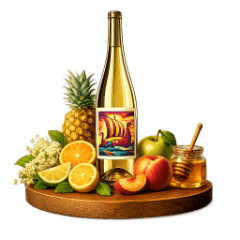
Danish Solaris
Imagine biting into a ripe pineapple while standing in a blizzard. That is basically what happens here. Solaris defies logic by ripening perfectly in Scandinavia, delivering a fruit basket of flavors despite the chilly northern latitude.
Imagine biting into a ripe pineapple while standing in a blizzard. That is basically what happens here. Solaris defies logic by ripening perfectly in Scandinavia, delivering a fruit basket of flavors despite the chilly northern latitude.
Imagine biting into a ripe pineapple while standing in a blizzard. That is basically what happens here. Solaris defies logic by ripening perfectly in Scandinavia, delivering a fruit basket of flavors despite the chilly northern latitude.
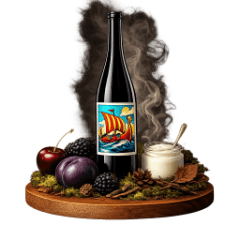
Danish Rondo
Don't let the latitude fool you - this red is seriously pigmented and surprisingly robust for a region better known for pastry. Rondo delivers a glass full of dark berries and a rustic charm that screams Scandinavia.
Don't let the latitude fool you - this red is seriously pigmented and surprisingly robust for a region better known for pastry. Rondo delivers a glass full of dark berries and a rustic charm that screams Scandinavia.
Don't let the latitude fool you - this red is seriously pigmented and surprisingly robust for a region better known for pastry. Rondo delivers a glass full of dark berries and a rustic charm that screams Scandinavia.
LATEST REVIEWS