«
Germany

Württemberg
Württemberg
Württemberg
Swabian Red Power
Located down south, this area flips the German script by prioritizing reds over whites. It is a land of industrious locals who drink most of what they produce, making these bottles rare treasures elsewhere.
Located down south, this area flips the German script by prioritizing reds over whites. It is a land of industrious locals who drink most of what they produce, making these bottles rare treasures elsewhere.
Located down south, this area flips the German script by prioritizing reds over whites. It is a land of industrious locals who drink most of what they produce, making these bottles rare treasures elsewhere.
LEADERS


HELPERS







Why it's unique
Cooperative power
Local thirst
Hidden gems
What makes this place distinct is the vibe - it feels more like a red wine exclave than typical Germany. Most growers here own tiny plots and pool their resources into massive, high-quality cooperatives. Locals display incredible loyalty to their region, consuming a staggering amount of the yearly production themselves. If you see a bottle outside the region, it essentially escaped captivity.
What makes this place distinct is the vibe - it feels more like a red wine exclave than typical Germany. Most growers here own tiny plots and pool their resources into massive, high-quality cooperatives. Locals display incredible loyalty to their region, consuming a staggering amount of the yearly production themselves. If you see a bottle outside the region, it essentially escaped captivity.
What makes this place distinct is the vibe - it feels more like a red wine exclave than typical Germany. Most growers here own tiny plots and pool their resources into massive, high-quality cooperatives. Locals display incredible loyalty to their region, consuming a staggering amount of the yearly production themselves. If you see a bottle outside the region, it essentially escaped captivity.
Terroir
River heat
Shell limestone
Sheltered valleys
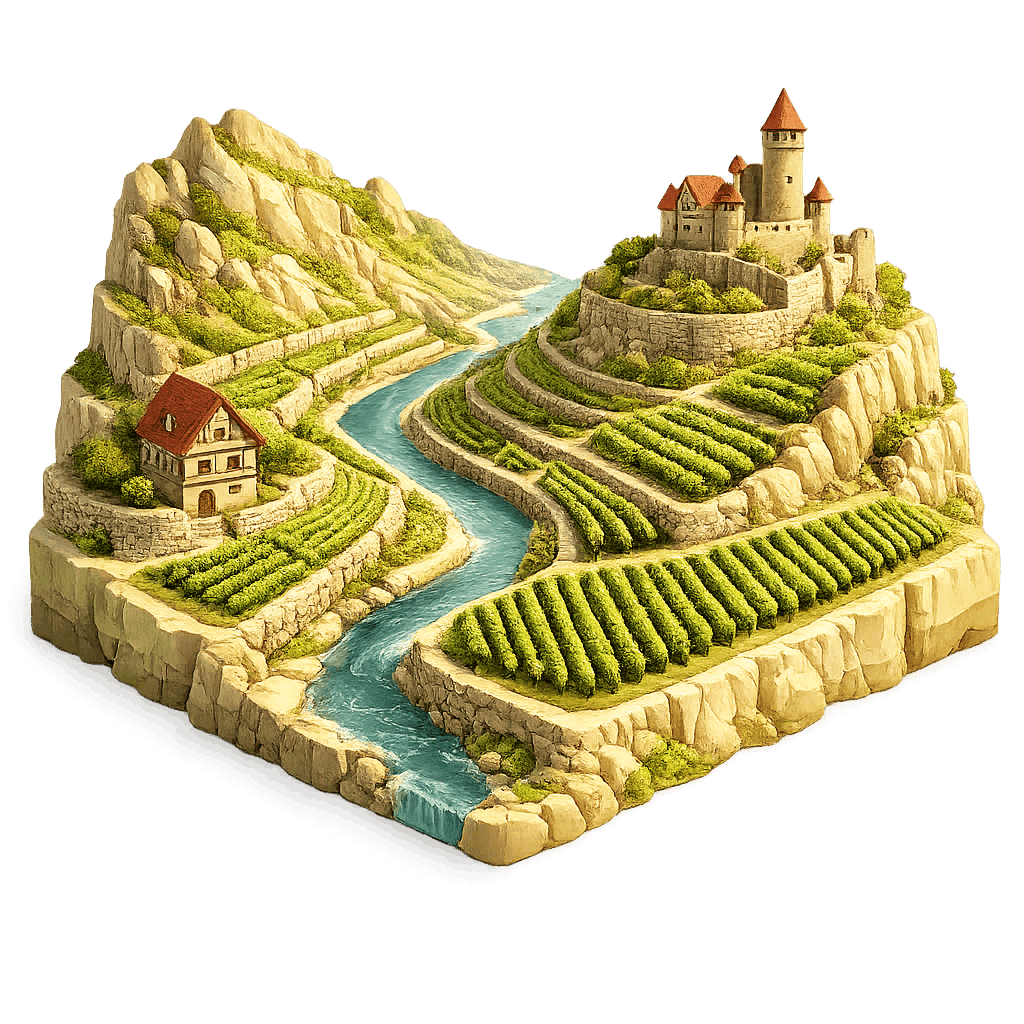
Steep terraced vineyards lining the Neckar river soak up every ray of sunshine, protecting vines from harsh winds. Soils are a mix of shell limestone and Keuper, which act like a thermal blanket during cool nights. This warmth allows Lemberger and Spätburgunder to ripen fully, developing spicy notes and structured tannins that would be impossible to achieve just a few hours north.
Steep terraced vineyards lining the Neckar river soak up every ray of sunshine, protecting vines from harsh winds. Soils are a mix of shell limestone and Keuper, which act like a thermal blanket during cool nights. This warmth allows Lemberger and Spätburgunder to ripen fully, developing spicy notes and structured tannins that would be impossible to achieve just a few hours north.
Steep terraced vineyards lining the Neckar river soak up every ray of sunshine, protecting vines from harsh winds. Soils are a mix of shell limestone and Keuper, which act like a thermal blanket during cool nights. This warmth allows Lemberger and Spätburgunder to ripen fully, developing spicy notes and structured tannins that would be impossible to achieve just a few hours north.
You gotta try
Lemberger kick
Light Trollinger
Grippy Riesling
Start with a glass of Lemberger, often called Blaufränkisch elsewhere, for a spicy, berry-loaded kick. If you want to drink like a true local, pour some Trollinger, a light red that acts as the regional water. Don't skip the Riesling here either - it tends to have a bit more body and grip than its northern cousins thanks to those warmer soils.
Start with a glass of Lemberger, often called Blaufränkisch elsewhere, for a spicy, berry-loaded kick. If you want to drink like a true local, pour some Trollinger, a light red that acts as the regional water. Don't skip the Riesling here either - it tends to have a bit more body and grip than its northern cousins thanks to those warmer soils.
Start with a glass of Lemberger, often called Blaufränkisch elsewhere, for a spicy, berry-loaded kick. If you want to drink like a true local, pour some Trollinger, a light red that acts as the regional water. Don't skip the Riesling here either - it tends to have a bit more body and grip than its northern cousins thanks to those warmer soils.
LOCAL TALES
Not That Poet
Not That Poet
Not That Poet
Everyone assumes Schillerwein is named after Friedrich Schiller, the famous local playwright who wrote Ode to Joy. It makes for a great story, imagining the writer sipping this pink drink while penning masterpieces. Sadly, linguists ruin everything. The name actually comes from the verb schillern, meaning to shimmer or iridesce, describing the wine’s unique color. This style is a Rotling, meaning red and white berries are mashed and fermented together - not just mixed later like a cheap cocktail. While Schiller the poet might not be the godfather of this blend, he was born in Marbach nearby, so locals still raise a glass of shimmering pink wine in his honor anyway.
Everyone assumes Schillerwein is named after Friedrich Schiller, the famous local playwright who wrote Ode to Joy. It makes for a great story, imagining the writer sipping this pink drink while penning masterpieces. Sadly, linguists ruin everything. The name actually comes from the verb schillern, meaning to shimmer or iridesce, describing the wine’s unique color. This style is a Rotling, meaning red and white berries are mashed and fermented together - not just mixed later like a cheap cocktail. While Schiller the poet might not be the godfather of this blend, he was born in Marbach nearby, so locals still raise a glass of shimmering pink wine in his honor anyway.
Everyone assumes Schillerwein is named after Friedrich Schiller, the famous local playwright who wrote Ode to Joy. It makes for a great story, imagining the writer sipping this pink drink while penning masterpieces. Sadly, linguists ruin everything. The name actually comes from the verb schillern, meaning to shimmer or iridesce, describing the wine’s unique color. This style is a Rotling, meaning red and white berries are mashed and fermented together - not just mixed later like a cheap cocktail. While Schiller the poet might not be the godfather of this blend, he was born in Marbach nearby, so locals still raise a glass of shimmering pink wine in his honor anyway.
Strength in Numbers
Strength in Numbers
Strength in Numbers
Back in the 19th century, making wine here was a fast track to poverty. Land inheritance laws split vineyards into ridiculously tiny strips, meaning a single family might own just a few rows. Alone, they couldn't afford equipment or marketing. In 1855, a group of struggling growers in Neckarsulm decided to stop competing and start collaborating. They formed Germany’s first wine cooperative. It was a revolutionary idea that saved the region. Today, these co-ops are giants, handling the majority of the harvest. Unlike in other places where co-op implies bulk quantity over quality, Württemberg co-ops produce some of the most stunning, high-end bottles on the market.
Back in the 19th century, making wine here was a fast track to poverty. Land inheritance laws split vineyards into ridiculously tiny strips, meaning a single family might own just a few rows. Alone, they couldn't afford equipment or marketing. In 1855, a group of struggling growers in Neckarsulm decided to stop competing and start collaborating. They formed Germany’s first wine cooperative. It was a revolutionary idea that saved the region. Today, these co-ops are giants, handling the majority of the harvest. Unlike in other places where co-op implies bulk quantity over quality, Württemberg co-ops produce some of the most stunning, high-end bottles on the market.
Back in the 19th century, making wine here was a fast track to poverty. Land inheritance laws split vineyards into ridiculously tiny strips, meaning a single family might own just a few rows. Alone, they couldn't afford equipment or marketing. In 1855, a group of struggling growers in Neckarsulm decided to stop competing and start collaborating. They formed Germany’s first wine cooperative. It was a revolutionary idea that saved the region. Today, these co-ops are giants, handling the majority of the harvest. Unlike in other places where co-op implies bulk quantity over quality, Württemberg co-ops produce some of the most stunning, high-end bottles on the market.
Follow the Broom
Follow the Broom
Follow the Broom
If you are driving through the villages and see a birch broom hanging over a doorway, hit the brakes. You have found a Besenwirtschaft. These are temporary wine taverns that open for just a few weeks a year, usually in the winemaker's living room or converted barn. It is a tradition dating back to Charlemagne, allowing farmers to sell their own wine tax-free for short periods. There is no fancy menu - usually just homemade Maultaschen (giant ravioli), potato salad, and endless carafes of young wine. It is the ultimate unpretentious experience where you sit on a bench with strangers, eat heart-stopping amounts of carbs, and understand why Swabians are so happy.
If you are driving through the villages and see a birch broom hanging over a doorway, hit the brakes. You have found a Besenwirtschaft. These are temporary wine taverns that open for just a few weeks a year, usually in the winemaker's living room or converted barn. It is a tradition dating back to Charlemagne, allowing farmers to sell their own wine tax-free for short periods. There is no fancy menu - usually just homemade Maultaschen (giant ravioli), potato salad, and endless carafes of young wine. It is the ultimate unpretentious experience where you sit on a bench with strangers, eat heart-stopping amounts of carbs, and understand why Swabians are so happy.
If you are driving through the villages and see a birch broom hanging over a doorway, hit the brakes. You have found a Besenwirtschaft. These are temporary wine taverns that open for just a few weeks a year, usually in the winemaker's living room or converted barn. It is a tradition dating back to Charlemagne, allowing farmers to sell their own wine tax-free for short periods. There is no fancy menu - usually just homemade Maultaschen (giant ravioli), potato salad, and endless carafes of young wine. It is the ultimate unpretentious experience where you sit on a bench with strangers, eat heart-stopping amounts of carbs, and understand why Swabians are so happy.
SUB-REGIONS
Neckar
(
Württemberg
)
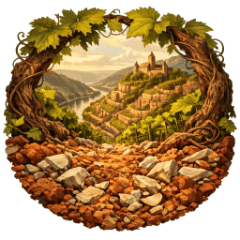
Carving its way through Württemberg, this winding river valley hosts vineyards that cling to cliffs like desperate rock climbers. It serves as the pumping artery for Germany's premier red wine country, mixing tradition with engineering.
Carving its way through Württemberg, this winding river valley hosts vineyards that cling to cliffs like desperate rock climbers. It serves as the pumping artery for Germany's premier red wine country, mixing tradition with engineering.
Remstal
(
Württemberg
)
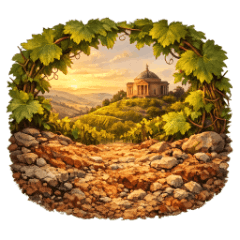
Just east of the car factories, things get surprisingly Mediterranean. This valley is basically the overachiever of the region, pumping out premier whites and reds that make the rest of Germany jealous while maintaining a relaxed, garden-like atmosphere.
Just east of the car factories, things get surprisingly Mediterranean. This valley is basically the overachiever of the region, pumping out premier whites and reds that make the rest of Germany jealous while maintaining a relaxed, garden-like atmosphere.
LOCAL WINE STYLES
German Riesling
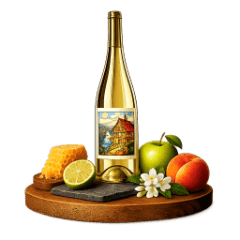
Imagine biting into a crisp green apple while sliding down a slate mountain. This style balances razor-sharp acidity with varying levels of sweetness, creating a tension that vibrates on your tongue like a plucked guitar string.
Imagine biting into a crisp green apple while sliding down a slate mountain. This style balances razor-sharp acidity with varying levels of sweetness, creating a tension that vibrates on your tongue like a plucked guitar string.
Imagine biting into a crisp green apple while sliding down a slate mountain. This style balances razor-sharp acidity with varying levels of sweetness, creating a tension that vibrates on your tongue like a plucked guitar string.
German Spätburgunder
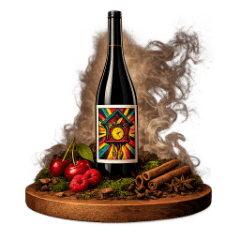
Forget everything you thought you knew about this region being only for sweet white wines. This red is proof that climate change and serious ambition have created a worthy rival to French classics, delivering earthiness and spice.
Forget everything you thought you knew about this region being only for sweet white wines. This red is proof that climate change and serious ambition have created a worthy rival to French classics, delivering earthiness and spice.
Forget everything you thought you knew about this region being only for sweet white wines. This red is proof that climate change and serious ambition have created a worthy rival to French classics, delivering earthiness and spice.
LATEST REVIEWS