«
California

Paso Robles
Paso Robles
Paso Robles
Cowboy Rhone Zone
Saddle up because this spot sits perfectly between rugged ranch vibes and high-end winemaking. It is the place where dusty boots meet polished glasses, proving you don't need a pinky out to drink spectacular juice.
Saddle up because this spot sits perfectly between rugged ranch vibes and high-end winemaking. It is the place where dusty boots meet polished glasses, proving you don't need a pinky out to drink spectacular juice.
Saddle up because this spot sits perfectly between rugged ranch vibes and high-end winemaking. It is the place where dusty boots meet polished glasses, proving you don't need a pinky out to drink spectacular juice.
LEADERS

Cabernet Sauvignon

Syrah / Shiraz

Petite Sirah

Zinfandel / Primitivo

Grenache

Viognier

Roussanne

Grenache Blanc
HELPERS










Why it's unique
Rule breakers
Rhone styles
Intense Cab
Freedom reigns supreme here. Unlike some stuffy neighbors to the north, winemakers in this area love breaking rules and blending things that technically shouldn't work but taste amazing. It is arguably the best spot in America for Syrah and Grenache, yet they still manage to crush Cabernet Sauvignon with an intensity that will knock your socks off.
Freedom reigns supreme here. Unlike some stuffy neighbors to the north, winemakers in this area love breaking rules and blending things that technically shouldn't work but taste amazing. It is arguably the best spot in America for Syrah and Grenache, yet they still manage to crush Cabernet Sauvignon with an intensity that will knock your socks off.
Freedom reigns supreme here. Unlike some stuffy neighbors to the north, winemakers in this area love breaking rules and blending things that technically shouldn't work but taste amazing. It is arguably the best spot in America for Syrah and Grenache, yet they still manage to crush Cabernet Sauvignon with an intensity that will knock your socks off.
Terroir
Calcareous shale
Diurnal shifts
Blazing sun
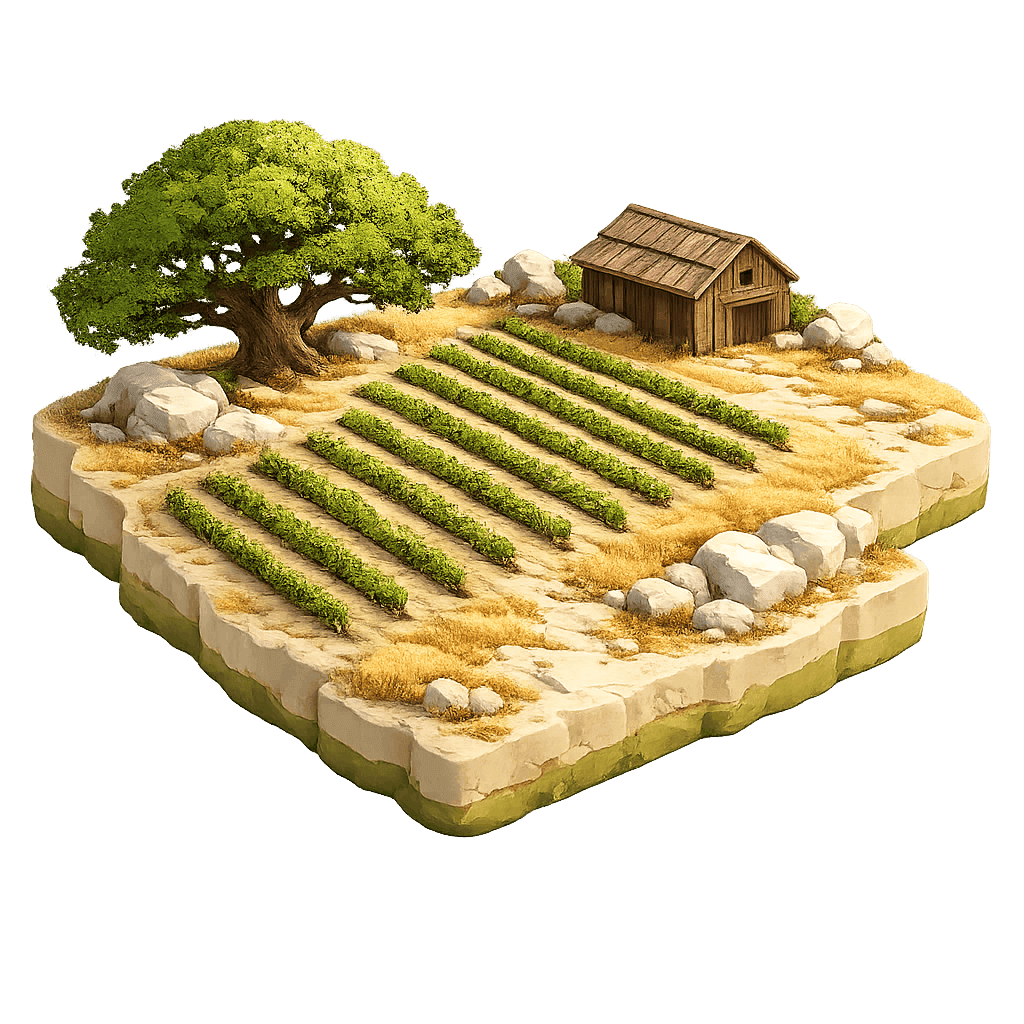
Geologically, this place is a chaotic mess in the best way possible. Calcareous shale acts like a sponge for acid, keeping wines fresh despite the blazing sun. The secret weapon is the diurnal shift - temperatures drop like a stone at night, sometimes swinging forty degrees, which lets the fruit ripen fully without turning into strawberry jam.
Geologically, this place is a chaotic mess in the best way possible. Calcareous shale acts like a sponge for acid, keeping wines fresh despite the blazing sun. The secret weapon is the diurnal shift - temperatures drop like a stone at night, sometimes swinging forty degrees, which lets the fruit ripen fully without turning into strawberry jam.
Geologically, this place is a chaotic mess in the best way possible. Calcareous shale acts like a sponge for acid, keeping wines fresh despite the blazing sun. The secret weapon is the diurnal shift - temperatures drop like a stone at night, sometimes swinging forty degrees, which lets the fruit ripen fully without turning into strawberry jam.
You gotta try
GSM blends
Westside Zin
Plush Cab
Hunt down a GSM blend immediately. Grenache, Syrah, and Mourvèdre thrive in this heat, creating spicy, meaty, and fruit-forward bombs that pair perfectly with barbecue. If you crave power, Zinfandel from the west side offers peppery richness that practically chews itself. Don't ignore the Cabernet Sauvignon either - it is plush, dark, and significantly friendlier to your wallet than Napa.
Hunt down a GSM blend immediately. Grenache, Syrah, and Mourvèdre thrive in this heat, creating spicy, meaty, and fruit-forward bombs that pair perfectly with barbecue. If you crave power, Zinfandel from the west side offers peppery richness that practically chews itself. Don't ignore the Cabernet Sauvignon either - it is plush, dark, and significantly friendlier to your wallet than Napa.
Hunt down a GSM blend immediately. Grenache, Syrah, and Mourvèdre thrive in this heat, creating spicy, meaty, and fruit-forward bombs that pair perfectly with barbecue. If you crave power, Zinfandel from the west side offers peppery richness that practically chews itself. Don't ignore the Cabernet Sauvignon either - it is plush, dark, and significantly friendlier to your wallet than Napa.
LOCAL TALES
The Pianist Farmer
The Pianist Farmer
The Pianist Farmer
Imagine being a world-famous pianist, a signer of the Treaty of Versailles, and the Prime Minister of Poland, yet all you really want to do is farm Zinfandel. That was Ignacy Jan Paderewski. In the early 1900s, he came to the region to treat his arthritis at the hot springs but stayed for the dirt. He planted Zinfandel and Petite Sirah on his ranch, proving that this scrubby landscape could produce world-class beverages. His wines won gold medals just after Prohibition ended, firmly putting this cow town on the viticultural map long before the modern rush.
Imagine being a world-famous pianist, a signer of the Treaty of Versailles, and the Prime Minister of Poland, yet all you really want to do is farm Zinfandel. That was Ignacy Jan Paderewski. In the early 1900s, he came to the region to treat his arthritis at the hot springs but stayed for the dirt. He planted Zinfandel and Petite Sirah on his ranch, proving that this scrubby landscape could produce world-class beverages. His wines won gold medals just after Prohibition ended, firmly putting this cow town on the viticultural map long before the modern rush.
Imagine being a world-famous pianist, a signer of the Treaty of Versailles, and the Prime Minister of Poland, yet all you really want to do is farm Zinfandel. That was Ignacy Jan Paderewski. In the early 1900s, he came to the region to treat his arthritis at the hot springs but stayed for the dirt. He planted Zinfandel and Petite Sirah on his ranch, proving that this scrubby landscape could produce world-class beverages. His wines won gold medals just after Prohibition ended, firmly putting this cow town on the viticultural map long before the modern rush.
The Limestone Hunt
The Limestone Hunt
The Limestone Hunt
The French Connection involves the Perrin family of Château de Beaucastel. They spent years scouring California with a geological map in hand, hunting for soil that mimicked their beloved Châteauneuf-du-Pape. They didn't care about Napa or Sonoma, they wanted limestone. In 1989, they found a scrubby patch of land here that looked exactly like home. They imported cuttings directly from France, went through a nightmare of quarantine protocols, and established a nursery that eventually supplied high-quality clones to hundreds of wineries in the state. They basically jumpstarted the American Rhône revolution.
The French Connection involves the Perrin family of Château de Beaucastel. They spent years scouring California with a geological map in hand, hunting for soil that mimicked their beloved Châteauneuf-du-Pape. They didn't care about Napa or Sonoma, they wanted limestone. In 1989, they found a scrubby patch of land here that looked exactly like home. They imported cuttings directly from France, went through a nightmare of quarantine protocols, and established a nursery that eventually supplied high-quality clones to hundreds of wineries in the state. They basically jumpstarted the American Rhône revolution.
The French Connection involves the Perrin family of Château de Beaucastel. They spent years scouring California with a geological map in hand, hunting for soil that mimicked their beloved Châteauneuf-du-Pape. They didn't care about Napa or Sonoma, they wanted limestone. In 1989, they found a scrubby patch of land here that looked exactly like home. They imported cuttings directly from France, went through a nightmare of quarantine protocols, and established a nursery that eventually supplied high-quality clones to hundreds of wineries in the state. They basically jumpstarted the American Rhône revolution.
Pass of Oaks
Pass of Oaks
Pass of Oaks
The name itself, "El Paso de Robles," translates to "The Pass of the Oaks," which sounds like a fantasy novel setting but is actually just a very accurate description of the landscape. For nearly a century, this was strictly almond and cattle country. Cowboys ruled the roost, and wine was something you made in a bathtub. It wasn't until the 1970s and 80s that people realized those giant oak trees were shading soil that was absolute gold for vines. The transition from cattle ranching to vineyards was swift, but the cowboy hat never really left the tasting room.
The name itself, "El Paso de Robles," translates to "The Pass of the Oaks," which sounds like a fantasy novel setting but is actually just a very accurate description of the landscape. For nearly a century, this was strictly almond and cattle country. Cowboys ruled the roost, and wine was something you made in a bathtub. It wasn't until the 1970s and 80s that people realized those giant oak trees were shading soil that was absolute gold for vines. The transition from cattle ranching to vineyards was swift, but the cowboy hat never really left the tasting room.
The name itself, "El Paso de Robles," translates to "The Pass of the Oaks," which sounds like a fantasy novel setting but is actually just a very accurate description of the landscape. For nearly a century, this was strictly almond and cattle country. Cowboys ruled the roost, and wine was something you made in a bathtub. It wasn't until the 1970s and 80s that people realized those giant oak trees were shading soil that was absolute gold for vines. The transition from cattle ranching to vineyards was swift, but the cowboy hat never really left the tasting room.
SUB-REGIONS
Adelaida District
(
Paso Robles
)
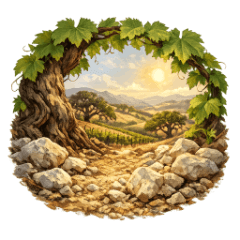
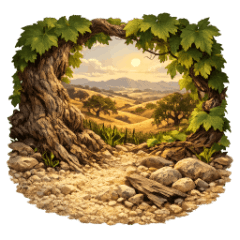
Sitting high on the Santa Lucia range, this is where calcareous dreams come true. It acts as the Beverly Hills of Paso Robles, boasting steep slopes and huge diurnal shifts that keep acid sharp while fruit gets lush.
Sitting high on the Santa Lucia range, this is where calcareous dreams come true. It acts as the Beverly Hills of Paso Robles, boasting steep slopes and huge diurnal shifts that keep acid sharp while fruit gets lush.
Creston District
(
Paso Robles
)
Head east and climb up to where horses outnumber hipsters. This elevated plateau offers serious heat relief compared to the valley floor, creating conditions perfect for intense reds without the jammy overtones found elsewhere.
Head east and climb up to where horses outnumber hipsters. This elevated plateau offers serious heat relief compared to the valley floor, creating conditions perfect for intense reds without the jammy overtones found elsewhere.
LOCAL WINE STYLES
Californian Cabernet Sauvignon
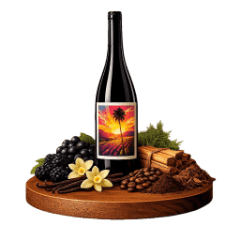
Like a blockbuster movie star, this wine demands attention with muscles on top of muscles. It is big, confident, and fills the room with intense dark fruit and lavish oak that screams success.
Like a blockbuster movie star, this wine demands attention with muscles on top of muscles. It is big, confident, and fills the room with intense dark fruit and lavish oak that screams success.
Like a blockbuster movie star, this wine demands attention with muscles on top of muscles. It is big, confident, and fills the room with intense dark fruit and lavish oak that screams success.
Californian Red Blend
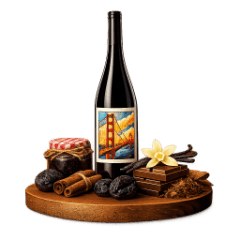
Imagine a winemaker throwing every ripe fruit they can find into a fermentation tank. These wines prioritize smoothness and rich berry flavors over strict rules, resulting in a glass that tastes like liquid red velvet cake.
Imagine a winemaker throwing every ripe fruit they can find into a fermentation tank. These wines prioritize smoothness and rich berry flavors over strict rules, resulting in a glass that tastes like liquid red velvet cake.
Imagine a winemaker throwing every ripe fruit they can find into a fermentation tank. These wines prioritize smoothness and rich berry flavors over strict rules, resulting in a glass that tastes like liquid red velvet cake.
LATEST REVIEWS