«
Lebanon

Bekaa Valley
Bekaa Valley
Bekaa Valley
Phoenicia's Liquid Gold
Most people don't associate active conflict zones with world-class Cabernet, but Lebanon defies logic. This valley is the spiritual home of winemaking, pumping out Bordeaux blends that scream elegance despite the chaos that often surrounds them.
Most people don't associate active conflict zones with world-class Cabernet, but Lebanon defies logic. This valley is the spiritual home of winemaking, pumping out Bordeaux blends that scream elegance despite the chaos that often surrounds them.
Most people don't associate active conflict zones with world-class Cabernet, but Lebanon defies logic. This valley is the spiritual home of winemaking, pumping out Bordeaux blends that scream elegance despite the chaos that often surrounds them.
LEADERS




HELPERS






Why it's unique
Pure defiance
Rivals France
Bacchus Temple
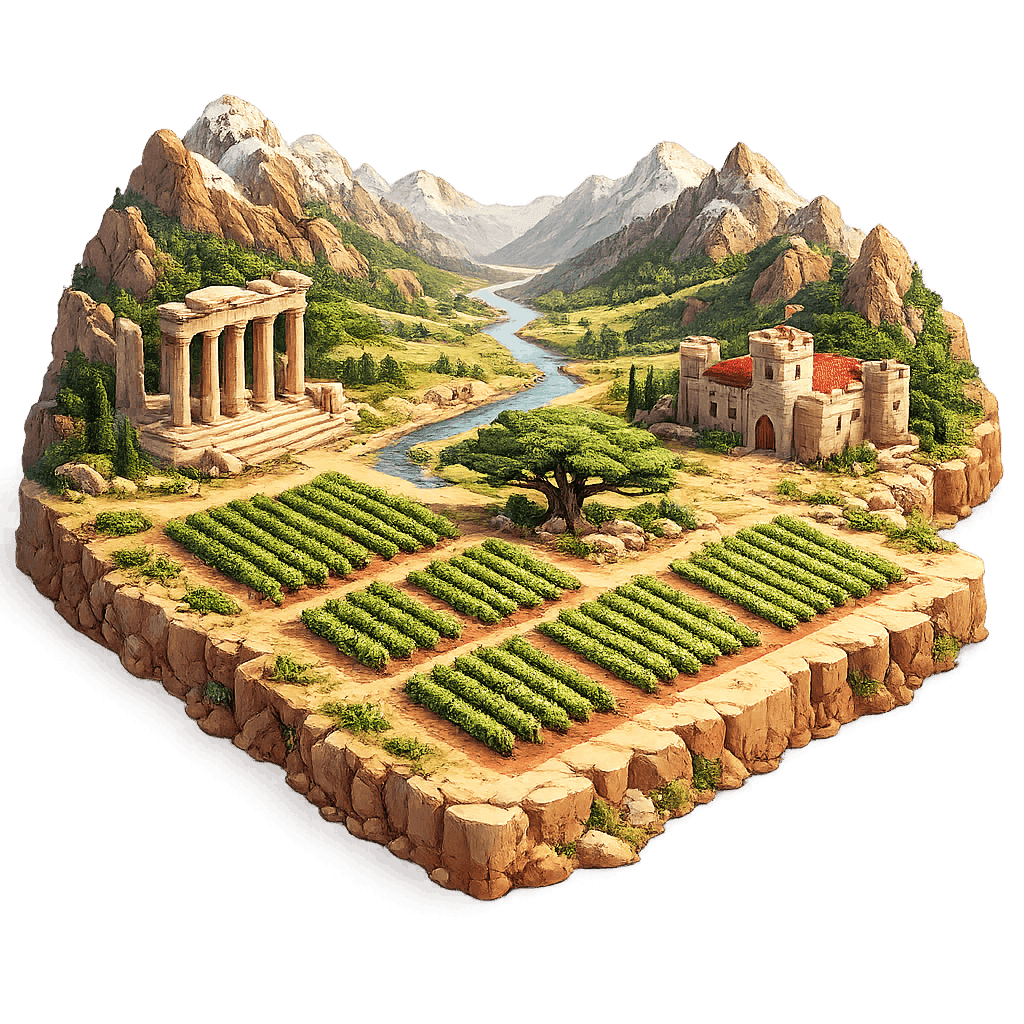
Winemaking here isn't a hobby - it is an act of pure defiance. You have producers harvesting grapes while dodging actual missiles, yet they still manage to produce wines that rival top-tier French estates. It is an ancient cradle of viticulture, where the Temple of Bacchus stands watch over vines that have seen empires rise and fall, proving that great wine outlasts everything.
Winemaking here isn't a hobby - it is an act of pure defiance. You have producers harvesting grapes while dodging actual missiles, yet they still manage to produce wines that rival top-tier French estates. It is an ancient cradle of viticulture, where the Temple of Bacchus stands watch over vines that have seen empires rise and fall, proving that great wine outlasts everything.
Winemaking here isn't a hobby - it is an act of pure defiance. You have producers harvesting grapes while dodging actual missiles, yet they still manage to produce wines that rival top-tier French estates. It is an ancient cradle of viticulture, where the Temple of Bacchus stands watch over vines that have seen empires rise and fall, proving that great wine outlasts everything.
Terroir
High altitude
Hot days
Rain shadow
At 1,000 meters above sea level, this plateau enjoys a Mediterranean climate on steroids. You get scorching hot days that ripen Cinsault to perfection, followed by chilly nights that lock in acidity. The mountains act as massive rain shadows, keeping things dry and disease-free, meaning organic farming is almost the default setting here rather than a hipster marketing trend.
At 1,000 meters above sea level, this plateau enjoys a Mediterranean climate on steroids. You get scorching hot days that ripen Cinsault to perfection, followed by chilly nights that lock in acidity. The mountains act as massive rain shadows, keeping things dry and disease-free, meaning organic farming is almost the default setting here rather than a hipster marketing trend.
At 1,000 meters above sea level, this plateau enjoys a Mediterranean climate on steroids. You get scorching hot days that ripen Cinsault to perfection, followed by chilly nights that lock in acidity. The mountains act as massive rain shadows, keeping things dry and disease-free, meaning organic farming is almost the default setting here rather than a hipster marketing trend.
You gotta try
Spicy Cinsault
Savory Blends
Earthy Carignan
Grab a bottle of Cinsault to see what the region's adopted star tastes like - it is spicy, fruity, and ridiculously drinkable. If you want the full experience, hunt down a generic Red Blend from the valley. These usually combine Cabernet Sauvignon, Carignan, and Cinsault into a savory, earthy masterpiece that tastes like crushed rocks and sun-baked herbs.
Grab a bottle of Cinsault to see what the region's adopted star tastes like - it is spicy, fruity, and ridiculously drinkable. If you want the full experience, hunt down a generic Red Blend from the valley. These usually combine Cabernet Sauvignon, Carignan, and Cinsault into a savory, earthy masterpiece that tastes like crushed rocks and sun-baked herbs.
Grab a bottle of Cinsault to see what the region's adopted star tastes like - it is spicy, fruity, and ridiculously drinkable. If you want the full experience, hunt down a generic Red Blend from the valley. These usually combine Cabernet Sauvignon, Carignan, and Cinsault into a savory, earthy masterpiece that tastes like crushed rocks and sun-baked herbs.
LOCAL TALES
The OG Party God
The OG Party God
The OG Party God
Long before your favorite sommelier started talking about terroir, the Romans were already obsessed with this place. They loved the local juice so much they built the Temple of Bacchus right here in Baalbek. It is essentially the biggest party mansion of the ancient world, dedicated entirely to the god of wine and good times. The temple is massive and surprisingly well-preserved, standing as permanent proof that the Bekaa Valley has been the center of the winemaking universe for thousands of years. While empires crumbled around it, the stone carvings of vines and poppies remained, reminding everyone that while politics are temporary, a good glass of red is eternal.
Long before your favorite sommelier started talking about terroir, the Romans were already obsessed with this place. They loved the local juice so much they built the Temple of Bacchus right here in Baalbek. It is essentially the biggest party mansion of the ancient world, dedicated entirely to the god of wine and good times. The temple is massive and surprisingly well-preserved, standing as permanent proof that the Bekaa Valley has been the center of the winemaking universe for thousands of years. While empires crumbled around it, the stone carvings of vines and poppies remained, reminding everyone that while politics are temporary, a good glass of red is eternal.
Long before your favorite sommelier started talking about terroir, the Romans were already obsessed with this place. They loved the local juice so much they built the Temple of Bacchus right here in Baalbek. It is essentially the biggest party mansion of the ancient world, dedicated entirely to the god of wine and good times. The temple is massive and surprisingly well-preserved, standing as permanent proof that the Bekaa Valley has been the center of the winemaking universe for thousands of years. While empires crumbled around it, the stone carvings of vines and poppies remained, reminding everyone that while politics are temporary, a good glass of red is eternal.
Harvesting Under Fire
Harvesting Under Fire
Harvesting Under Fire
You think your job is stressful? Try making wine during a civil war. The legendary Serge Hochar of Chateau Musar became a global icon not just for his wine, but for his sheer stubbornness. During the conflict, shells were literally falling on the vineyards, but his team kept picking. There were years when he had to smuggle the wine out on boats under the cover of darkness just to get it to Bristol for tasting. In 1976, the fighting was so intense they couldn't harvest at all, which is the only gap in their history. It wasn't just agriculture - it was resistance. Every bottle produced was a message to the world that life and culture continue.
You think your job is stressful? Try making wine during a civil war. The legendary Serge Hochar of Chateau Musar became a global icon not just for his wine, but for his sheer stubbornness. During the conflict, shells were literally falling on the vineyards, but his team kept picking. There were years when he had to smuggle the wine out on boats under the cover of darkness just to get it to Bristol for tasting. In 1976, the fighting was so intense they couldn't harvest at all, which is the only gap in their history. It wasn't just agriculture - it was resistance. Every bottle produced was a message to the world that life and culture continue.
You think your job is stressful? Try making wine during a civil war. The legendary Serge Hochar of Chateau Musar became a global icon not just for his wine, but for his sheer stubbornness. During the conflict, shells were literally falling on the vineyards, but his team kept picking. There were years when he had to smuggle the wine out on boats under the cover of darkness just to get it to Bristol for tasting. In 1976, the fighting was so intense they couldn't harvest at all, which is the only gap in their history. It wasn't just agriculture - it was resistance. Every bottle produced was a message to the world that life and culture continue.
The Phoenician Influencers
The Phoenician Influencers
The Phoenician Influencers
We owe a massive apology to the French because the Phoenicians from this coast were the original wine influencers. Around 3000 BC, these seafaring traders were already packaging wine in amphorae and shipping it across the Mediterranean. They didn't just export the drink - they exported the know-how, teaching the Greeks and Romans how to cultivate vines properly. Without these ancient mariners from modern-day Lebanon, the vineyards of Tuscany or Provence might look very different today. They developed a resin to seal their jars which gave the wine a distinct flavor. You can find a similar savory richness in the unique character of the indigenous Obeideh and Merwah whites today.
We owe a massive apology to the French because the Phoenicians from this coast were the original wine influencers. Around 3000 BC, these seafaring traders were already packaging wine in amphorae and shipping it across the Mediterranean. They didn't just export the drink - they exported the know-how, teaching the Greeks and Romans how to cultivate vines properly. Without these ancient mariners from modern-day Lebanon, the vineyards of Tuscany or Provence might look very different today. They developed a resin to seal their jars which gave the wine a distinct flavor. You can find a similar savory richness in the unique character of the indigenous Obeideh and Merwah whites today.
We owe a massive apology to the French because the Phoenicians from this coast were the original wine influencers. Around 3000 BC, these seafaring traders were already packaging wine in amphorae and shipping it across the Mediterranean. They didn't just export the drink - they exported the know-how, teaching the Greeks and Romans how to cultivate vines properly. Without these ancient mariners from modern-day Lebanon, the vineyards of Tuscany or Provence might look very different today. They developed a resin to seal their jars which gave the wine a distinct flavor. You can find a similar savory richness in the unique character of the indigenous Obeideh and Merwah whites today.
LOCAL WINE STYLES
Bekaa Valley Red
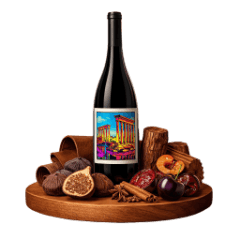
Imagine biting into a sun-dried fig while standing in a cedar forest. This style blends French finesse with Middle Eastern heat, delivering robust reds that survived empires and conflict to land in your glass.
Imagine biting into a sun-dried fig while standing in a cedar forest. This style blends French finesse with Middle Eastern heat, delivering robust reds that survived empires and conflict to land in your glass.
Imagine biting into a sun-dried fig while standing in a cedar forest. This style blends French finesse with Middle Eastern heat, delivering robust reds that survived empires and conflict to land in your glass.
Bekaa Valley Bordeaux Blend
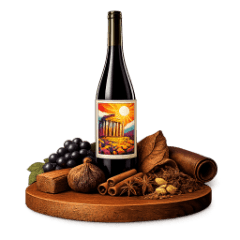
Think of this as a classic French aristocrat who moved to the Middle East and got a really deep tan. It is all the structure you love from Bordeaux but packed with spicy, sun-baked warmth and history.
Think of this as a classic French aristocrat who moved to the Middle East and got a really deep tan. It is all the structure you love from Bordeaux but packed with spicy, sun-baked warmth and history.
Think of this as a classic French aristocrat who moved to the Middle East and got a really deep tan. It is all the structure you love from Bordeaux but packed with spicy, sun-baked warmth and history.
LATEST REVIEWS