«
Romania

Banat
Banat
Banat
Habsburgs' Sunny Garden
Sitting comfortably on the western frontier, this region feels like a historical crossroads where Austrian discipline met Mediterranean warmth. It’s where spicy reds and crisp whites throw a party that’s been raging since Empress Maria Theresa’s days.
Sitting comfortably on the western frontier, this region feels like a historical crossroads where Austrian discipline met Mediterranean warmth. It’s where spicy reds and crisp whites throw a party that’s been raging since Empress Maria Theresa’s days.
Sitting comfortably on the western frontier, this region feels like a historical crossroads where Austrian discipline met Mediterranean warmth. It’s where spicy reds and crisp whites throw a party that’s been raging since Empress Maria Theresa’s days.







Why it's unique
Multicultural heritage
Habsburg history
British innovation
Diversity is the name of the game here. You won’t just find Romanian traditions - it’s a melting pot of Serbian, Hungarian, and Swabian influences. This area is a tale of two eras: the historic Miniș hills that once supplied the Habsburg Emperors, and the ultra-modern wineries in Recaș that are currently conquering British supermarkets with state-of-the-art precision.
Diversity is the name of the game here. You won’t just find Romanian traditions - it’s a melting pot of Serbian, Hungarian, and Swabian influences. This area is a tale of two eras: the historic Miniș hills that once supplied the Habsburg Emperors, and the ultra-modern wineries in Recaș that are currently conquering British supermarkets with state-of-the-art precision.
Diversity is the name of the game here. You won’t just find Romanian traditions - it’s a melting pot of Serbian, Hungarian, and Swabian influences. This area is a tale of two eras: the historic Miniș hills that once supplied the Habsburg Emperors, and the ultra-modern wineries in Recaș that are currently conquering British supermarkets with state-of-the-art precision.
Terroir
Mediterranean warmth
Volcanic & clay
Deep roots
Sunbathers love it here almost as much as Cabernet Sauvignon does. With a climate that leans heavily towards the Mediterranean, summers are hot and autumns are long. The soil is a geologic patchwork—ranging from the volcanic granite and diorite of Miniș to the mineral-rich clays of Recaș—forcing roots to dig deep for nutrients and resulting in concentrated flavors.
Sunbathers love it here almost as much as Cabernet Sauvignon does. With a climate that leans heavily towards the Mediterranean, summers are hot and autumns are long. The soil is a geologic patchwork—ranging from the volcanic granite and diorite of Miniș to the mineral-rich clays of Recaș—forcing roots to dig deep for nutrients and resulting in concentrated flavors.
Sunbathers love it here almost as much as Cabernet Sauvignon does. With a climate that leans heavily towards the Mediterranean, summers are hot and autumns are long. The soil is a geologic patchwork—ranging from the volcanic granite and diorite of Miniș to the mineral-rich clays of Recaș—forcing roots to dig deep for nutrients and resulting in concentrated flavors.
You gotta try
Spicy Cadarca
Lush Merlot
Rich Cabernet
Grab a bottle of Cadarca immediately. It’s the local hero that used to be the favorite of imperial courts for its spicy, rustic kick. If you want something polished, the international superstars like Merlot and Cabernet Sauvignon ripen perfectly here, offering a lush richness that rivals more famous Western European neighbors without the scary price tag.
Grab a bottle of Cadarca immediately. It’s the local hero that used to be the favorite of imperial courts for its spicy, rustic kick. If you want something polished, the international superstars like Merlot and Cabernet Sauvignon ripen perfectly here, offering a lush richness that rivals more famous Western European neighbors without the scary price tag.
Grab a bottle of Cadarca immediately. It’s the local hero that used to be the favorite of imperial courts for its spicy, rustic kick. If you want something polished, the international superstars like Merlot and Cabernet Sauvignon ripen perfectly here, offering a lush richness that rivals more famous Western European neighbors without the scary price tag.
LOCAL TALES
The Imperial Hangover Cure
The Imperial Hangover Cure
The Imperial Hangover Cure
Back when the Austro-Hungarian Empire was running the show, the court in Vienna had a serious thirst for wines from Miniș. Legend has it that Cadarca was the red of choice for the Emperor himself because it was spicy enough to wake up his palate during endless banquets. They even produced a legendary sweet red style called Aszu (or Cadarisszima) that rivaled the famous Tokaji.
Back when the Austro-Hungarian Empire was running the show, the court in Vienna had a serious thirst for wines from Miniș. Legend has it that Cadarca was the red of choice for the Emperor himself because it was spicy enough to wake up his palate during endless banquets. They even produced a legendary sweet red style called Aszu (or Cadarisszima) that rivaled the famous Tokaji.
Back when the Austro-Hungarian Empire was running the show, the court in Vienna had a serious thirst for wines from Miniș. Legend has it that Cadarca was the red of choice for the Emperor himself because it was spicy enough to wake up his palate during endless banquets. They even produced a legendary sweet red style called Aszu (or Cadarisszima) that rivaled the famous Tokaji.
A British Invasion
A British Invasion
A British Invasion
While history is great, modern Banat, specifically Recas, owes a lot to a wild gamble. An Englishman named Philip Cox decided this specific patch of Romanian soil was gold dust. He and his partners transformed a massive state-run collective farm into one of the most technologically advanced wineries in Eastern Europe. They bet big on the fact that Australian winemaking techniques applied to Romanian terroir would conquer British supermarkets - and they were absolutely right. Now, these wines are practically unofficial ambassadors for the entire country.
While history is great, modern Banat, specifically Recas, owes a lot to a wild gamble. An Englishman named Philip Cox decided this specific patch of Romanian soil was gold dust. He and his partners transformed a massive state-run collective farm into one of the most technologically advanced wineries in Eastern Europe. They bet big on the fact that Australian winemaking techniques applied to Romanian terroir would conquer British supermarkets - and they were absolutely right. Now, these wines are practically unofficial ambassadors for the entire country.
While history is great, modern Banat, specifically Recas, owes a lot to a wild gamble. An Englishman named Philip Cox decided this specific patch of Romanian soil was gold dust. He and his partners transformed a massive state-run collective farm into one of the most technologically advanced wineries in Eastern Europe. They bet big on the fact that Australian winemaking techniques applied to Romanian terroir would conquer British supermarkets - and they were absolutely right. Now, these wines are practically unofficial ambassadors for the entire country.
The Electric Wine Train
The Electric Wine Train
The Electric Wine Train
The locals in Miniș were so serious about getting their juice to market that they built the 'Green Arrow' in 1906, the first electric railway in Eastern Europe. While it technically carried passengers between the vineyards and the city of Arad, its real VIP cargo was the heavy barrels of wine. It ensured the Emperor's supply line remained unbroken, cementing the region's industrial and viticultural fame.
The locals in Miniș were so serious about getting their juice to market that they built the 'Green Arrow' in 1906, the first electric railway in Eastern Europe. While it technically carried passengers between the vineyards and the city of Arad, its real VIP cargo was the heavy barrels of wine. It ensured the Emperor's supply line remained unbroken, cementing the region's industrial and viticultural fame.
The locals in Miniș were so serious about getting their juice to market that they built the 'Green Arrow' in 1906, the first electric railway in Eastern Europe. While it technically carried passengers between the vineyards and the city of Arad, its real VIP cargo was the heavy barrels of wine. It ensured the Emperor's supply line remained unbroken, cementing the region's industrial and viticultural fame.
LOCAL WINE STYLES

Romanian Feteasca Neagra
Imagine biting into a ripe plum while sitting in a worn leather armchair. This red offers a deep, textured experience that balances savory spice with lush black fruit, making it Romania's proudest ambassador in the glass.
Imagine biting into a ripe plum while sitting in a worn leather armchair. This red offers a deep, textured experience that balances savory spice with lush black fruit, making it Romania's proudest ambassador in the glass.
Imagine biting into a ripe plum while sitting in a worn leather armchair. This red offers a deep, textured experience that balances savory spice with lush black fruit, making it Romania's proudest ambassador in the glass.
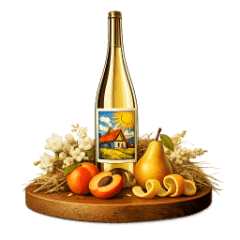
Romanian Feteasca Alba
Gentle and unassuming, this white offers a delicate touch rather than a punch. Feteasca Alba delivers waves of blossoming acacia and ripe orchard fruit, creating a texture that feels like silk sliding over your tongue.
Gentle and unassuming, this white offers a delicate touch rather than a punch. Feteasca Alba delivers waves of blossoming acacia and ripe orchard fruit, creating a texture that feels like silk sliding over your tongue.
Gentle and unassuming, this white offers a delicate touch rather than a punch. Feteasca Alba delivers waves of blossoming acacia and ripe orchard fruit, creating a texture that feels like silk sliding over your tongue.
LATEST REVIEWS