Wine style
Wine style
Kakheti Rkatsiteli Qvevri White
Kakheti Rkatsiteli Qvevri White
Kakheti Rkatsiteli Qvevri White
«
Georgia

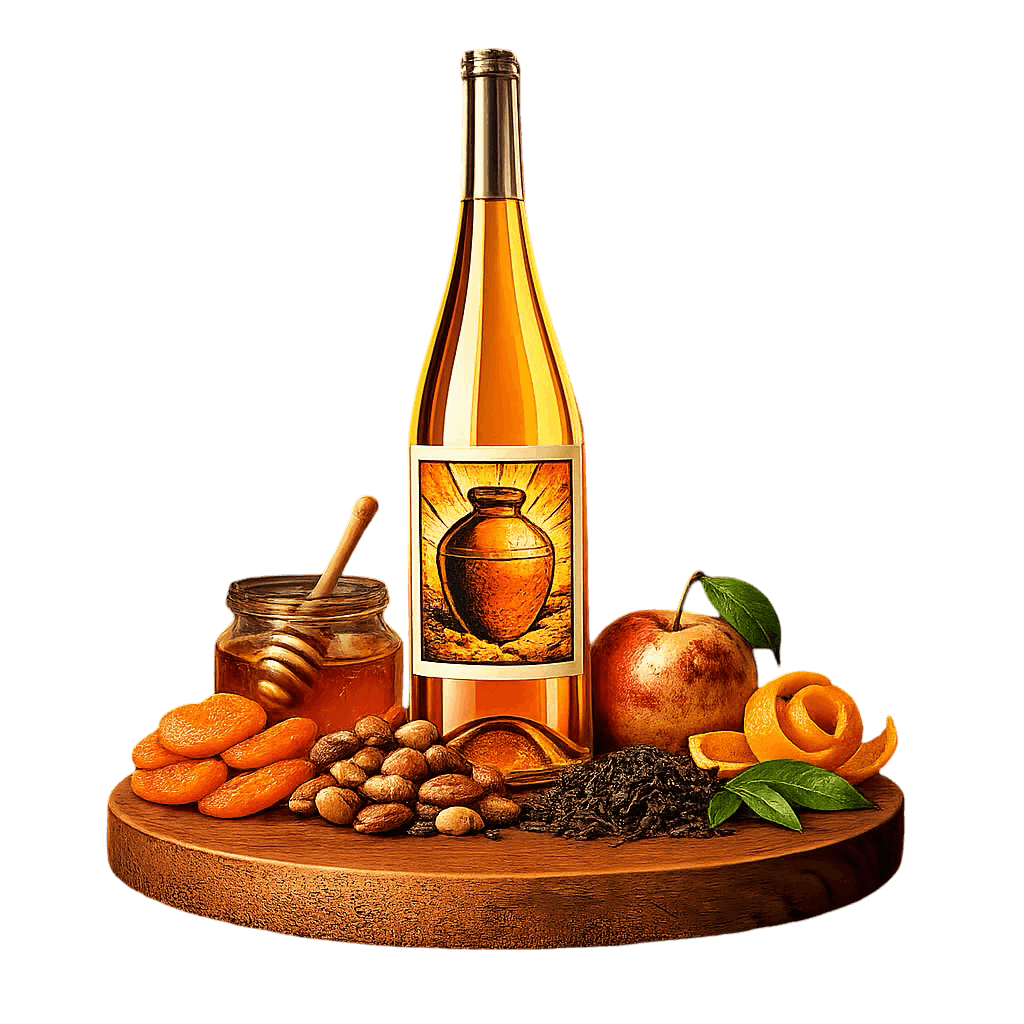
Imagine burying Rkatsiteli underground in clay jars for months until it transforms into a gripping, textural beast. It is white wine made like red wine, resulting in a savory, structured beverage that refuses to be ignored.
Imagine burying Rkatsiteli underground in clay jars for months until it transforms into a gripping, textural beast. It is white wine made like red wine, resulting in a savory, structured beverage that refuses to be ignored.
Imagine burying Rkatsiteli underground in clay jars for months until it transforms into a gripping, textural beast. It is white wine made like red wine, resulting in a savory, structured beverage that refuses to be ignored.
Body
Big & Bold

Tannins
No Resistance
Barely Felt
Pillowy Presence
Serious Grip
The Brick Wall
Acidity
Vibrant Balance

Sugar
Savagely Dry



The story
Ancient roots
Clay magic
Soviet survivor
Georgians have been making wine this way for 8,000 years, long before stainless steel tanks were even a fever dream. By leaving skins and stems in contact with juice inside buried clay vessels called Qvevri, winemakers created a natural preservative system. Rkatsiteli proved perfectly suited for this rugged treatment, evolving from a simple fruit into a complex, oxidative masterpiece that survived Soviet industrialization to reclaim its throne.
Georgians have been making wine this way for 8,000 years, long before stainless steel tanks were even a fever dream. By leaving skins and stems in contact with juice inside buried clay vessels called Qvevri, winemakers created a natural preservative system. Rkatsiteli proved perfectly suited for this rugged treatment, evolving from a simple fruit into a complex, oxidative masterpiece that survived Soviet industrialization to reclaim its throne.
Georgians have been making wine this way for 8,000 years, long before stainless steel tanks were even a fever dream. By leaving skins and stems in contact with juice inside buried clay vessels called Qvevri, winemakers created a natural preservative system. Rkatsiteli proved perfectly suited for this rugged treatment, evolving from a simple fruit into a complex, oxidative masterpiece that survived Soviet industrialization to reclaim its throne.
Why it's special
Oxygen friend
Earth cooling
Brain bender
Modern white wines usually run away from oxygen, but this style embraces it like an old friend. Buried deep in the earth, the temperature stays stable while the porous clay allows tiny amounts of air to soften the tannins. You get the structure and grip of a Cabernet with the flavors of dried fruit and nuts, creating a category-bending experience that confuses your brain but delights your palate.
Modern white wines usually run away from oxygen, but this style embraces it like an old friend. Buried deep in the earth, the temperature stays stable while the porous clay allows tiny amounts of air to soften the tannins. You get the structure and grip of a Cabernet with the flavors of dried fruit and nuts, creating a category-bending experience that confuses your brain but delights your palate.
Modern white wines usually run away from oxygen, but this style embraces it like an old friend. Buried deep in the earth, the temperature stays stable while the porous clay allows tiny amounts of air to soften the tannins. You get the structure and grip of a Cabernet with the flavors of dried fruit and nuts, creating a category-bending experience that confuses your brain but delights your palate.
Who's gonna like it
Beer lovers
Savory fans
History buffs
Do you love craft beer, particularly sour ales or lambics? Perhaps you are a red wine drinker feeling adventurous but scared of weak, watery whites. Drinkers who enjoy savory complexity over fruity sweetness will feel right at home here. Also, anyone obsessed with history or natural wines will appreciate tasting a method that has remained virtually unchanged since the Stone Age. It is not for the faint of heart.
Do you love craft beer, particularly sour ales or lambics? Perhaps you are a red wine drinker feeling adventurous but scared of weak, watery whites. Drinkers who enjoy savory complexity over fruity sweetness will feel right at home here. Also, anyone obsessed with history or natural wines will appreciate tasting a method that has remained virtually unchanged since the Stone Age. It is not for the faint of heart.
Do you love craft beer, particularly sour ales or lambics? Perhaps you are a red wine drinker feeling adventurous but scared of weak, watery whites. Drinkers who enjoy savory complexity over fruity sweetness will feel right at home here. Also, anyone obsessed with history or natural wines will appreciate tasting a method that has remained virtually unchanged since the Stone Age. It is not for the faint of heart.

LATEST REVIEWS