Wine style
Wine style
Chinese Cabernet Sauvignon
Chinese Cabernet Sauvignon
Chinese Cabernet Sauvignon
«
China

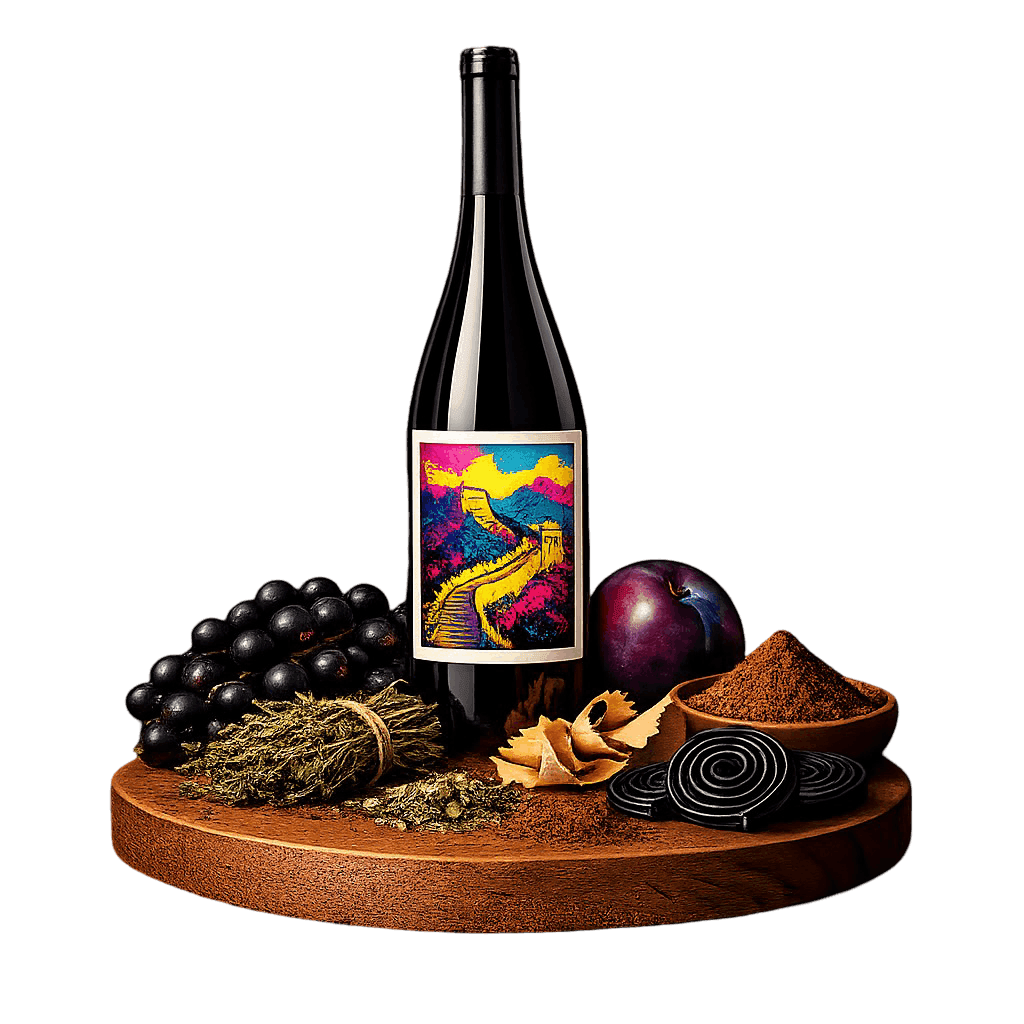
Imagine Bordeaux went on a gap year to the Gobi Desert and came back tougher and wiser. This pour combines classic structure with a distinct herbal edge that screams future superpower of the wine world.
Imagine Bordeaux went on a gap year to the Gobi Desert and came back tougher and wiser. This pour combines classic structure with a distinct herbal edge that screams future superpower of the wine world.
Imagine Bordeaux went on a gap year to the Gobi Desert and came back tougher and wiser. This pour combines classic structure with a distinct herbal edge that screams future superpower of the wine world.
Body
Big & Bold

Tannins
No Resistance
Barely Felt
Pillowy Presence
Serious Grip
The Brick Wall
Acidity
Vibrant Balance

Sugar
Savagely Dry

LEADERS

The story
Government plan
Rapid growth
Buried vines
It started as a government initiative to turn dusty scrubland into lush vineyards, proving that determination can terraform anything. Importing French expertise and cuttings in the 1980s and 90s, China rapidly transformed regions like Ningxia into serious contenders. Massive investment met extreme continental climates, forcing vignerons to bury vines underground every winter just so they survive the freezing cold to produce these structured reds.
It started as a government initiative to turn dusty scrubland into lush vineyards, proving that determination can terraform anything. Importing French expertise and cuttings in the 1980s and 90s, China rapidly transformed regions like Ningxia into serious contenders. Massive investment met extreme continental climates, forcing vignerons to bury vines underground every winter just so they survive the freezing cold to produce these structured reds.
It started as a government initiative to turn dusty scrubland into lush vineyards, proving that determination can terraform anything. Importing French expertise and cuttings in the 1980s and 90s, China rapidly transformed regions like Ningxia into serious contenders. Massive investment met extreme continental climates, forcing vignerons to bury vines underground every winter just so they survive the freezing cold to produce these structured reds.
Why it's special
Buried vines
Arctic winters
Savory herbs
Survival instinct defines every bottle produced here. Because winters drop to arctic temperatures, farmers must painstakingly bury every single vine under soil annually to prevent death by freezing. This labor-intensive process, combined with arid summers and high sunshine hours, creates concentrated fruit with thick skins. The resulting juice balances ripe power with a savory, dusty herbaceousness that you simply cannot find in Napa or Bordeaux.
Survival instinct defines every bottle produced here. Because winters drop to arctic temperatures, farmers must painstakingly bury every single vine under soil annually to prevent death by freezing. This labor-intensive process, combined with arid summers and high sunshine hours, creates concentrated fruit with thick skins. The resulting juice balances ripe power with a savory, dusty herbaceousness that you simply cannot find in Napa or Bordeaux.
Survival instinct defines every bottle produced here. Because winters drop to arctic temperatures, farmers must painstakingly bury every single vine under soil annually to prevent death by freezing. This labor-intensive process, combined with arid summers and high sunshine hours, creates concentrated fruit with thick skins. The resulting juice balances ripe power with a savory, dusty herbaceousness that you simply cannot find in Napa or Bordeaux.
Who's gonna like it
Bordeaux fans
Curious souls
Skeptics
Drinkers who claim they have tasted everything need to grab a glass immediately. If you enjoy the structure of a Left Bank Bordeaux but want the ripe punch of a modern New World red, this hits the sweet spot. It is perfect for skeptics who do not believe Asia makes world-class wine and for curious souls wanting to taste the rapid evolution of a new wine giant.
Drinkers who claim they have tasted everything need to grab a glass immediately. If you enjoy the structure of a Left Bank Bordeaux but want the ripe punch of a modern New World red, this hits the sweet spot. It is perfect for skeptics who do not believe Asia makes world-class wine and for curious souls wanting to taste the rapid evolution of a new wine giant.
Drinkers who claim they have tasted everything need to grab a glass immediately. If you enjoy the structure of a Left Bank Bordeaux but want the ripe punch of a modern New World red, this hits the sweet spot. It is perfect for skeptics who do not believe Asia makes world-class wine and for curious souls wanting to taste the rapid evolution of a new wine giant.
REGIONS

Ningxia
Located on the edge of the Tengger Desert, this area is rapidly transforming from arid wasteland to viticultural wonderland. It is proving that premium wine isn't just a Western game anymore, bringing serious heat to blind tastings globally.
Located on the edge of the Tengger Desert, this area is rapidly transforming from arid wasteland to viticultural wonderland. It is proving that premium wine isn't just a Western game anymore, bringing serious heat to blind tastings globally.

Shandong
Think of this as the granddaddy of Chinese viticulture. While newer regions get the hype, this coastal province churns out massive volumes and fights the humid monsoon battles every single year to keep glasses full.
Think of this as the granddaddy of Chinese viticulture. While newer regions get the hype, this coastal province churns out massive volumes and fights the humid monsoon battles every single year to keep glasses full.
LATEST REVIEWS