«
China

Shandong
Shandong
Shandong
China's Coastal Veteran
Think of this as the granddaddy of Chinese viticulture. While newer regions get the hype, this coastal province churns out massive volumes and fights the humid monsoon battles every single year to keep glasses full.
Think of this as the granddaddy of Chinese viticulture. While newer regions get the hype, this coastal province churns out massive volumes and fights the humid monsoon battles every single year to keep glasses full.
Think of this as the granddaddy of Chinese viticulture. While newer regions get the hype, this coastal province churns out massive volumes and fights the humid monsoon battles every single year to keep glasses full.







Why it's unique
Deep history
Ocean influence
Production powerhouse
History runs deep here. Changyu, the oldest winery in the country, set up shop in Yantai way back in 1892. Unlike the arid interior, this place is defined by the ocean. It creates a fascinating tension between massive commercial production and boutique estates trying to craft world-class bottles amidst the summer rains. It’s the engine room of the national industry.
History runs deep here. Changyu, the oldest winery in the country, set up shop in Yantai way back in 1892. Unlike the arid interior, this place is defined by the ocean. It creates a fascinating tension between massive commercial production and boutique estates trying to craft world-class bottles amidst the summer rains. It’s the engine room of the national industry.
History runs deep here. Changyu, the oldest winery in the country, set up shop in Yantai way back in 1892. Unlike the arid interior, this place is defined by the ocean. It creates a fascinating tension between massive commercial production and boutique estates trying to craft world-class bottles amidst the summer rains. It’s the engine room of the national industry.
Terroir
Maritime climate
Monsoon rains
Disease pressure
Humidity is the uninvited guest that refuses to leave. A maritime climate brings plenty of warmth but also the dreaded East Asian Monsoon, meaning rain during harvest is a constant threat. Viticulturists have to be ninjas here, focusing on drainage and disease management. When the sun shines and the sea breeze hits just right, the vines ripen slowly to retain lovely acidity.
Humidity is the uninvited guest that refuses to leave. A maritime climate brings plenty of warmth but also the dreaded East Asian Monsoon, meaning rain during harvest is a constant threat. Viticulturists have to be ninjas here, focusing on drainage and disease management. When the sun shines and the sea breeze hits just right, the vines ripen slowly to retain lovely acidity.
Humidity is the uninvited guest that refuses to leave. A maritime climate brings plenty of warmth but also the dreaded East Asian Monsoon, meaning rain during harvest is a constant threat. Viticulturists have to be ninjas here, focusing on drainage and disease management. When the sun shines and the sea breeze hits just right, the vines ripen slowly to retain lovely acidity.
You gotta try
Cabernet Gernischt
Spicy reds
Juicy Marselan
Cabernet Gernischt is the local eccentric you need to meet. Genetic testing says it is basically Carmenère, but here it has developed a spicy, red-pepper personality all its own. Don't skip the Marselan either - this cross between Cabernet Sauvignon and Grenache handles the damp weather like a champ, producing juicy, vibrant reds that actually taste like fruit instead of oak chips.
Cabernet Gernischt is the local eccentric you need to meet. Genetic testing says it is basically Carmenère, but here it has developed a spicy, red-pepper personality all its own. Don't skip the Marselan either - this cross between Cabernet Sauvignon and Grenache handles the damp weather like a champ, producing juicy, vibrant reds that actually taste like fruit instead of oak chips.
Cabernet Gernischt is the local eccentric you need to meet. Genetic testing says it is basically Carmenère, but here it has developed a spicy, red-pepper personality all its own. Don't skip the Marselan either - this cross between Cabernet Sauvignon and Grenache handles the damp weather like a champ, producing juicy, vibrant reds that actually taste like fruit instead of oak chips.
LOCAL TALES
The Diplomat's Gamble
The Diplomat's Gamble
The Diplomat's Gamble
Back in 1892, a wealthy diplomat named Zhang Bishi decided China needed its own wine culture. He didn't just plant a few seeds in his backyard - he went all in. Zhang poured a fortune into Yantai, importing hundreds of thousands of vines from Europe and hiring Austrian winemakers to get the job done. Locals probably thought he was insane, watching him try to graft delicate European vines onto wild local roots to survive the pests. But his gamble, the Changyu Pioneer Wine Company, survived wars and revolutions to become a behemoth. It wasn't just a business move - it was a statement that fine wine could belong to the East as much as the West.
Back in 1892, a wealthy diplomat named Zhang Bishi decided China needed its own wine culture. He didn't just plant a few seeds in his backyard - he went all in. Zhang poured a fortune into Yantai, importing hundreds of thousands of vines from Europe and hiring Austrian winemakers to get the job done. Locals probably thought he was insane, watching him try to graft delicate European vines onto wild local roots to survive the pests. But his gamble, the Changyu Pioneer Wine Company, survived wars and revolutions to become a behemoth. It wasn't just a business move - it was a statement that fine wine could belong to the East as much as the West.
Back in 1892, a wealthy diplomat named Zhang Bishi decided China needed its own wine culture. He didn't just plant a few seeds in his backyard - he went all in. Zhang poured a fortune into Yantai, importing hundreds of thousands of vines from Europe and hiring Austrian winemakers to get the job done. Locals probably thought he was insane, watching him try to graft delicate European vines onto wild local roots to survive the pests. But his gamble, the Changyu Pioneer Wine Company, survived wars and revolutions to become a behemoth. It wasn't just a business move - it was a statement that fine wine could belong to the East as much as the West.
The Mystery Grape
The Mystery Grape
The Mystery Grape
For decades, vignerons in Shandong were scratching their heads over a vine they called Cabernet Gernischt. It looked like Cabernet Franc, acted a bit like Merlot, but tasted uniquely spicy. It arrived mixed in with other cuttings from Europe in the late 19th century and just sort of hung around, becoming a signature of the region. Fast forward to modern genetic testing, and the curtain was finally pulled back. It turns out this mystery celebrity is actually Carmenère, the lost grape of Bordeaux that also found a home in Chile. But don't tell the locals it's just a copycat - in this terroir, Gernischt has evolved into something entirely distinct, boasting a pepperiness that pairs perfectly with Shandong cuisine.
For decades, vignerons in Shandong were scratching their heads over a vine they called Cabernet Gernischt. It looked like Cabernet Franc, acted a bit like Merlot, but tasted uniquely spicy. It arrived mixed in with other cuttings from Europe in the late 19th century and just sort of hung around, becoming a signature of the region. Fast forward to modern genetic testing, and the curtain was finally pulled back. It turns out this mystery celebrity is actually Carmenère, the lost grape of Bordeaux that also found a home in Chile. But don't tell the locals it's just a copycat - in this terroir, Gernischt has evolved into something entirely distinct, boasting a pepperiness that pairs perfectly with Shandong cuisine.
For decades, vignerons in Shandong were scratching their heads over a vine they called Cabernet Gernischt. It looked like Cabernet Franc, acted a bit like Merlot, but tasted uniquely spicy. It arrived mixed in with other cuttings from Europe in the late 19th century and just sort of hung around, becoming a signature of the region. Fast forward to modern genetic testing, and the curtain was finally pulled back. It turns out this mystery celebrity is actually Carmenère, the lost grape of Bordeaux that also found a home in Chile. But don't tell the locals it's just a copycat - in this terroir, Gernischt has evolved into something entirely distinct, boasting a pepperiness that pairs perfectly with Shandong cuisine.
Lafite Comes Knocking
Lafite Comes Knocking
Lafite Comes Knocking
You know a region means business when the big guns from France show up with their checkbooks. Domaines Barons de Rothschild, the owners of the legendary Château Lafite, spent years scouring China for the perfect spot to plant their flag. They skipped the dry northwest and settled right here in Penglai. Why? They saw potential in the granite soils and the coastal moderation that others missed. Establishing Domaine de Long Dai wasn't a walk in the park - they had to dig hundreds of soil pits and terrace steep hills by hand. Their arrival validated the entire coast, proving that with enough money and patience, you can make luxury wine even where the monsoon threatens to ruin the party.
You know a region means business when the big guns from France show up with their checkbooks. Domaines Barons de Rothschild, the owners of the legendary Château Lafite, spent years scouring China for the perfect spot to plant their flag. They skipped the dry northwest and settled right here in Penglai. Why? They saw potential in the granite soils and the coastal moderation that others missed. Establishing Domaine de Long Dai wasn't a walk in the park - they had to dig hundreds of soil pits and terrace steep hills by hand. Their arrival validated the entire coast, proving that with enough money and patience, you can make luxury wine even where the monsoon threatens to ruin the party.
You know a region means business when the big guns from France show up with their checkbooks. Domaines Barons de Rothschild, the owners of the legendary Château Lafite, spent years scouring China for the perfect spot to plant their flag. They skipped the dry northwest and settled right here in Penglai. Why? They saw potential in the granite soils and the coastal moderation that others missed. Establishing Domaine de Long Dai wasn't a walk in the park - they had to dig hundreds of soil pits and terrace steep hills by hand. Their arrival validated the entire coast, proving that with enough money and patience, you can make luxury wine even where the monsoon threatens to ruin the party.
LOCAL WINE STYLES
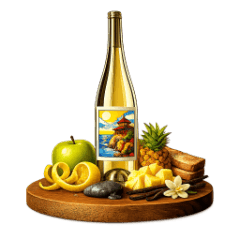
Shandong Chardonnay
Located on the misty coast, Shandong produces crisp whites that rival famous regions. It is like Bordeaux went on an Asian vacation and decided to stay forever because the local seafood was just too good to leave behind.
Located on the misty coast, Shandong produces crisp whites that rival famous regions. It is like Bordeaux went on an Asian vacation and decided to stay forever because the local seafood was just too good to leave behind.
Located on the misty coast, Shandong produces crisp whites that rival famous regions. It is like Bordeaux went on an Asian vacation and decided to stay forever because the local seafood was just too good to leave behind.

Shandong Riesling
Imagine biting into a lime while standing on a granite cliff on the eastern coast of China. This wine offers that exact electric thrill, balancing sharp acidity with just enough fruit to keep your tastebuds dancing happily.
Imagine biting into a lime while standing on a granite cliff on the eastern coast of China. This wine offers that exact electric thrill, balancing sharp acidity with just enough fruit to keep your tastebuds dancing happily.
Imagine biting into a lime while standing on a granite cliff on the eastern coast of China. This wine offers that exact electric thrill, balancing sharp acidity with just enough fruit to keep your tastebuds dancing happily.
LATEST REVIEWS