Wine style
Wine style
Cappadocia Emir
Cappadocia Emir
Cappadocia Emir
«
Turkey

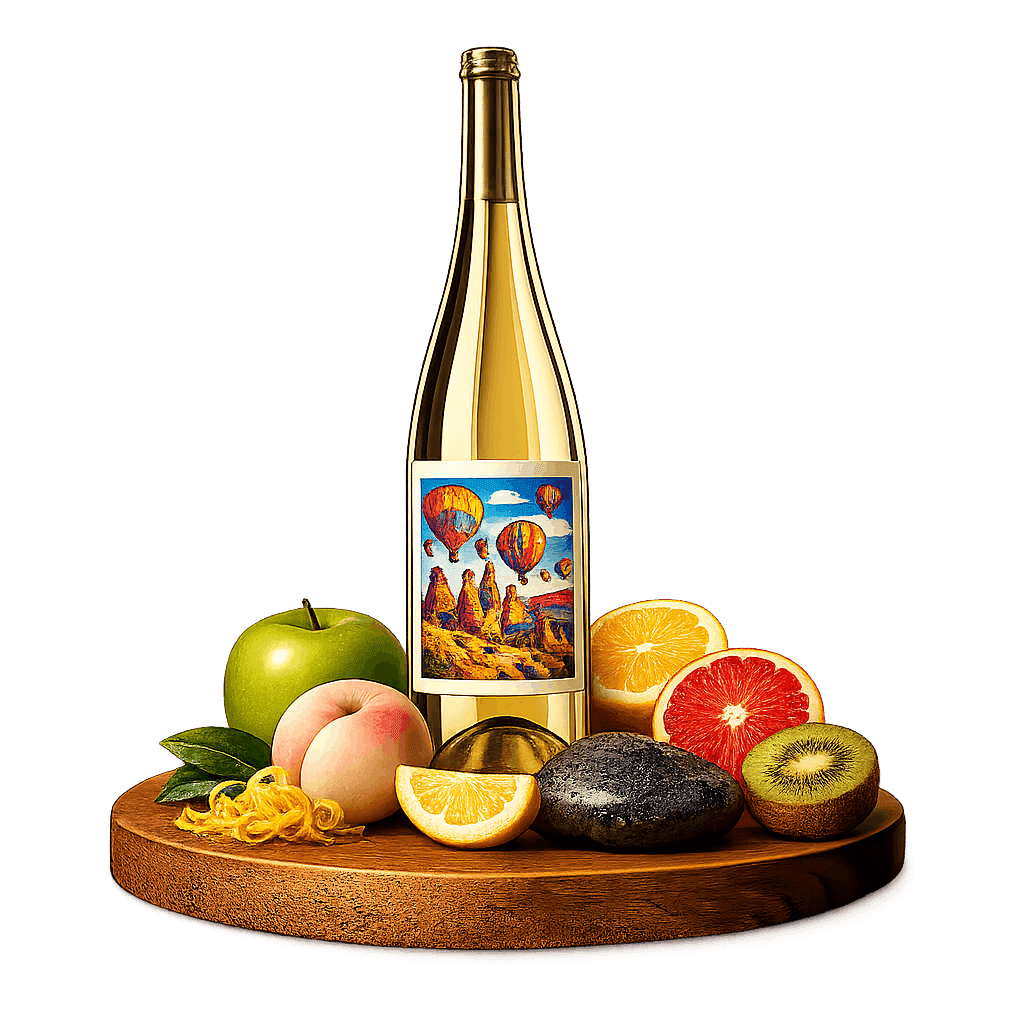
Think of biting into a green apple while standing on a volcano. This white is fierce, mineral-driven, and relentlessly fresh, channeling the stark, surreal landscapes of its home into pure liquid energy for your glass.
Think of biting into a green apple while standing on a volcano. This white is fierce, mineral-driven, and relentlessly fresh, channeling the stark, surreal landscapes of its home into pure liquid energy for your glass.
Think of biting into a green apple while standing on a volcano. This white is fierce, mineral-driven, and relentlessly fresh, channeling the stark, surreal landscapes of its home into pure liquid energy for your glass.
Body
Soft Muscle

Tannins
No Resistance
Barely Felt
Pillowy Presence
Serious Grip
The Brick Wall

Acidity
Sour As Heck

Sugar
Savagely Dry
The story
Ancient roots
Volcanic survival
Noble name
Cappadocia isn't just for hot air balloons, it is the ancestral home of this noble beverage. For centuries, locals have cultivated Emir in volcanic tuff soils where phylloxera simply cannot survive. Its name translates to 'ruler,' implying that Ottoman princes likely demanded this specific crispness at their banquets to cut through rich, fatty feasts.
Cappadocia isn't just for hot air balloons, it is the ancestral home of this noble beverage. For centuries, locals have cultivated Emir in volcanic tuff soils where phylloxera simply cannot survive. Its name translates to 'ruler,' implying that Ottoman princes likely demanded this specific crispness at their banquets to cut through rich, fatty feasts.
Cappadocia isn't just for hot air balloons, it is the ancestral home of this noble beverage. For centuries, locals have cultivated Emir in volcanic tuff soils where phylloxera simply cannot survive. Its name translates to 'ruler,' implying that Ottoman princes likely demanded this specific crispness at their banquets to cut through rich, fatty feasts.
Why it's special
Moon soil
Razor acidity
Liquid geology
Imagine growing in soil that looks like actual moon dust. That volcanic tuff gives Emir a distinct, gunflint minerality you rarely find elsewhere. It retains razor-sharp acidity even during hot summers because the vines burrow deep in the porous tuff. It is basically drinking geology that has been filtered through a very stubborn, resilient fruit.
Imagine growing in soil that looks like actual moon dust. That volcanic tuff gives Emir a distinct, gunflint minerality you rarely find elsewhere. It retains razor-sharp acidity even during hot summers because the vines burrow deep in the porous tuff. It is basically drinking geology that has been filtered through a very stubborn, resilient fruit.
Imagine growing in soil that looks like actual moon dust. That volcanic tuff gives Emir a distinct, gunflint minerality you rarely find elsewhere. It retains razor-sharp acidity even during hot summers because the vines burrow deep in the porous tuff. It is basically drinking geology that has been filtered through a very stubborn, resilient fruit.
Who's gonna like it
Acid hounds
Chablis lovers
Meze pair
Fans of Chablis or Assyrtiko, get in here immediately. You need this if you crave wines that slap your palate awake rather than cuddling it. It suits drinkers who believe lemon juice is a beverage and those looking for a salty, stony finish to pair with fried calamari or a massive plate of meze.
Fans of Chablis or Assyrtiko, get in here immediately. You need this if you crave wines that slap your palate awake rather than cuddling it. It suits drinkers who believe lemon juice is a beverage and those looking for a salty, stony finish to pair with fried calamari or a massive plate of meze.
Fans of Chablis or Assyrtiko, get in here immediately. You need this if you crave wines that slap your palate awake rather than cuddling it. It suits drinkers who believe lemon juice is a beverage and those looking for a salty, stony finish to pair with fried calamari or a massive plate of meze.
LATEST REVIEWS