«
Maipo Valley
,
Chile

Puente Alto
Chile's Royal Court
This isn't just a vineyard area, it's the holy grail of Chilean Cabernet Sauvignon. Situated right where the city meets the Andes, it produces the most expensive and celebrated bottles in the entire country.
This isn't just a vineyard area, it's the holy grail of Chilean Cabernet Sauvignon. Situated right where the city meets the Andes, it produces the most expensive and celebrated bottles in the entire country.
This isn't just a vineyard area, it's the holy grail of Chilean Cabernet Sauvignon. Situated right where the city meets the Andes, it produces the most expensive and celebrated bottles in the entire country.



Taste profile
Polished Power
Graphite Notes
Age Worthy
Prepare your palate for power and elegance shaking hands. Cabernet Sauvignon here develops a specific mineral streak thanks to the rocky soil, mixing with cassis, graphite, and cedar. It is polished, age-worthy, and often tastes like money. Winemakers treat these grapes like Fabergé eggs, ensuring silky tannins and complex finishes that go on forever without ever feeling flabby or overcooked.
Prepare your palate for power and elegance shaking hands. Cabernet Sauvignon here develops a specific mineral streak thanks to the rocky soil, mixing with cassis, graphite, and cedar. It is polished, age-worthy, and often tastes like money. Winemakers treat these grapes like Fabergé eggs, ensuring silky tannins and complex finishes that go on forever without ever feeling flabby or overcooked.
Prepare your palate for power and elegance shaking hands. Cabernet Sauvignon here develops a specific mineral streak thanks to the rocky soil, mixing with cassis, graphite, and cedar. It is polished, age-worthy, and often tastes like money. Winemakers treat these grapes like Fabergé eggs, ensuring silky tannins and complex finishes that go on forever without ever feeling flabby or overcooked.
The vibe
Urban Edge
High Stakes
Prestigious Dust
Imagine a high-stakes poker game played in a dusty, rocky field. It is arguably the most prestigious terroir in Chile, yet it sits surprisingly close to urban hustle. You might hear a city bus in the distance while standing in a vineyard that produces hundred-dollar bottles. It feels serious, historic, and slightly incongruous with the suburban sprawl nearby.
Imagine a high-stakes poker game played in a dusty, rocky field. It is arguably the most prestigious terroir in Chile, yet it sits surprisingly close to urban hustle. You might hear a city bus in the distance while standing in a vineyard that produces hundred-dollar bottles. It feels serious, historic, and slightly incongruous with the suburban sprawl nearby.
Imagine a high-stakes poker game played in a dusty, rocky field. It is arguably the most prestigious terroir in Chile, yet it sits surprisingly close to urban hustle. You might hear a city bus in the distance while standing in a vineyard that produces hundred-dollar bottles. It feels serious, historic, and slightly incongruous with the suburban sprawl nearby.
Who's who
Concha Toro
Almaviva Icon
Viñedo Chadwick
Heavy hitters only need apply here. Concha y Toro rules the roost with their iconic Don Melchor, while Viñedo Chadwick and Almaviva (the Baron Philippe de Rothschild joint venture) set the gold standard for luxury blends. If you are looking for hidden gems or scrappy upstarts, you are in the wrong neighborhood - this is land of the titans.
Heavy hitters only need apply here. Concha y Toro rules the roost with their iconic Don Melchor, while Viñedo Chadwick and Almaviva (the Baron Philippe de Rothschild joint venture) set the gold standard for luxury blends. If you are looking for hidden gems or scrappy upstarts, you are in the wrong neighborhood - this is land of the titans.
Heavy hitters only need apply here. Concha y Toro rules the roost with their iconic Don Melchor, while Viñedo Chadwick and Almaviva (the Baron Philippe de Rothschild joint venture) set the gold standard for luxury blends. If you are looking for hidden gems or scrappy upstarts, you are in the wrong neighborhood - this is land of the titans.
LOCAL TALES
Polo Ponies to Cabernet Glory
Polo Ponies to Cabernet Glory
Polo Ponies to Cabernet Glory
There is a reason Viñedo Chadwick tastes so distinct. Decades ago, this land wasn't growing Cabernet Sauvignon - it was growing grass for polo ponies. Alfonso Chadwick was a polo fanatic, and his private field was the stuff of legend. When his son Eduardo took over, he realized the distinct rocky soil beneath those hoofprints was actually gold dust for wine. He bravely ripped up the goalposts and planted vines. Critics thought he was mad to destroy a beloved sports field, but when the 2000 vintage beat top Bordeaux wines in the famous Berlin Tasting, nobody missed the polo matches anymore. It proved Chilean terroir could stand toe-to-toe with French giants.
There is a reason Viñedo Chadwick tastes so distinct. Decades ago, this land wasn't growing Cabernet Sauvignon - it was growing grass for polo ponies. Alfonso Chadwick was a polo fanatic, and his private field was the stuff of legend. When his son Eduardo took over, he realized the distinct rocky soil beneath those hoofprints was actually gold dust for wine. He bravely ripped up the goalposts and planted vines. Critics thought he was mad to destroy a beloved sports field, but when the 2000 vintage beat top Bordeaux wines in the famous Berlin Tasting, nobody missed the polo matches anymore. It proved Chilean terroir could stand toe-to-toe with French giants.
The French Connection
The French Connection
The French Connection
It was the wedding of the century, at least for oenophiles. In the late nineties, the Baroness Philippine de Rothschild looked at this rocky patch of dirt and saw the potential for a South American version of her family's legendary Mouton Rothschild. She teamed up with local heavyweights Concha y Toro to create Almaviva, blending French winemaking know-how with Chilean sunshine. They built a bodega that looks more like a Bond villain's lair than a farm, complete with indigenous Mapuche symbolism. It wasn't just a business deal - it was the moment the world stopped looking at Chile as a bargain bin and started taking it seriously as a fine wine destination.
It was the wedding of the century, at least for oenophiles. In the late nineties, the Baroness Philippine de Rothschild looked at this rocky patch of dirt and saw the potential for a South American version of her family's legendary Mouton Rothschild. She teamed up with local heavyweights Concha y Toro to create Almaviva, blending French winemaking know-how with Chilean sunshine. They built a bodega that looks more like a Bond villain's lair than a farm, complete with indigenous Mapuche symbolism. It wasn't just a business deal - it was the moment the world stopped looking at Chile as a bargain bin and started taking it seriously as a fine wine destination.
Digging for Gold
Digging for Gold
Digging for Gold
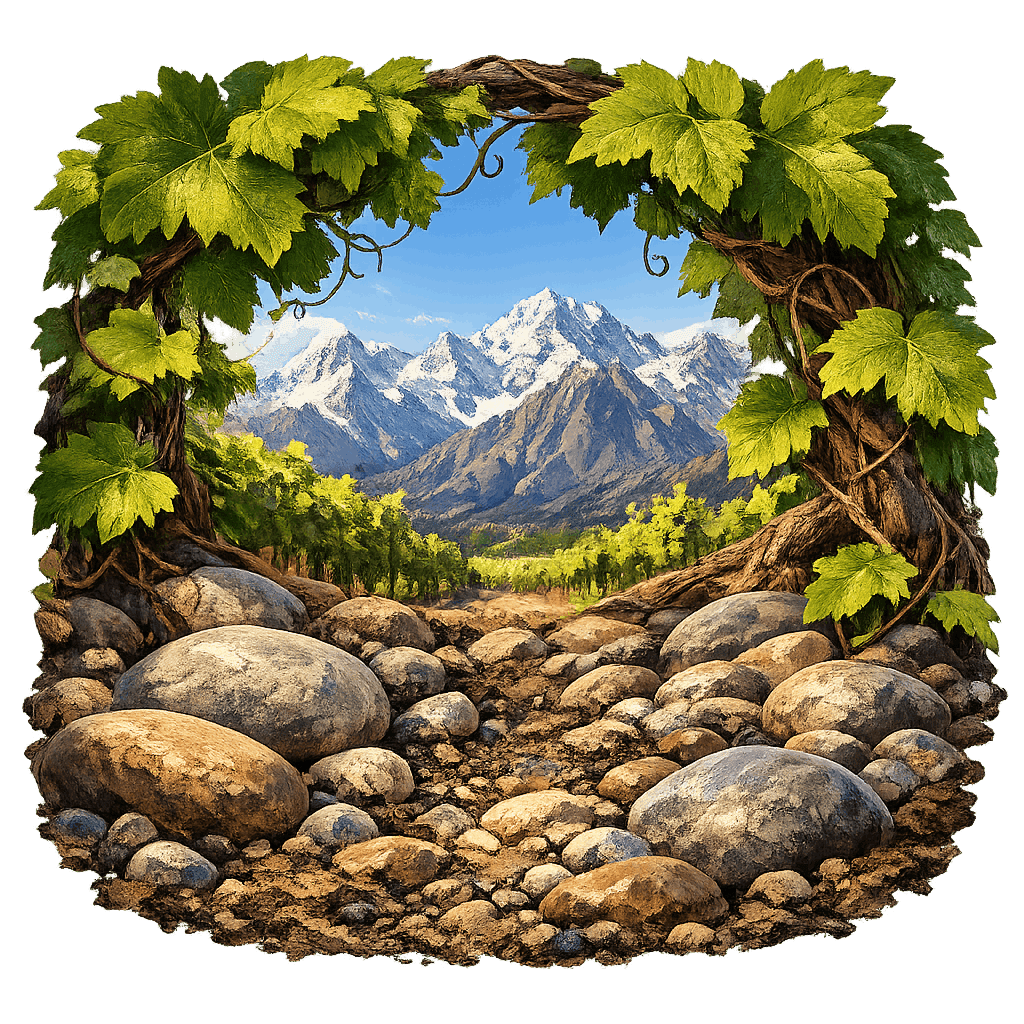
If you try to dig a hole in Puente Alto, bring a pickaxe and a lot of patience. The ground here is barely soil at all. It is an ancient alluvial terrace of the Maipo River, packed tight with round stones that look like oversized potatoes made of granite. These rocks are the secret weapon. They drain water instantly, forcing roots to dig deep for survival, and they radiate heat at night, keeping the grapes cozy when temperatures drop off the Andes. It is a miserable place for a vegetable garden but absolute paradise for Cabernet Sauvignon. The struggle makes the vines stronger, concentrating flavors until they taste intense enough to justify the hefty price tags.
If you try to dig a hole in Puente Alto, bring a pickaxe and a lot of patience. The ground here is barely soil at all. It is an ancient alluvial terrace of the Maipo River, packed tight with round stones that look like oversized potatoes made of granite. These rocks are the secret weapon. They drain water instantly, forcing roots to dig deep for survival, and they radiate heat at night, keeping the grapes cozy when temperatures drop off the Andes. It is a miserable place for a vegetable garden but absolute paradise for Cabernet Sauvignon. The struggle makes the vines stronger, concentrating flavors until they taste intense enough to justify the hefty price tags.
LOCAL WINE STYLES
Chilean Cabernet Sauvignon
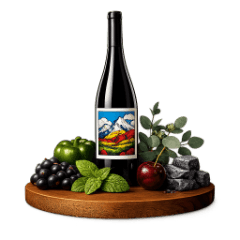
Imagine sipping a glass of bold dark fruit while standing in a eucalyptus forest. It brings serious structure without the hefty price tag found in Napa, mixing savory green pepper notes with ripe blackcurrants effortlessly.
Imagine sipping a glass of bold dark fruit while standing in a eucalyptus forest. It brings serious structure without the hefty price tag found in Napa, mixing savory green pepper notes with ripe blackcurrants effortlessly.
Chilean Carménère
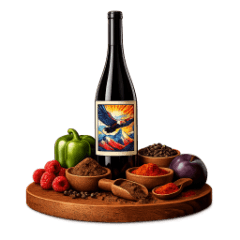
Once thought extinct in Europe, this red found a secret hideout in South America. It is famous for mixing savory herbal notes with plush red fruit, making it the ultimate barbecue wingman for veggies and meats alike.
Once thought extinct in Europe, this red found a secret hideout in South America. It is famous for mixing savory herbal notes with plush red fruit, making it the ultimate barbecue wingman for veggies and meats alike.
LATEST REVIEWS