«
Languedoc-Roussillon
,
France
Fitou
Rugged Red Duo
France's first red-wine appellation in the Languedoc has a serious identity crisis, but in a good way. It is geographically sliced in two, offering distinct coastal breezes or mountain herbs, yet remains united by hefty Carignan.
France's first red-wine appellation in the Languedoc has a serious identity crisis, but in a good way. It is geographically sliced in two, offering distinct coastal breezes or mountain herbs, yet remains united by hefty Carignan.
France's first red-wine appellation in the Languedoc has a serious identity crisis, but in a good way. It is geographically sliced in two, offering distinct coastal breezes or mountain herbs, yet remains united by hefty Carignan.





Taste profile
Herbal punch
Dark fruit
Savory leather
Expect a punch of wild herbs and dark fruit that feels like a hike through the garrigue. Carignan dominates here, bringing structured tannins and savory leather notes, while Grenache adds a splash of strawberry jam warmth. Coastal versions are slightly smoother and brinier, whereas the inland mountain wines offer more grip and intense minerality. It is basically the liquid equivalent of a hearty stew by a campfire.
Expect a punch of wild herbs and dark fruit that feels like a hike through the garrigue. Carignan dominates here, bringing structured tannins and savory leather notes, while Grenache adds a splash of strawberry jam warmth. Coastal versions are slightly smoother and brinier, whereas the inland mountain wines offer more grip and intense minerality. It is basically the liquid equivalent of a hearty stew by a campfire.
Expect a punch of wild herbs and dark fruit that feels like a hike through the garrigue. Carignan dominates here, bringing structured tannins and savory leather notes, while Grenache adds a splash of strawberry jam warmth. Coastal versions are slightly smoother and brinier, whereas the inland mountain wines offer more grip and intense minerality. It is basically the liquid equivalent of a hearty stew by a campfire.
The vibe
Split geography
Windy Tramontane
Rugged terrain
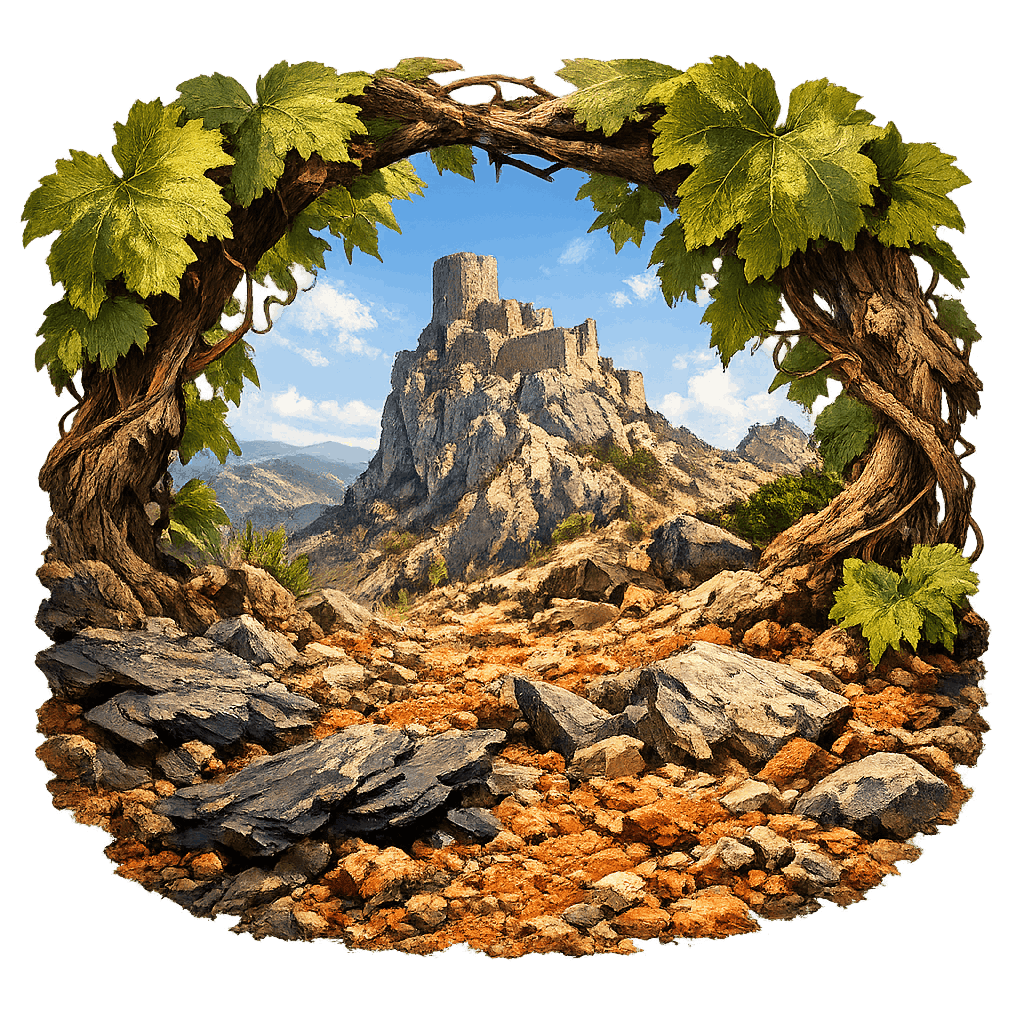
This place is literally torn apart. You have the clay-limestone soils hugging the Mediterranean ponds where windsurfers hang out, and then a totally separate mountainous zone inland where wild boars roam. It is hot, dry, and incredibly windy thanks to the Tramontane, which acts like a giant hair dryer keeping the vines disease-free. It feels ancient, rugged, and untamed, much like the locals.
This place is literally torn apart. You have the clay-limestone soils hugging the Mediterranean ponds where windsurfers hang out, and then a totally separate mountainous zone inland where wild boars roam. It is hot, dry, and incredibly windy thanks to the Tramontane, which acts like a giant hair dryer keeping the vines disease-free. It feels ancient, rugged, and untamed, much like the locals.
This place is literally torn apart. You have the clay-limestone soils hugging the Mediterranean ponds where windsurfers hang out, and then a totally separate mountainous zone inland where wild boars roam. It is hot, dry, and incredibly windy thanks to the Tramontane, which acts like a giant hair dryer keeping the vines disease-free. It feels ancient, rugged, and untamed, much like the locals.
Who's who
Reliable co-ops
Organic artisans
Value aging
While historic cooperatives like Mont Tauch still pump out reliable juice, the real excitement lies with individual domains pushing organic farming. Look for superstars like Château Champ des Sœurs who are redefining elegance near the sea, or Mas des Caprices for biodynamic brilliance. Winemakers here are shedding the rustic bulk-wine reputation and proving they can make sophisticated bottles that age beautifully without costing a fortune.
While historic cooperatives like Mont Tauch still pump out reliable juice, the real excitement lies with individual domains pushing organic farming. Look for superstars like Château Champ des Sœurs who are redefining elegance near the sea, or Mas des Caprices for biodynamic brilliance. Winemakers here are shedding the rustic bulk-wine reputation and proving they can make sophisticated bottles that age beautifully without costing a fortune.
While historic cooperatives like Mont Tauch still pump out reliable juice, the real excitement lies with individual domains pushing organic farming. Look for superstars like Château Champ des Sœurs who are redefining elegance near the sea, or Mas des Caprices for biodynamic brilliance. Winemakers here are shedding the rustic bulk-wine reputation and proving they can make sophisticated bottles that age beautifully without costing a fortune.
LOCAL TALES
The Pioneer of 1948
The Pioneer of 1948
The Pioneer of 1948
Back in 1948, while the rest of the Languedoc was happily drowning Europe in cheap table wine, Fitou decided it had standards. It became the very first appellation in the entire region to gain AOC status for its red wines. This was a massive deal because the neighbors were focused on quantity over quality. The locals realized their Carignan wasn't just filler - it was gold. They drew lines around the best plots near the sea and the mountains, excluding the flat plains in between. That bold move set the stage for the entire quality revolution in the south, proving that these sun-baked hills could produce something worthy of a tablecloth and a proper steak.
Back in 1948, while the rest of the Languedoc was happily drowning Europe in cheap table wine, Fitou decided it had standards. It became the very first appellation in the entire region to gain AOC status for its red wines. This was a massive deal because the neighbors were focused on quantity over quality. The locals realized their Carignan wasn't just filler - it was gold. They drew lines around the best plots near the sea and the mountains, excluding the flat plains in between. That bold move set the stage for the entire quality revolution in the south, proving that these sun-baked hills could produce something worthy of a tablecloth and a proper steak.
A Tale of Two Terroirs
A Tale of Two Terroirs
A Tale of Two Terroirs
If you look at a map, you might think the cartographer had too much Grenache. Fitou is not one solid block of land but two separate islands floating within the massive Corbières region. There is Fitou Maritime, chilling by the saltwater lagoons with flamingos, and Fitou Montagneux, sitting high up in the rocky schist hills about twenty miles inland. To drive from one to the other, you have to leave the appellation and re-enter it. This geographical divorce creates a fun rivalry where winemakers argue over whose terroir is superior. The coastal crew claims finesse and salinity, while the mountain folk brag about structure and ageability. Honestly, the winner is usually whoever has the corkscrew.
If you look at a map, you might think the cartographer had too much Grenache. Fitou is not one solid block of land but two separate islands floating within the massive Corbières region. There is Fitou Maritime, chilling by the saltwater lagoons with flamingos, and Fitou Montagneux, sitting high up in the rocky schist hills about twenty miles inland. To drive from one to the other, you have to leave the appellation and re-enter it. This geographical divorce creates a fun rivalry where winemakers argue over whose terroir is superior. The coastal crew claims finesse and salinity, while the mountain folk brag about structure and ageability. Honestly, the winner is usually whoever has the corkscrew.
Revenge of the Carignan
Revenge of the Carignan
Revenge of the Carignan
For decades, Carignan was the ugly duckling of French viticulture, accused of being too rustic and high-yielding. But here, this grape is treated like royalty. We are talking about gnarled, ancient stumps that look like bonsai trees from a horror movie, some over a hundred years old. These elderly vines produce tiny amounts of concentrated juice that tastes like blackberries rolled in crushed rocks. While other regions ripped them out to plant international crowd-pleasers, this region doubled down. Today, young winemakers are fighting to buy these old plots because they realize that with a little love and lower yields, Carignan transforms from a workhorse into a thoroughbred racehorse.
For decades, Carignan was the ugly duckling of French viticulture, accused of being too rustic and high-yielding. But here, this grape is treated like royalty. We are talking about gnarled, ancient stumps that look like bonsai trees from a horror movie, some over a hundred years old. These elderly vines produce tiny amounts of concentrated juice that tastes like blackberries rolled in crushed rocks. While other regions ripped them out to plant international crowd-pleasers, this region doubled down. Today, young winemakers are fighting to buy these old plots because they realize that with a little love and lower yields, Carignan transforms from a workhorse into a thoroughbred racehorse.
LATEST REVIEWS