«
Russia

Volgograd Oblast
Volgograd Oblast
Volgograd Oblast
Extreme Steppe Survivors
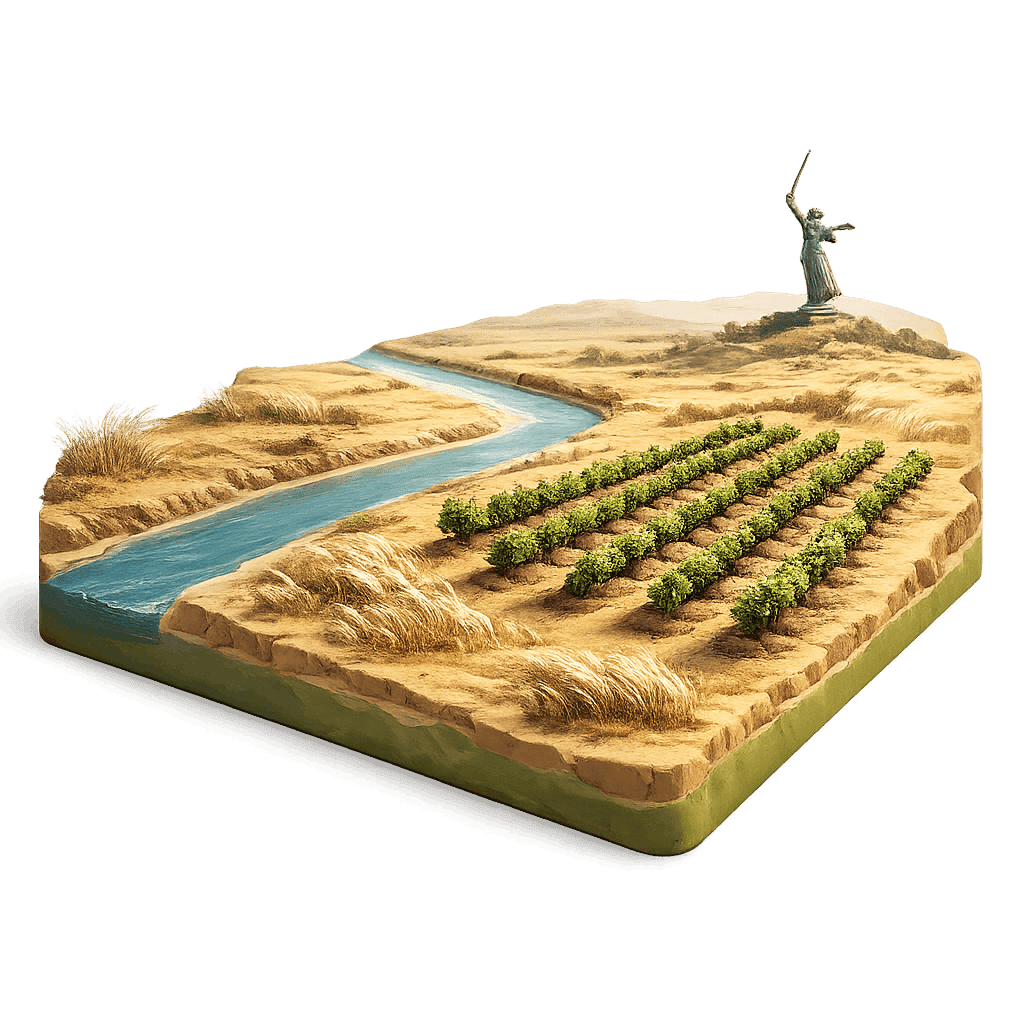
Imagine vines fighting for survival against polar winds and desert heat. This place defines heroic viticulture, sitting right on the edge of where winemaking is technically possible, yet producing bottles that truly stun.
Imagine vines fighting for survival against polar winds and desert heat. This place defines heroic viticulture, sitting right on the edge of where winemaking is technically possible, yet producing bottles that truly stun.
Imagine vines fighting for survival against polar winds and desert heat. This place defines heroic viticulture, sitting right on the edge of where winemaking is technically possible, yet producing bottles that truly stun.
Why it's unique
Northern Limit
Buried Vines
Cossack Heritage
It is the northern outpost of Russian winemaking, a place where nature constantly tries to kill the vineyard. Farmers here must bury everything underground every winter to protect against lethal frosts, a labor-intensive practice that screams dedication. While the south gets the glory, this area quietly preserves ancient Cossack traditions and indigenous wonders found nowhere else.
It is the northern outpost of Russian winemaking, a place where nature constantly tries to kill the vineyard. Farmers here must bury everything underground every winter to protect against lethal frosts, a labor-intensive practice that screams dedication. While the south gets the glory, this area quietly preserves ancient Cossack traditions and indigenous wonders found nowhere else.
It is the northern outpost of Russian winemaking, a place where nature constantly tries to kill the vineyard. Farmers here must bury everything underground every winter to protect against lethal frosts, a labor-intensive practice that screams dedication. While the south gets the glory, this area quietly preserves ancient Cossack traditions and indigenous wonders found nowhere else.
Terroir
Extreme Contrast
Volga Influence
Chestnut Soils
Drastic temperature swings define this landscape. Winters drop to bone-chilling lows, necessitating the burial of wood, while summers bring baking heat that ripens fruit perfectly. The Volga river provides a crucial moderating influence, creating a microclimate that prevents total disaster. Soils here are light and chestnut-colored, forcing roots deep and resulting in wines with intense acidity and surprisingly high sugar accumulation.
Drastic temperature swings define this landscape. Winters drop to bone-chilling lows, necessitating the burial of wood, while summers bring baking heat that ripens fruit perfectly. The Volga river provides a crucial moderating influence, creating a microclimate that prevents total disaster. Soils here are light and chestnut-colored, forcing roots deep and resulting in wines with intense acidity and surprisingly high sugar accumulation.
Drastic temperature swings define this landscape. Winters drop to bone-chilling lows, necessitating the burial of wood, while summers bring baking heat that ripens fruit perfectly. The Volga river provides a crucial moderating influence, creating a microclimate that prevents total disaster. Soils here are light and chestnut-colored, forcing roots deep and resulting in wines with intense acidity and surprisingly high sugar accumulation.
You gotta try
Rare Marinovsky
Crisp Riesling
Local Bubbles
Taste anything made from Marinovsky immediately. This rare local treasure delivers deep, berry-rich reds that feel like a warm hug in a blizzard. If whites are your jam, hunt down a crisp Riesling, which retains razor-sharp acidity thanks to those cold nights. Also, sparklers here are gaining serious traction, offering a bubbly explosion of freshness that cuts through rich, oily foods.
Taste anything made from Marinovsky immediately. This rare local treasure delivers deep, berry-rich reds that feel like a warm hug in a blizzard. If whites are your jam, hunt down a crisp Riesling, which retains razor-sharp acidity thanks to those cold nights. Also, sparklers here are gaining serious traction, offering a bubbly explosion of freshness that cuts through rich, oily foods.
Taste anything made from Marinovsky immediately. This rare local treasure delivers deep, berry-rich reds that feel like a warm hug in a blizzard. If whites are your jam, hunt down a crisp Riesling, which retains razor-sharp acidity thanks to those cold nights. Also, sparklers here are gaining serious traction, offering a bubbly explosion of freshness that cuts through rich, oily foods.
LOCAL TALES
The Mustard Capital's Secret
The Mustard Capital's Secret
The Mustard Capital's Secret
Back in the 18th century, Catherine the Great invited Germans to settle the Volga banks, establishing the colony of Sarepta. While they became world-famous for their mustard - seriously, it is legendary stuff - they also brought serious brewing and winemaking skills to the table. They realized quickly that the wild steppe was not exactly the Rhineland. Instead of giving up when winter turned the region into an ice block, they adapted, planting resilient crops and fermenting whatever grew. Today’s winemakers are the spiritual successors of those stubborn colonists, proving that with enough grit and perhaps enough spicy mustard to keep you warm, you can farm just about anything here.
Back in the 18th century, Catherine the Great invited Germans to settle the Volga banks, establishing the colony of Sarepta. While they became world-famous for their mustard - seriously, it is legendary stuff - they also brought serious brewing and winemaking skills to the table. They realized quickly that the wild steppe was not exactly the Rhineland. Instead of giving up when winter turned the region into an ice block, they adapted, planting resilient crops and fermenting whatever grew. Today’s winemakers are the spiritual successors of those stubborn colonists, proving that with enough grit and perhaps enough spicy mustard to keep you warm, you can farm just about anything here.
Back in the 18th century, Catherine the Great invited Germans to settle the Volga banks, establishing the colony of Sarepta. While they became world-famous for their mustard - seriously, it is legendary stuff - they also brought serious brewing and winemaking skills to the table. They realized quickly that the wild steppe was not exactly the Rhineland. Instead of giving up when winter turned the region into an ice block, they adapted, planting resilient crops and fermenting whatever grew. Today’s winemakers are the spiritual successors of those stubborn colonists, proving that with enough grit and perhaps enough spicy mustard to keep you warm, you can farm just about anything here.
The Great Winter Burial
The Great Winter Burial
The Great Winter Burial
Imagine having to tuck your children into bed every winter, but your children are thousands of woody plants and the bed is a trench covered in dirt. That is the reality here. Fame in this region comes from the sheer stubbornness of "ukryvnoy" viticulture. Every autumn, right before the frost hits, teams rush to detach vines from their trellises and bury them deep under the soil to insulate them from temperatures that can snap wood like a dry twig. It is backbreaking work that doubles the labor cost, but when spring arrives and they exhume the plants, the resulting fruit has a character forged in absolute survival.
Imagine having to tuck your children into bed every winter, but your children are thousands of woody plants and the bed is a trench covered in dirt. That is the reality here. Fame in this region comes from the sheer stubbornness of "ukryvnoy" viticulture. Every autumn, right before the frost hits, teams rush to detach vines from their trellises and bury them deep under the soil to insulate them from temperatures that can snap wood like a dry twig. It is backbreaking work that doubles the labor cost, but when spring arrives and they exhume the plants, the resulting fruit has a character forged in absolute survival.
Imagine having to tuck your children into bed every winter, but your children are thousands of woody plants and the bed is a trench covered in dirt. That is the reality here. Fame in this region comes from the sheer stubbornness of "ukryvnoy" viticulture. Every autumn, right before the frost hits, teams rush to detach vines from their trellises and bury them deep under the soil to insulate them from temperatures that can snap wood like a dry twig. It is backbreaking work that doubles the labor cost, but when spring arrives and they exhume the plants, the resulting fruit has a character forged in absolute survival.
A Cossack Toast to Survival
A Cossack Toast to Survival
A Cossack Toast to Survival
Before modern stainless steel tanks arrived, the Don Cossacks ruled these lands and made wine their own way. They were not using refractometers or lab yeast, they were fermenting grapes in huge pits or wooden barrels, often letting the juice sit on the skins until it was dark as ink. They favored indigenous survivors like Tsimlyansky Black because these plants could take a beating from the elements. Drinking these wines was a rite of passage, a toast to surviving another battle or another winter. Modern producers are now dusting off these old manuals, reviving ancient techniques to create wines that taste less like fruit juice and more like history in a glass.
Before modern stainless steel tanks arrived, the Don Cossacks ruled these lands and made wine their own way. They were not using refractometers or lab yeast, they were fermenting grapes in huge pits or wooden barrels, often letting the juice sit on the skins until it was dark as ink. They favored indigenous survivors like Tsimlyansky Black because these plants could take a beating from the elements. Drinking these wines was a rite of passage, a toast to surviving another battle or another winter. Modern producers are now dusting off these old manuals, reviving ancient techniques to create wines that taste less like fruit juice and more like history in a glass.
Before modern stainless steel tanks arrived, the Don Cossacks ruled these lands and made wine their own way. They were not using refractometers or lab yeast, they were fermenting grapes in huge pits or wooden barrels, often letting the juice sit on the skins until it was dark as ink. They favored indigenous survivors like Tsimlyansky Black because these plants could take a beating from the elements. Drinking these wines was a rite of passage, a toast to surviving another battle or another winter. Modern producers are now dusting off these old manuals, reviving ancient techniques to create wines that taste less like fruit juice and more like history in a glass.
LATEST REVIEWS