«
Brazil

Vale do São Francisco
Vale do São Francisco
Vale do São Francisco
Tropical Desert Oasis
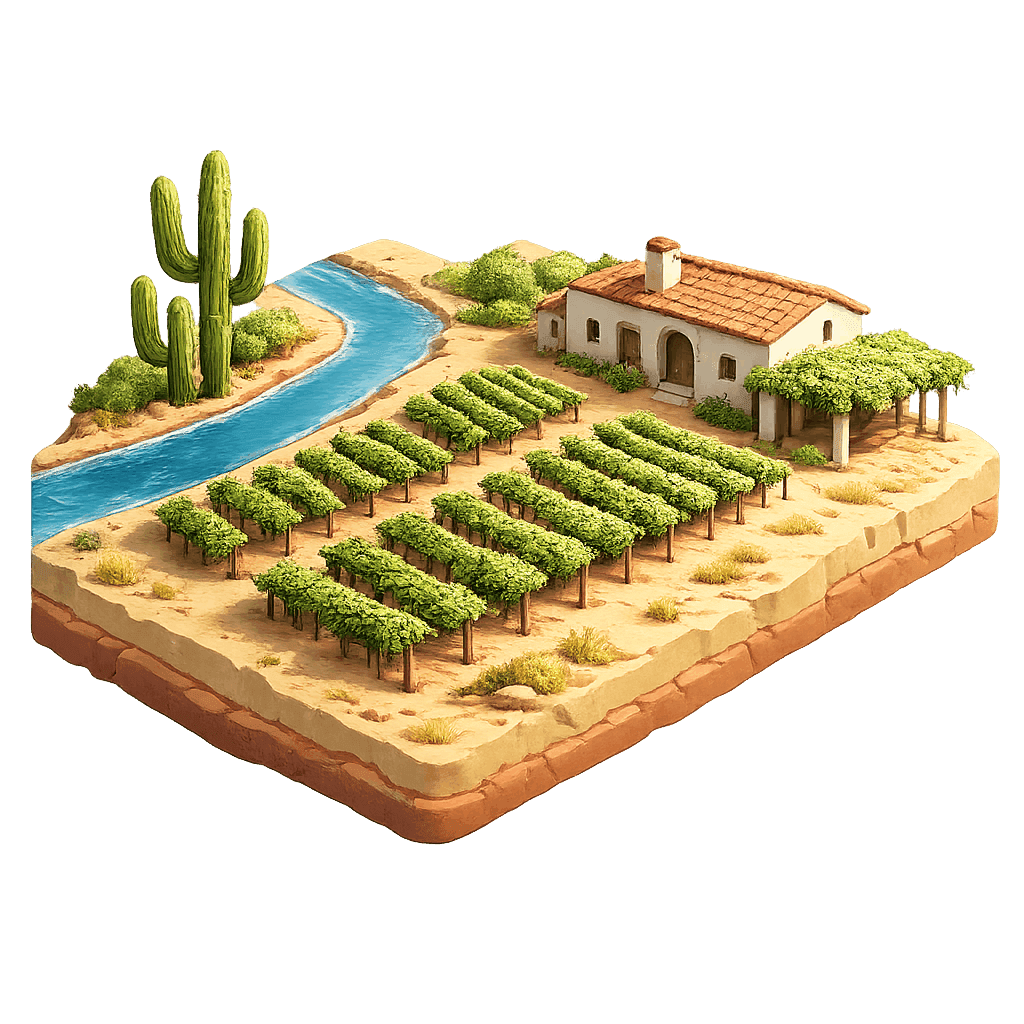
Latitude 8 means nothing to these rebels. By harnessing a massive river in the middle of a dusty drought zone, they have created a green paradise pumping out fresh juice where only cacti should survive.
Latitude 8 means nothing to these rebels. By harnessing a massive river in the middle of a dusty drought zone, they have created a green paradise pumping out fresh juice where only cacti should survive.
Latitude 8 means nothing to these rebels. By harnessing a massive river in the middle of a dusty drought zone, they have created a green paradise pumping out fresh juice where only cacti should survive.

Why it's unique
Perpetual Harvest
Equator Proximity
Irrigation Control
You usually get one shot at vintage per year, but here, growers laugh at calendars. Because it is eternally warm and dry, they control the water to force dormancy or growth on command. This creates a staggering two harvests annually per plot. You could visit in January or July and see harvest machinery running full tilt. It is one of the rare places in the world producing wine every single day.
You usually get one shot at vintage per year, but here, growers laugh at calendars. Because it is eternally warm and dry, they control the water to force dormancy or growth on command. This creates a staggering two harvests annually per plot. You could visit in January or July and see harvest machinery running full tilt. It is one of the rare places in the world producing wine every single day.
You usually get one shot at vintage per year, but here, growers laugh at calendars. Because it is eternally warm and dry, they control the water to force dormancy or growth on command. This creates a staggering two harvests annually per plot. You could visit in January or July and see harvest machinery running full tilt. It is one of the rare places in the world producing wine every single day.
Terroir
River Dependence
Sandy Soils
Intense Insolation
Constant sunshine defines this latitude, but the secret weapon is the São Francisco River. Without it, this is just scrubland. The soil is sandy and loose, allowing water to drain quickly so roots don't rot. High insolation means sugar levels skyrocket fast, while the controlled lack of water concentrates flavors before the acid drops out completely. It is extreme farming where humans play god with the seasons.
Constant sunshine defines this latitude, but the secret weapon is the São Francisco River. Without it, this is just scrubland. The soil is sandy and loose, allowing water to drain quickly so roots don't rot. High insolation means sugar levels skyrocket fast, while the controlled lack of water concentrates flavors before the acid drops out completely. It is extreme farming where humans play god with the seasons.
Constant sunshine defines this latitude, but the secret weapon is the São Francisco River. Without it, this is just scrubland. The soil is sandy and loose, allowing water to drain quickly so roots don't rot. High insolation means sugar levels skyrocket fast, while the controlled lack of water concentrates flavors before the acid drops out completely. It is extreme farming where humans play god with the seasons.
You gotta try
Lush Syrah
Sparkling Moscatel
Tropical Chenin
Syrah loves this heat, turning into a lush, fruit-forward bomb that pairs perfectly with BBQ. Don't skip the sparkling Moscatel either. It is practically the national drink of the region - frothy, sweet, and aggressively aromatic. If you want white wine with substance, Chenin Blanc develops a tropical richness here that is totally distinct from its French cousins and surprisingly refreshing given the desert temperatures.
Syrah loves this heat, turning into a lush, fruit-forward bomb that pairs perfectly with BBQ. Don't skip the sparkling Moscatel either. It is practically the national drink of the region - frothy, sweet, and aggressively aromatic. If you want white wine with substance, Chenin Blanc develops a tropical richness here that is totally distinct from its French cousins and surprisingly refreshing given the desert temperatures.
Syrah loves this heat, turning into a lush, fruit-forward bomb that pairs perfectly with BBQ. Don't skip the sparkling Moscatel either. It is practically the national drink of the region - frothy, sweet, and aggressively aromatic. If you want white wine with substance, Chenin Blanc develops a tropical richness here that is totally distinct from its French cousins and surprisingly refreshing given the desert temperatures.
LOCAL TALES
The River of National Integration
The River of National Integration
The River of National Integration
Long before anyone thought about corks and bottles, this region was a harsh, unforgiving landscape known as the Caatinga. The scrubland was synonymous with drought and hardship until the government decided to intervene with massive infrastructure projects in the mid-20th century. They built dams and canals to divert the Old Chico, as the São Francisco River is affectionately known, turning the dust into mud. While the initial goal was simply to grow food to stop people from starving or migrating, some adventurous agronomists looked at the fierce sun and abundant water and thought, "Why not get tipsy?" The first experimental vines were planted in the 1960s, proving that you can indeed fool Mother Nature with enough determination.
Long before anyone thought about corks and bottles, this region was a harsh, unforgiving landscape known as the Caatinga. The scrubland was synonymous with drought and hardship until the government decided to intervene with massive infrastructure projects in the mid-20th century. They built dams and canals to divert the Old Chico, as the São Francisco River is affectionately known, turning the dust into mud. While the initial goal was simply to grow food to stop people from starving or migrating, some adventurous agronomists looked at the fierce sun and abundant water and thought, "Why not get tipsy?" The first experimental vines were planted in the 1960s, proving that you can indeed fool Mother Nature with enough determination.
Long before anyone thought about corks and bottles, this region was a harsh, unforgiving landscape known as the Caatinga. The scrubland was synonymous with drought and hardship until the government decided to intervene with massive infrastructure projects in the mid-20th century. They built dams and canals to divert the Old Chico, as the São Francisco River is affectionately known, turning the dust into mud. While the initial goal was simply to grow food to stop people from starving or migrating, some adventurous agronomists looked at the fierce sun and abundant water and thought, "Why not get tipsy?" The first experimental vines were planted in the 1960s, proving that you can indeed fool Mother Nature with enough determination.
Tricking the Plants
Tricking the Plants
Tricking the Plants
There is a funny story about the first foreign consultants who visited the valley. They were baffled. In Europe, winter puts the plants to sleep, but here, winter is just a slightly less hot version of summer. The vines would just keep growing leaves forever without producing fruit if left alone. The locals figured out a biological hack: they cut the water supply to stress the plant into dormancy, simulating winter. Then, they prune it, apply a growth regulator, and turn the water back on. Boom-instant spring. It is a cycle that allows a winery to harvest plot A in March and plot B in June. It confuses the heck out of traditionalists, but the wine flows regardless.
There is a funny story about the first foreign consultants who visited the valley. They were baffled. In Europe, winter puts the plants to sleep, but here, winter is just a slightly less hot version of summer. The vines would just keep growing leaves forever without producing fruit if left alone. The locals figured out a biological hack: they cut the water supply to stress the plant into dormancy, simulating winter. Then, they prune it, apply a growth regulator, and turn the water back on. Boom-instant spring. It is a cycle that allows a winery to harvest plot A in March and plot B in June. It confuses the heck out of traditionalists, but the wine flows regardless.
There is a funny story about the first foreign consultants who visited the valley. They were baffled. In Europe, winter puts the plants to sleep, but here, winter is just a slightly less hot version of summer. The vines would just keep growing leaves forever without producing fruit if left alone. The locals figured out a biological hack: they cut the water supply to stress the plant into dormancy, simulating winter. Then, they prune it, apply a growth regulator, and turn the water back on. Boom-instant spring. It is a cycle that allows a winery to harvest plot A in March and plot B in June. It confuses the heck out of traditionalists, but the wine flows regardless.
The Goat Connection
The Goat Connection
The Goat Connection
Before wine took over, this area was famously the land of goats. In fact, Petrolina and Juazeiro are still surrounded by goat farming culture, which heavily influences the local cuisine. When the wine industry started booming, producers realized they needed to pair their high-alcohol, fruity reds with something local. The classic pairing became 'Bode Assado' (roast goat). It sounds rustic, and it is, but the bold intensity of the local reds cuts through the gamey, fatty meat like a laser. It is a culinary marriage born of necessity-you eat what grows there, and you drink what grows there. Now, wine festivals often feature just as much roasted meat as they do fermentation tanks.
Before wine took over, this area was famously the land of goats. In fact, Petrolina and Juazeiro are still surrounded by goat farming culture, which heavily influences the local cuisine. When the wine industry started booming, producers realized they needed to pair their high-alcohol, fruity reds with something local. The classic pairing became 'Bode Assado' (roast goat). It sounds rustic, and it is, but the bold intensity of the local reds cuts through the gamey, fatty meat like a laser. It is a culinary marriage born of necessity-you eat what grows there, and you drink what grows there. Now, wine festivals often feature just as much roasted meat as they do fermentation tanks.
Before wine took over, this area was famously the land of goats. In fact, Petrolina and Juazeiro are still surrounded by goat farming culture, which heavily influences the local cuisine. When the wine industry started booming, producers realized they needed to pair their high-alcohol, fruity reds with something local. The classic pairing became 'Bode Assado' (roast goat). It sounds rustic, and it is, but the bold intensity of the local reds cuts through the gamey, fatty meat like a laser. It is a culinary marriage born of necessity-you eat what grows there, and you drink what grows there. Now, wine festivals often feature just as much roasted meat as they do fermentation tanks.
LATEST REVIEWS