«
France
Rhône Valley
Rhône Valley
Rhône Valley
Spicy River Corridor
Stretching from Lyon down to Avignon, this French powerhouse offers a tale of two distinct worlds. Northern slopes bring serious structure while the sunny south throws a massive Grenache party full of warmth and herbal goodness.
Stretching from Lyon down to Avignon, this French powerhouse offers a tale of two distinct worlds. Northern slopes bring serious structure while the sunny south throws a massive Grenache party full of warmth and herbal goodness.
Stretching from Lyon down to Avignon, this French powerhouse offers a tale of two distinct worlds. Northern slopes bring serious structure while the sunny south throws a massive Grenache party full of warmth and herbal goodness.

LEADERS






HELPERS






Why it's unique
Two worlds
GSM birthplace
Iconic duality
Duality defines this area more than anything else. You have the prestige of the North with its impossibly steep slopes dedicated to Syrah. Then you find the sunny South, a sprawling landscape famous for Châteauneuf-du-Pape and blends using eighteen different grapes. It’s the spiritual home of the GSM blend, offering everything from affordable bistro guzzlers to cellar-worthy legends that cost a small fortune.
Duality defines this area more than anything else. You have the prestige of the North with its impossibly steep slopes dedicated to Syrah. Then you find the sunny South, a sprawling landscape famous for Châteauneuf-du-Pape and blends using eighteen different grapes. It’s the spiritual home of the GSM blend, offering everything from affordable bistro guzzlers to cellar-worthy legends that cost a small fortune.
Duality defines this area more than anything else. You have the prestige of the North with its impossibly steep slopes dedicated to Syrah. Then you find the sunny South, a sprawling landscape famous for Châteauneuf-du-Pape and blends using eighteen different grapes. It’s the spiritual home of the GSM blend, offering everything from affordable bistro guzzlers to cellar-worthy legends that cost a small fortune.
Terroir
Mistral wind
Granite slopes
Pudding stones
The Mistral wind rules with an iron fist here. This fierce gust sweeps down the corridor, chasing away fungal diseases but occasionally snapping shoots. Northern vines cling desperately to granite terraces so steep that harvest feels like rock climbing. Down south, the ground is covered in galets roulés, smooth river stones that absorb heat all day and bake the fruit at night for maximum ripeness.
The Mistral wind rules with an iron fist here. This fierce gust sweeps down the corridor, chasing away fungal diseases but occasionally snapping shoots. Northern vines cling desperately to granite terraces so steep that harvest feels like rock climbing. Down south, the ground is covered in galets roulés, smooth river stones that absorb heat all day and bake the fruit at night for maximum ripeness.
The Mistral wind rules with an iron fist here. This fierce gust sweeps down the corridor, chasing away fungal diseases but occasionally snapping shoots. Northern vines cling desperately to granite terraces so steep that harvest feels like rock climbing. Down south, the ground is covered in galets roulés, smooth river stones that absorb heat all day and bake the fruit at night for maximum ripeness.
You gotta try
Côtes du Rhône
Smoky Syrah
Peachy Viognier
Start with a classic Côtes du Rhône red for a reliable Tuesday night option tasting of berries and black pepper. If you want to splurge, hunt down Côte-Rôtie for an elegant, smoky Syrah experience that defies logic. White wine fans should grab Condrieu, where Viognier smells like apricots and expensive perfume. For the south, Châteauneuf-du-Pape is mandatory to understand just how powerful and complex Grenache gets.
Start with a classic Côtes du Rhône red for a reliable Tuesday night option tasting of berries and black pepper. If you want to splurge, hunt down Côte-Rôtie for an elegant, smoky Syrah experience that defies logic. White wine fans should grab Condrieu, where Viognier smells like apricots and expensive perfume. For the south, Châteauneuf-du-Pape is mandatory to understand just how powerful and complex Grenache gets.
Start with a classic Côtes du Rhône red for a reliable Tuesday night option tasting of berries and black pepper. If you want to splurge, hunt down Côte-Rôtie for an elegant, smoky Syrah experience that defies logic. White wine fans should grab Condrieu, where Viognier smells like apricots and expensive perfume. For the south, Châteauneuf-du-Pape is mandatory to understand just how powerful and complex Grenache gets.
LOCAL TALES
The Holy Relocation
The Holy Relocation
The Holy Relocation
Back in the 14th century, the Pope decided Rome was too chaotic and moved the entire Catholic headquarters to Avignon. This wasn't just a political relocation, it was the kickstart of serious winemaking in the valley. Pope Clement V and his successor John XXII were massive wine enthusiasts who planted vineyards everywhere they looked. They eventually built a summer residence which they named Châteauneuf-du-Pape, translating literally to The Pope's New Castle. Before this divine intervention, local juice was barely considered drinkable by the elite. The papacy effectively turned the region into a viticultural powerhouse, proving that even holy men need a stiff glass of Grenache after a long day of ruling the religious world.
Back in the 14th century, the Pope decided Rome was too chaotic and moved the entire Catholic headquarters to Avignon. This wasn't just a political relocation, it was the kickstart of serious winemaking in the valley. Pope Clement V and his successor John XXII were massive wine enthusiasts who planted vineyards everywhere they looked. They eventually built a summer residence which they named Châteauneuf-du-Pape, translating literally to The Pope's New Castle. Before this divine intervention, local juice was barely considered drinkable by the elite. The papacy effectively turned the region into a viticultural powerhouse, proving that even holy men need a stiff glass of Grenache after a long day of ruling the religious world.
Back in the 14th century, the Pope decided Rome was too chaotic and moved the entire Catholic headquarters to Avignon. This wasn't just a political relocation, it was the kickstart of serious winemaking in the valley. Pope Clement V and his successor John XXII were massive wine enthusiasts who planted vineyards everywhere they looked. They eventually built a summer residence which they named Châteauneuf-du-Pape, translating literally to The Pope's New Castle. Before this divine intervention, local juice was barely considered drinkable by the elite. The papacy effectively turned the region into a viticultural powerhouse, proving that even holy men need a stiff glass of Grenache after a long day of ruling the religious world.
The Hermit's Hill
The Hermit's Hill
The Hermit's Hill
Legend claims the famous hill of Hermitage got its name from a weary crusader named Gaspard de Stérimberg. After getting tired of fighting holy wars, he returned home in 1224, climbed the steep hill, built a tiny chapel, and decided to live as a hermit. But Gaspard did more than just pray. He planted Syrah. He realized the granite soil and southern exposure were absolutely magical for growing fruit. Soon enough, locals realized his red wine was significantly better than his sermons. The hill became famous not for piety but for producing some of the most enduring wines on earth. That tiny chapel still sits there today, watching over incredibly expensive vines.
Legend claims the famous hill of Hermitage got its name from a weary crusader named Gaspard de Stérimberg. After getting tired of fighting holy wars, he returned home in 1224, climbed the steep hill, built a tiny chapel, and decided to live as a hermit. But Gaspard did more than just pray. He planted Syrah. He realized the granite soil and southern exposure were absolutely magical for growing fruit. Soon enough, locals realized his red wine was significantly better than his sermons. The hill became famous not for piety but for producing some of the most enduring wines on earth. That tiny chapel still sits there today, watching over incredibly expensive vines.
Legend claims the famous hill of Hermitage got its name from a weary crusader named Gaspard de Stérimberg. After getting tired of fighting holy wars, he returned home in 1224, climbed the steep hill, built a tiny chapel, and decided to live as a hermit. But Gaspard did more than just pray. He planted Syrah. He realized the granite soil and southern exposure were absolutely magical for growing fruit. Soon enough, locals realized his red wine was significantly better than his sermons. The hill became famous not for piety but for producing some of the most enduring wines on earth. That tiny chapel still sits there today, watching over incredibly expensive vines.
Aliens Not Welcome
Aliens Not Welcome
Aliens Not Welcome
In 1954, the town of Châteauneuf-du-Pape passed one of the weirdest municipal laws in human history. The mayor was deeply concerned about the safety of his vineyards. His worry wasn't pests or hail, but extraterrestrials. He issued an official decree stating that the flight, take-off, and landing of flying saucers or specifically flying cigars was strictly forbidden over the appellation. If any aliens dared to land, their spaceship would be impounded immediately by the rural guard. This was likely a brilliant marketing stunt that put the town in newspapers worldwide. To this day, no UFO has landed on the precious galets stones, so the legislation is clearly working perfectly.
In 1954, the town of Châteauneuf-du-Pape passed one of the weirdest municipal laws in human history. The mayor was deeply concerned about the safety of his vineyards. His worry wasn't pests or hail, but extraterrestrials. He issued an official decree stating that the flight, take-off, and landing of flying saucers or specifically flying cigars was strictly forbidden over the appellation. If any aliens dared to land, their spaceship would be impounded immediately by the rural guard. This was likely a brilliant marketing stunt that put the town in newspapers worldwide. To this day, no UFO has landed on the precious galets stones, so the legislation is clearly working perfectly.
In 1954, the town of Châteauneuf-du-Pape passed one of the weirdest municipal laws in human history. The mayor was deeply concerned about the safety of his vineyards. His worry wasn't pests or hail, but extraterrestrials. He issued an official decree stating that the flight, take-off, and landing of flying saucers or specifically flying cigars was strictly forbidden over the appellation. If any aliens dared to land, their spaceship would be impounded immediately by the rural guard. This was likely a brilliant marketing stunt that put the town in newspapers worldwide. To this day, no UFO has landed on the precious galets stones, so the legislation is clearly working perfectly.
SUB-REGIONS

Côte-Rôtie
(
Rhône Valley
)
Gravity barely applies here. Winemakers cling to hillsides that look more like cliffs than vineyards, producing northern Rhône reds that are arguably the most elegant expressions of Syrah on planet Earth. It is dangerous farming for serious juice.
Gravity barely applies here. Winemakers cling to hillsides that look more like cliffs than vineyards, producing northern Rhône reds that are arguably the most elegant expressions of Syrah on planet Earth. It is dangerous farming for serious juice.

Condrieu
(
Rhône Valley
)
Welcome to the spiritual home of Viognier, where steep granite cliffs birth a white wine so perfume-heavy you might think you walked into a florist shop. It is rare, tricky to farm, and utterly hedonistic.
Welcome to the spiritual home of Viognier, where steep granite cliffs birth a white wine so perfume-heavy you might think you walked into a florist shop. It is rare, tricky to farm, and utterly hedonistic.
LOCAL WINE STYLES
Northern Rhône Syrah
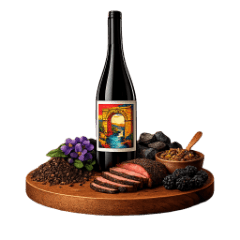
Imagine biting into a black olive wrapped in bacon while standing in a flower garden. Syrah here isn't a fruit bomb - it's a brooding, savory masterpiece grown on slopes so steep farmers practically need grappling hooks.
Imagine biting into a black olive wrapped in bacon while standing in a flower garden. Syrah here isn't a fruit bomb - it's a brooding, savory masterpiece grown on slopes so steep farmers practically need grappling hooks.
Imagine biting into a black olive wrapped in bacon while standing in a flower garden. Syrah here isn't a fruit bomb - it's a brooding, savory masterpiece grown on slopes so steep farmers practically need grappling hooks.
Southern Rhône Red
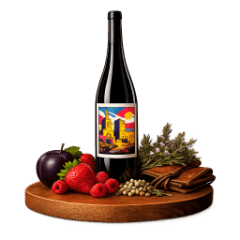
It is like a big, boisterous family reunion in a glass. Grenache usually leads the charge here, bringing heat, spice, and red fruit to a party where everyone is invited and the volume is turned up high.
It is like a big, boisterous family reunion in a glass. Grenache usually leads the charge here, bringing heat, spice, and red fruit to a party where everyone is invited and the volume is turned up high.
It is like a big, boisterous family reunion in a glass. Grenache usually leads the charge here, bringing heat, spice, and red fruit to a party where everyone is invited and the volume is turned up high.
LATEST REVIEWS