«
BROWSE ALL
France
France
This place is the ultimate reference library for your palate, where every bottle sets a global standard. It creates the rules, defines the styles, and remains the yardstick against which all others are eventually measured.
This place is the ultimate reference library for your palate, where every bottle sets a global standard. It creates the rules, defines the styles, and remains the yardstick against which all others are eventually measured.
This place is the ultimate reference library for your palate, where every bottle sets a global standard. It creates the rules, defines the styles, and remains the yardstick against which all others are eventually measured.

What it's about
Export Leader
Value King
Ancient Roots
While Italy might squeeze out more juice by volume, France consistently claims the crown for export value, raking in nearly 11 billion euros annually. It is the spiritual ancestor of modern viticulture, tracing roots back to Roman times and perfecting them through medieval monks. From the cool hills of Champagne to the sun-baked Mediterranean coast, it produces roughly 40 million hectoliters a year, setting the bar for quality worldwide.
While Italy might squeeze out more juice by volume, France consistently claims the crown for export value, raking in nearly 11 billion euros annually. It is the spiritual ancestor of modern viticulture, tracing roots back to Roman times and perfecting them through medieval monks. From the cool hills of Champagne to the sun-baked Mediterranean coast, it produces roughly 40 million hectoliters a year, setting the bar for quality worldwide.
While Italy might squeeze out more juice by volume, France consistently claims the crown for export value, raking in nearly 11 billion euros annually. It is the spiritual ancestor of modern viticulture, tracing roots back to Roman times and perfecting them through medieval monks. From the cool hills of Champagne to the sun-baked Mediterranean coast, it produces roughly 40 million hectoliters a year, setting the bar for quality worldwide.
What they're proud of
Mystical Terroir
Strict AOC
Regional Prestige
Ask any local winemaker, and they will immediately start lecturing you about "terroir" - the almost mystical belief that a specific patch of dirt, sun, and wind creates a flavor impossible to replicate elsewhere. They also fiercely defend their Appellation d'Origine Contrôlée (AOC) system, established in 1935, which guarantees that sparkling wine from Champagne or red from Bordeaux is the genuine article. It is a culture built on centuries of agonizing attention to detail.
Ask any local winemaker, and they will immediately start lecturing you about "terroir" - the almost mystical belief that a specific patch of dirt, sun, and wind creates a flavor impossible to replicate elsewhere. They also fiercely defend their Appellation d'Origine Contrôlée (AOC) system, established in 1935, which guarantees that sparkling wine from Champagne or red from Bordeaux is the genuine article. It is a culture built on centuries of agonizing attention to detail.
Ask any local winemaker, and they will immediately start lecturing you about "terroir" - the almost mystical belief that a specific patch of dirt, sun, and wind creates a flavor impossible to replicate elsewhere. They also fiercely defend their Appellation d'Origine Contrôlée (AOC) system, established in 1935, which guarantees that sparkling wine from Champagne or red from Bordeaux is the genuine article. It is a culture built on centuries of agonizing attention to detail.
WHAT'S TRENDING
Organic Boom
Climate Adaptation
Year-round Rosé
Green is the new red and white here, with organic vineyards now covering a staggering 21% of the land - a massive leap driven by eco-conscious consumers. Climate change is also forcing a plot twist, harvest dates are shifting earlier, and alcohol levels are creeping up, prompting experiments with heat-resistant heritage stock. Meanwhile, Rosé has shed its summer-only reputation to become a year-round staple, and lower-alcohol styles are gaining serious traction among younger drinkers.
Green is the new red and white here, with organic vineyards now covering a staggering 21% of the land - a massive leap driven by eco-conscious consumers. Climate change is also forcing a plot twist, harvest dates are shifting earlier, and alcohol levels are creeping up, prompting experiments with heat-resistant heritage stock. Meanwhile, Rosé has shed its summer-only reputation to become a year-round staple, and lower-alcohol styles are gaining serious traction among younger drinkers.
Green is the new red and white here, with organic vineyards now covering a staggering 21% of the land - a massive leap driven by eco-conscious consumers. Climate change is also forcing a plot twist, harvest dates are shifting earlier, and alcohol levels are creeping up, prompting experiments with heat-resistant heritage stock. Meanwhile, Rosé has shed its summer-only reputation to become a year-round staple, and lower-alcohol styles are gaining serious traction among younger drinkers.
LOCAL TALES
The Bug That Almost Ended It All
The Bug That Almost Ended It All
The Bug That Almost Ended It All
Imagine a horror movie where the monster is microscopic, and the victim is an entire national identity. In the mid-19th century, a tiny aphid called Phylloxera hitched a ride on steamships from North America and began devouring the roots of French vineyards. It was a massacre, over 70% of the vines withered and died, bringing the industry to its knees. Desperate solutions included flooding vineyards or burying toads under the soil, but nothing worked. The ultimate savior was ironic: grafting delicate French scions onto the very American rootstocks that brought the pest in the first place. Today, almost every bottle you drink rests on American roots.
Imagine a horror movie where the monster is microscopic, and the victim is an entire national identity. In the mid-19th century, a tiny aphid called Phylloxera hitched a ride on steamships from North America and began devouring the roots of French vineyards. It was a massacre, over 70% of the vines withered and died, bringing the industry to its knees. Desperate solutions included flooding vineyards or burying toads under the soil, but nothing worked. The ultimate savior was ironic: grafting delicate French scions onto the very American rootstocks that brought the pest in the first place. Today, almost every bottle you drink rests on American roots.
The List That Never Changes (Almost)
The List That Never Changes (Almost)
The List That Never Changes (Almost)
Napoleon III wanted to show off at the 1855 Paris Exposition, so he ordered a ranking of the best wines from the Gironde region. Brokers hastily scribbled a list based largely on market price and reputation, creating the famous 1855 Classification of Médoc and Graves. They split the top reds into five tiers, or "Growths," assuming the list would be updated regularly. It wasn't. In nearly 170 years, there has been only one significant change: Château Mouton Rothschild was promoted to First Growth in 1973 after decades of lobbying. That hastily written list still dictates prices and egos today.
Napoleon III wanted to show off at the 1855 Paris Exposition, so he ordered a ranking of the best wines from the Gironde region. Brokers hastily scribbled a list based largely on market price and reputation, creating the famous 1855 Classification of Médoc and Graves. They split the top reds into five tiers, or "Growths," assuming the list would be updated regularly. It wasn't. In nearly 170 years, there has been only one significant change: Château Mouton Rothschild was promoted to First Growth in 1973 after decades of lobbying. That hastily written list still dictates prices and egos today.
The Monk Who Hated Bubbles
The Monk Who Hated Bubbles
The Monk Who Hated Bubbles
Pop culture loves to picture Dom Pérignon tasting sparkling wine and shouting, "I am drinking the stars!" Reality is funnier: he spent his life trying to get rid of the bubbles. As a cellar master at the Abbey of Hautvillers in the late 1600s, re-fermentation in the bottle was a dangerous flaw that caused bottles to explode, literally turning the cellar into a shrapnel zone. While he didn't invent the fizz, he was a master of blending and used hemp string to hold corks down. He accidentally made the region famous for the very thing he tried to destroy.
Pop culture loves to picture Dom Pérignon tasting sparkling wine and shouting, "I am drinking the stars!" Reality is funnier: he spent his life trying to get rid of the bubbles. As a cellar master at the Abbey of Hautvillers in the late 1600s, re-fermentation in the bottle was a dangerous flaw that caused bottles to explode, literally turning the cellar into a shrapnel zone. While he didn't invent the fizz, he was a master of blending and used hemp string to hold corks down. He accidentally made the region famous for the very thing he tried to destroy.
REGIONS

Alsace
Imagine a place where half-timbered houses meet serious viticulture. It sits right on the border, taking the best of French finesse and German precision to create wines that smell like a flower shop but often taste bone dry.
Imagine a place where half-timbered houses meet serious viticulture. It sits right on the border, taking the best of French finesse and German precision to create wines that smell like a flower shop but often taste bone dry.

Bordeaux
Everyone knows this legendary spot is the heavyweight champion of serious reds. It is not just about fancy chateaux and astronomical price tags, but rather about incredible history and blending magic happening on both river banks.
Everyone knows this legendary spot is the heavyweight champion of serious reds. It is not just about fancy chateaux and astronomical price tags, but rather about incredible history and blending magic happening on both river banks.
SUB-REGIONS

Ribeauvillé
(
Alsace
)
Imagine a town straight out of a fairy tale where three ruined castles watch over the vineyards. This spot offers serious history and even more serious white wines that demand patience and respect.
Imagine a town straight out of a fairy tale where three ruined castles watch over the vineyards. This spot offers serious history and even more serious white wines that demand patience and respect.
Riquewihr
(
Alsace
)
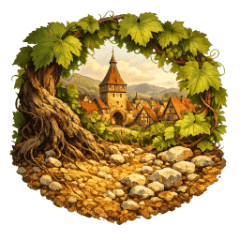
Walking through these cobblestone streets feels like stepping into a movie set because the architecture literally inspired Disney. This spot balances intense tourist crowds with some of the most serious, age-worthy white wines on the entire planet.
Walking through these cobblestone streets feels like stepping into a movie set because the architecture literally inspired Disney. This spot balances intense tourist crowds with some of the most serious, age-worthy white wines on the entire planet.
WINE STYLES
Bordeaux Left Bank
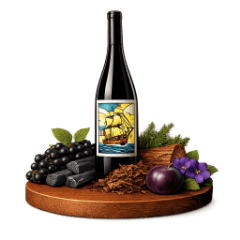
Think of a stern but rich uncle who owns a mahogany library. These blends rely heavily on Cabernet Sauvignon to provide structure and power, mellowing out only after years of sitting in a dark cellar.
Think of a stern but rich uncle who owns a mahogany library. These blends rely heavily on Cabernet Sauvignon to provide structure and power, mellowing out only after years of sitting in a dark cellar.
Think of a stern but rich uncle who owns a mahogany library. These blends rely heavily on Cabernet Sauvignon to provide structure and power, mellowing out only after years of sitting in a dark cellar.
Bordeaux Right Bank
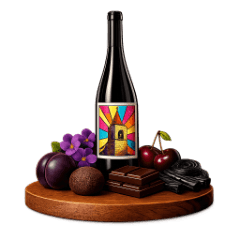
While the neighbors across the water are busy stiffening their upper lips with rigid structure, this side relaxes into a plush pillow of fruit. Expect richness without the wait, offering instant gratification in a glass through lush textures.
While the neighbors across the water are busy stiffening their upper lips with rigid structure, this side relaxes into a plush pillow of fruit. Expect richness without the wait, offering instant gratification in a glass through lush textures.
While the neighbors across the water are busy stiffening their upper lips with rigid structure, this side relaxes into a plush pillow of fruit. Expect richness without the wait, offering instant gratification in a glass through lush textures.
LATEST REVIEWS