«
Israel

Negev
Negev
Negev
Blooming Desert Laboratory
Imagine making premium booze where camels usually hang out. It is a testament to human stubbornness and advanced irrigation, turning yellow dunes into green vines that produce surprisingly crisp and intense bottles in a totally arid landscape.
Imagine making premium booze where camels usually hang out. It is a testament to human stubbornness and advanced irrigation, turning yellow dunes into green vines that produce surprisingly crisp and intense bottles in a totally arid landscape.
Imagine making premium booze where camels usually hang out. It is a testament to human stubbornness and advanced irrigation, turning yellow dunes into green vines that produce surprisingly crisp and intense bottles in a totally arid landscape.
Why it's unique
True desert
Extreme farming
Tech driven
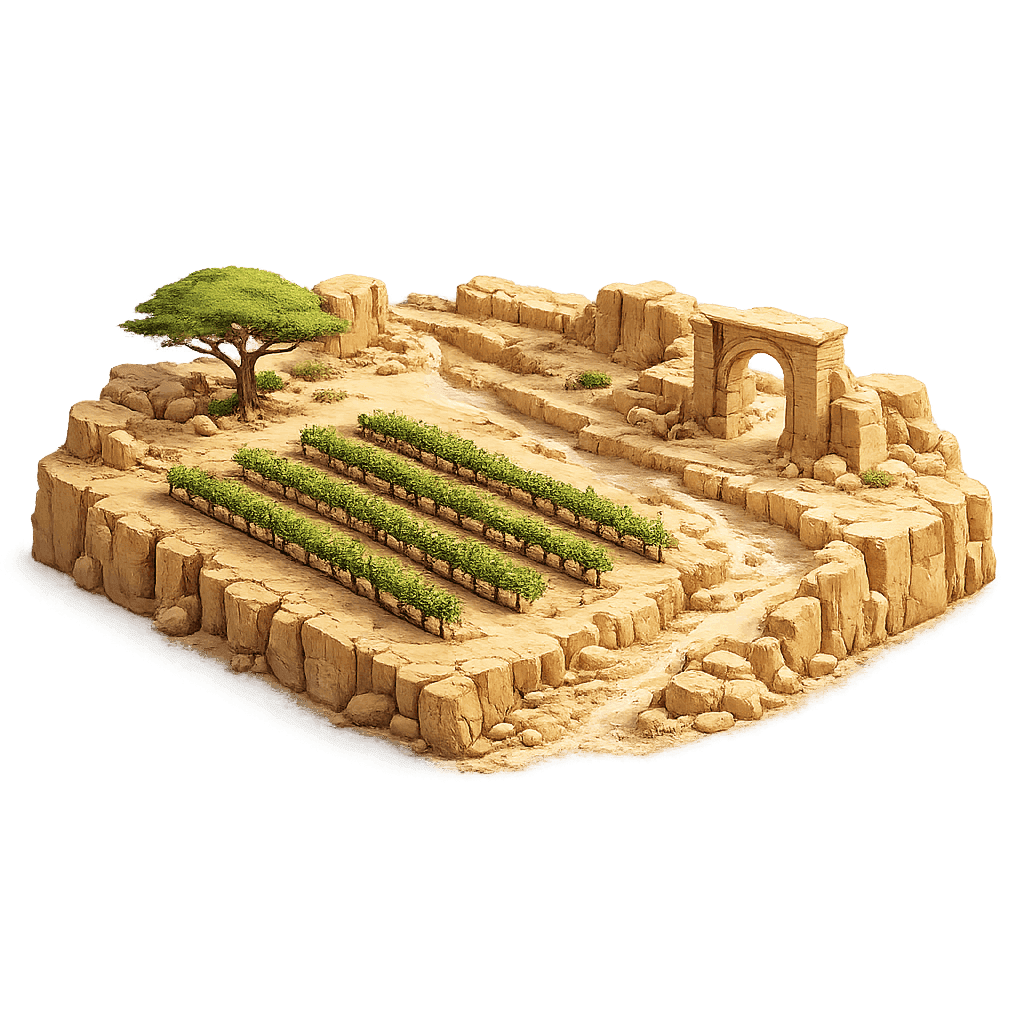
Most people see sand and think of thirst, but here winemakers see infinite potential. It is one of the few true desert wine regions in the world. Utilizing cutting-edge technology to force roots to struggle just enough, farmers manage to coax elegance out of a landscape that looks like Mars. It is extreme viticulture at its finest where science meets nature.
Most people see sand and think of thirst, but here winemakers see infinite potential. It is one of the few true desert wine regions in the world. Utilizing cutting-edge technology to force roots to struggle just enough, farmers manage to coax elegance out of a landscape that looks like Mars. It is extreme viticulture at its finest where science meets nature.
Most people see sand and think of thirst, but here winemakers see infinite potential. It is one of the few true desert wine regions in the world. Utilizing cutting-edge technology to force roots to struggle just enough, farmers manage to coax elegance out of a landscape that looks like Mars. It is extreme viticulture at its finest where science meets nature.
Terroir
Loess soil
Freezing nights
Drip irrigation
You might expect cooked flavors, but the dramatic temperature drop at night saves the acidity. Hot days ripen sugar, while freezing nights lock in freshness. The soils are loess and sandy loam, offering great drainage but requiring precise drip irrigation to keep things alive. It is a paradox of intense heat and cool distinct definition.
You might expect cooked flavors, but the dramatic temperature drop at night saves the acidity. Hot days ripen sugar, while freezing nights lock in freshness. The soils are loess and sandy loam, offering great drainage but requiring precise drip irrigation to keep things alive. It is a paradox of intense heat and cool distinct definition.
You might expect cooked flavors, but the dramatic temperature drop at night saves the acidity. Hot days ripen sugar, while freezing nights lock in freshness. The soils are loess and sandy loam, offering great drainage but requiring precise drip irrigation to keep things alive. It is a paradox of intense heat and cool distinct definition.
You gotta try
Spicy Syrah
Crisp Chenin
Bold Cabernet
Syrah loves the heat here but keeps its spicy edge thanks to the cold nights. If you want a white, Chenin Blanc is the unexpected superstar, showing tropical notes with a laser-sharp finish. Cabernet Sauvignon also does surprisingly well, ripening fully without turning into jam. These wines are powerful but surprisingly fresh given their sunny birth.
Syrah loves the heat here but keeps its spicy edge thanks to the cold nights. If you want a white, Chenin Blanc is the unexpected superstar, showing tropical notes with a laser-sharp finish. Cabernet Sauvignon also does surprisingly well, ripening fully without turning into jam. These wines are powerful but surprisingly fresh given their sunny birth.
Syrah loves the heat here but keeps its spicy edge thanks to the cold nights. If you want a white, Chenin Blanc is the unexpected superstar, showing tropical notes with a laser-sharp finish. Cabernet Sauvignon also does surprisingly well, ripening fully without turning into jam. These wines are powerful but surprisingly fresh given their sunny birth.
LOCAL TALES
The Nabatean Hangovers
The Nabatean Hangovers
The Nabatean Hangovers
While modern Israelis like to think they invented desert farming, a nomadic tribe called the Nabateans beat them to it by about 2,000 years. These guys were geniuses at catching flash flood water and channeling it into terraces to grow grapes in the middle of nowhere. Archaeologists recently found ancient grape seeds in the ruins of Avdat, proving that people have been getting tipsy in this dust bowl since Roman times. Today, local wineries are actually trying to recreate those ancient wines, proving that good ideas never really die, they just get covered in sand for a few millennia.
While modern Israelis like to think they invented desert farming, a nomadic tribe called the Nabateans beat them to it by about 2,000 years. These guys were geniuses at catching flash flood water and channeling it into terraces to grow grapes in the middle of nowhere. Archaeologists recently found ancient grape seeds in the ruins of Avdat, proving that people have been getting tipsy in this dust bowl since Roman times. Today, local wineries are actually trying to recreate those ancient wines, proving that good ideas never really die, they just get covered in sand for a few millennia.
While modern Israelis like to think they invented desert farming, a nomadic tribe called the Nabateans beat them to it by about 2,000 years. These guys were geniuses at catching flash flood water and channeling it into terraces to grow grapes in the middle of nowhere. Archaeologists recently found ancient grape seeds in the ruins of Avdat, proving that people have been getting tipsy in this dust bowl since Roman times. Today, local wineries are actually trying to recreate those ancient wines, proving that good ideas never really die, they just get covered in sand for a few millennia.
Ben-Gurion's Thirsty Dream
Ben-Gurion's Thirsty Dream
Ben-Gurion's Thirsty Dream
David Ben-Gurion, Israel's first Prime Minister, was obsessed with the Negev. He basically retired to a hut in Sde Boker and told everyone that making the desert bloom was the ultimate test of the nation. When experts told him the water was too salty for agriculture, he essentially told them to figure it out anyway. They discovered that certain crops, including hearty vines, could actually thrive on brackish water if managed correctly. Now, looking at the lush rows of green against the beige hills, you realize it is essentially one stubborn man's vision that turned a wasteland into a wine list.
David Ben-Gurion, Israel's first Prime Minister, was obsessed with the Negev. He basically retired to a hut in Sde Boker and told everyone that making the desert bloom was the ultimate test of the nation. When experts told him the water was too salty for agriculture, he essentially told them to figure it out anyway. They discovered that certain crops, including hearty vines, could actually thrive on brackish water if managed correctly. Now, looking at the lush rows of green against the beige hills, you realize it is essentially one stubborn man's vision that turned a wasteland into a wine list.
David Ben-Gurion, Israel's first Prime Minister, was obsessed with the Negev. He basically retired to a hut in Sde Boker and told everyone that making the desert bloom was the ultimate test of the nation. When experts told him the water was too salty for agriculture, he essentially told them to figure it out anyway. They discovered that certain crops, including hearty vines, could actually thrive on brackish water if managed correctly. Now, looking at the lush rows of green against the beige hills, you realize it is essentially one stubborn man's vision that turned a wasteland into a wine list.
The Drip That Changed Everything
The Drip That Changed Everything
The Drip That Changed Everything
You cannot talk about this region without mentioning the invention that saved viticulture here: drip irrigation. Before the 1960s, trying to farm here was like trying to fill a bathtub with a teaspoon. An engineer named Simcha Blass noticed a big tree growing near a leaking pipe and realized that slow, steady drips were better than flooding the soil. This accidental discovery led to the technology that now allows winemakers to feed each vine the exact amount of water and nutrients it needs, drop by drop. It is basically intravenous therapy for plants, and the results are delicious.
You cannot talk about this region without mentioning the invention that saved viticulture here: drip irrigation. Before the 1960s, trying to farm here was like trying to fill a bathtub with a teaspoon. An engineer named Simcha Blass noticed a big tree growing near a leaking pipe and realized that slow, steady drips were better than flooding the soil. This accidental discovery led to the technology that now allows winemakers to feed each vine the exact amount of water and nutrients it needs, drop by drop. It is basically intravenous therapy for plants, and the results are delicious.
You cannot talk about this region without mentioning the invention that saved viticulture here: drip irrigation. Before the 1960s, trying to farm here was like trying to fill a bathtub with a teaspoon. An engineer named Simcha Blass noticed a big tree growing near a leaking pipe and realized that slow, steady drips were better than flooding the soil. This accidental discovery led to the technology that now allows winemakers to feed each vine the exact amount of water and nutrients it needs, drop by drop. It is basically intravenous therapy for plants, and the results are delicious.
LATEST REVIEWS