«
Italy

Marche
Marche
Marche
Italy's Eastern Star
Sandwiched between the Apennines and the Adriatic, this spot offers a glorious mix of sea breezes and mountain air. It serves as the spiritual home of crisp whites that age beautifully and reds that punch above their weight.
Sandwiched between the Apennines and the Adriatic, this spot offers a glorious mix of sea breezes and mountain air. It serves as the spiritual home of crisp whites that age beautifully and reds that punch above their weight.
Sandwiched between the Apennines and the Adriatic, this spot offers a glorious mix of sea breezes and mountain air. It serves as the spiritual home of crisp whites that age beautifully and reds that punch above their weight.





Why it's unique
Age-worthy whites
Quiet excellence
Diverse styles
While Tuscany grabs all the headlines, Marche quietly produces some of the most complex white wines in the country without the celebrity price tag. Verdicchio here implies serious business rather than just a simple quaffer. It evolves into something nutty and profound with age. Plus, the region boasts a stunning diversity of microclimates that allow rediscovered gems like Pecorino and Passerina to thrive alongside indigenous heroes like Lacrima and Montepulciano.
While Tuscany grabs all the headlines, Marche quietly produces some of the most complex white wines in the country without the celebrity price tag. Verdicchio here implies serious business rather than just a simple quaffer. It evolves into something nutty and profound with age. Plus, the region boasts a stunning diversity of microclimates that allow rediscovered gems like Pecorino and Passerina to thrive alongside indigenous heroes like Lacrima and Montepulciano.
While Tuscany grabs all the headlines, Marche quietly produces some of the most complex white wines in the country without the celebrity price tag. Verdicchio here implies serious business rather than just a simple quaffer. It evolves into something nutty and profound with age. Plus, the region boasts a stunning diversity of microclimates that allow rediscovered gems like Pecorino and Passerina to thrive alongside indigenous heroes like Lacrima and Montepulciano.
Terroir
Limestone soils
Mountain shelter
Sea breezes
Limestone soils dominate the best vineyards and act like a sponge for mineral flavors. The geography creates a dramatic push-and-pull effect. You have the Apennine mountains blocking harsh weather from the west while the Adriatic Sea sends cooling currents from the east. This setup ensures a prolonged growing season where fruit ripens slowly. It maintains razor-sharp acidity while developing serious sugar levels, which is a total win-win for flavor accumulation.
Limestone soils dominate the best vineyards and act like a sponge for mineral flavors. The geography creates a dramatic push-and-pull effect. You have the Apennine mountains blocking harsh weather from the west while the Adriatic Sea sends cooling currents from the east. This setup ensures a prolonged growing season where fruit ripens slowly. It maintains razor-sharp acidity while developing serious sugar levels, which is a total win-win for flavor accumulation.
Limestone soils dominate the best vineyards and act like a sponge for mineral flavors. The geography creates a dramatic push-and-pull effect. You have the Apennine mountains blocking harsh weather from the west while the Adriatic Sea sends cooling currents from the east. This setup ensures a prolonged growing season where fruit ripens slowly. It maintains razor-sharp acidity while developing serious sugar levels, which is a total win-win for flavor accumulation.
You gotta try
Castelli Jesi
Conero Riserva
Floral Lacrima
Start with Verdicchio dei Castelli di Jesi for a textbook example of why this region rocks. If you prefer red, Conero Riserva is a must. It showcases Montepulciano in a powerful, structured avatar that demands a steak. For the adventurous, hunt down Lacrima di Morro d'Alba. It smells like a bouquet of violets exploded in a spice shop and tastes utterly unlike anything else on the shelf.
Start with Verdicchio dei Castelli di Jesi for a textbook example of why this region rocks. If you prefer red, Conero Riserva is a must. It showcases Montepulciano in a powerful, structured avatar that demands a steak. For the adventurous, hunt down Lacrima di Morro d'Alba. It smells like a bouquet of violets exploded in a spice shop and tastes utterly unlike anything else on the shelf.
Start with Verdicchio dei Castelli di Jesi for a textbook example of why this region rocks. If you prefer red, Conero Riserva is a must. It showcases Montepulciano in a powerful, structured avatar that demands a steak. For the adventurous, hunt down Lacrima di Morro d'Alba. It smells like a bouquet of violets exploded in a spice shop and tastes utterly unlike anything else on the shelf.
LOCAL TALES
The Shape of Success
The Shape of Success
The Shape of Success
Back in the 1950s, Marche needed a rebrand. Enter Antonio Maiocchi, an architect who decided that a standard wine bottle was simply too boring for Verdicchio. He designed the famous amphora-shaped green bottle to pay homage to ancient Etruscan vessels found in the area. It was marketing genius. Suddenly, this curvaceous glass figure became the symbol of Italian white wine globally. Everyone had one in their house, often turned into a lamp or candle holder after the wine was gone. While serious producers often use standard shapes now to prove they aren't just a gimmick, that funky green curve put Marche on the map when nobody could even pronounce the region's name.
Back in the 1950s, Marche needed a rebrand. Enter Antonio Maiocchi, an architect who decided that a standard wine bottle was simply too boring for Verdicchio. He designed the famous amphora-shaped green bottle to pay homage to ancient Etruscan vessels found in the area. It was marketing genius. Suddenly, this curvaceous glass figure became the symbol of Italian white wine globally. Everyone had one in their house, often turned into a lamp or candle holder after the wine was gone. While serious producers often use standard shapes now to prove they aren't just a gimmick, that funky green curve put Marche on the map when nobody could even pronounce the region's name.
Back in the 1950s, Marche needed a rebrand. Enter Antonio Maiocchi, an architect who decided that a standard wine bottle was simply too boring for Verdicchio. He designed the famous amphora-shaped green bottle to pay homage to ancient Etruscan vessels found in the area. It was marketing genius. Suddenly, this curvaceous glass figure became the symbol of Italian white wine globally. Everyone had one in their house, often turned into a lamp or candle holder after the wine was gone. While serious producers often use standard shapes now to prove they aren't just a gimmick, that funky green curve put Marche on the map when nobody could even pronounce the region's name.
Guarding the Vines
Guarding the Vines
Guarding the Vines
You might wonder why the most famous wine here refers to Castles. The Castelli di Jesi area isn't just a fancy name. It is literally a collection of medieval fortifications perched on hilltops. Historically, these fortified villages were the first line of defense and trade hubs. Today, they guard something much more precious than gold. They watch over endless rows of Verdicchio. Driving through the area feels like time travel. You hop from one walled town to another, sampling wines that have been made in the shadows of these stone giants for centuries. It serves as a reminder that in Italy, wine and warfare often shared the same real estate, though fortunately, only the wine remains today.
You might wonder why the most famous wine here refers to Castles. The Castelli di Jesi area isn't just a fancy name. It is literally a collection of medieval fortifications perched on hilltops. Historically, these fortified villages were the first line of defense and trade hubs. Today, they guard something much more precious than gold. They watch over endless rows of Verdicchio. Driving through the area feels like time travel. You hop from one walled town to another, sampling wines that have been made in the shadows of these stone giants for centuries. It serves as a reminder that in Italy, wine and warfare often shared the same real estate, though fortunately, only the wine remains today.
You might wonder why the most famous wine here refers to Castles. The Castelli di Jesi area isn't just a fancy name. It is literally a collection of medieval fortifications perched on hilltops. Historically, these fortified villages were the first line of defense and trade hubs. Today, they guard something much more precious than gold. They watch over endless rows of Verdicchio. Driving through the area feels like time travel. You hop from one walled town to another, sampling wines that have been made in the shadows of these stone giants for centuries. It serves as a reminder that in Italy, wine and warfare often shared the same real estate, though fortunately, only the wine remains today.
The Crying Grape
The Crying Grape
The Crying Grape
Lacrima di Morro d'Alba almost went extinct because it was too fragile for its own good. The name Lacrima means tear, which sounds tragic, but it actually refers to the skin of the berry. The skin is so delicate that it splits when ripe, shedding sweet tears of juice down the bunch. This made it a nightmare for farmers to harvest without making a sticky mess, so they ripped it out in favor of tougher crops. By the 1980s, barely ten hectares remained. Thanks to a few stubborn locals who refused to let this aromatic wonder die, it was saved. Now, Lacrima is a cult favorite known for an intense scent of roses and violets.
Lacrima di Morro d'Alba almost went extinct because it was too fragile for its own good. The name Lacrima means tear, which sounds tragic, but it actually refers to the skin of the berry. The skin is so delicate that it splits when ripe, shedding sweet tears of juice down the bunch. This made it a nightmare for farmers to harvest without making a sticky mess, so they ripped it out in favor of tougher crops. By the 1980s, barely ten hectares remained. Thanks to a few stubborn locals who refused to let this aromatic wonder die, it was saved. Now, Lacrima is a cult favorite known for an intense scent of roses and violets.
Lacrima di Morro d'Alba almost went extinct because it was too fragile for its own good. The name Lacrima means tear, which sounds tragic, but it actually refers to the skin of the berry. The skin is so delicate that it splits when ripe, shedding sweet tears of juice down the bunch. This made it a nightmare for farmers to harvest without making a sticky mess, so they ripped it out in favor of tougher crops. By the 1980s, barely ten hectares remained. Thanks to a few stubborn locals who refused to let this aromatic wonder die, it was saved. Now, Lacrima is a cult favorite known for an intense scent of roses and violets.
SUB-REGIONS
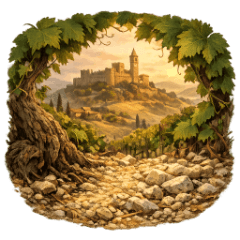
Castelli di Jesi
(
Marche
)
Located near Ancona, this area pumps out some of Italy's greatest white wines. It is famous for Verdicchio, castles on hills, and that iconic green fish shaped bottle that your grandmother probably turned into a lamp.
Located near Ancona, this area pumps out some of Italy's greatest white wines. It is famous for Verdicchio, castles on hills, and that iconic green fish shaped bottle that your grandmother probably turned into a lamp.
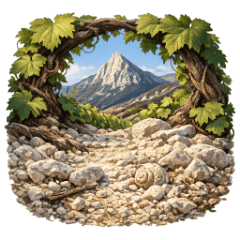
Matelica
(
Marche
)
Deep in the Apennines, this valley offers a radical departure from coastal life. It creates white wines with serious edge and acidity, proving that higher altitudes and cooler nights forge something truly electric in your glass.
Deep in the Apennines, this valley offers a radical departure from coastal life. It creates white wines with serious edge and acidity, proving that higher altitudes and cooler nights forge something truly electric in your glass.
LATEST REVIEWS