«
South Africa

Franschhoek Valley
Franschhoek Valley
Franschhoek Valley
Gourmet French Pocket
Imagine stepping into a little slice of Europe right in the heart of the Cape mountains. This valley is widely considered the culinary capital of the country, blending centuries-old viticulture with world-class dining experiences.
Imagine stepping into a little slice of Europe right in the heart of the Cape mountains. This valley is widely considered the culinary capital of the country, blending centuries-old viticulture with world-class dining experiences.
Imagine stepping into a little slice of Europe right in the heart of the Cape mountains. This valley is widely considered the culinary capital of the country, blending centuries-old viticulture with world-class dining experiences.
LEADERS



Why it's unique
French Heritage
Wine Tram
MCC Bubbles
Heritage runs deep here since the French Huguenots arrived in 1688 and brought their winemaking secrets along for the ride. It is the heart of the Cap Classique route, famous for creating incredible Methode Cap Classique bubbles that rival the real deal. Plus, the famous double-decker Wine Tram allows visitors to hop between prestigious estates without worrying about a designated driver, turning tastings into a localized adventure.
Heritage runs deep here since the French Huguenots arrived in 1688 and brought their winemaking secrets along for the ride. It is the heart of the Cap Classique route, famous for creating incredible Methode Cap Classique bubbles that rival the real deal. Plus, the famous double-decker Wine Tram allows visitors to hop between prestigious estates without worrying about a designated driver, turning tastings into a localized adventure.
Heritage runs deep here since the French Huguenots arrived in 1688 and brought their winemaking secrets along for the ride. It is the heart of the Cap Classique route, famous for creating incredible Methode Cap Classique bubbles that rival the real deal. Plus, the famous double-decker Wine Tram allows visitors to hop between prestigious estates without worrying about a designated driver, turning tastings into a localized adventure.
Terroir
Mountain Shadows
Granite Slopes
Cool Trap
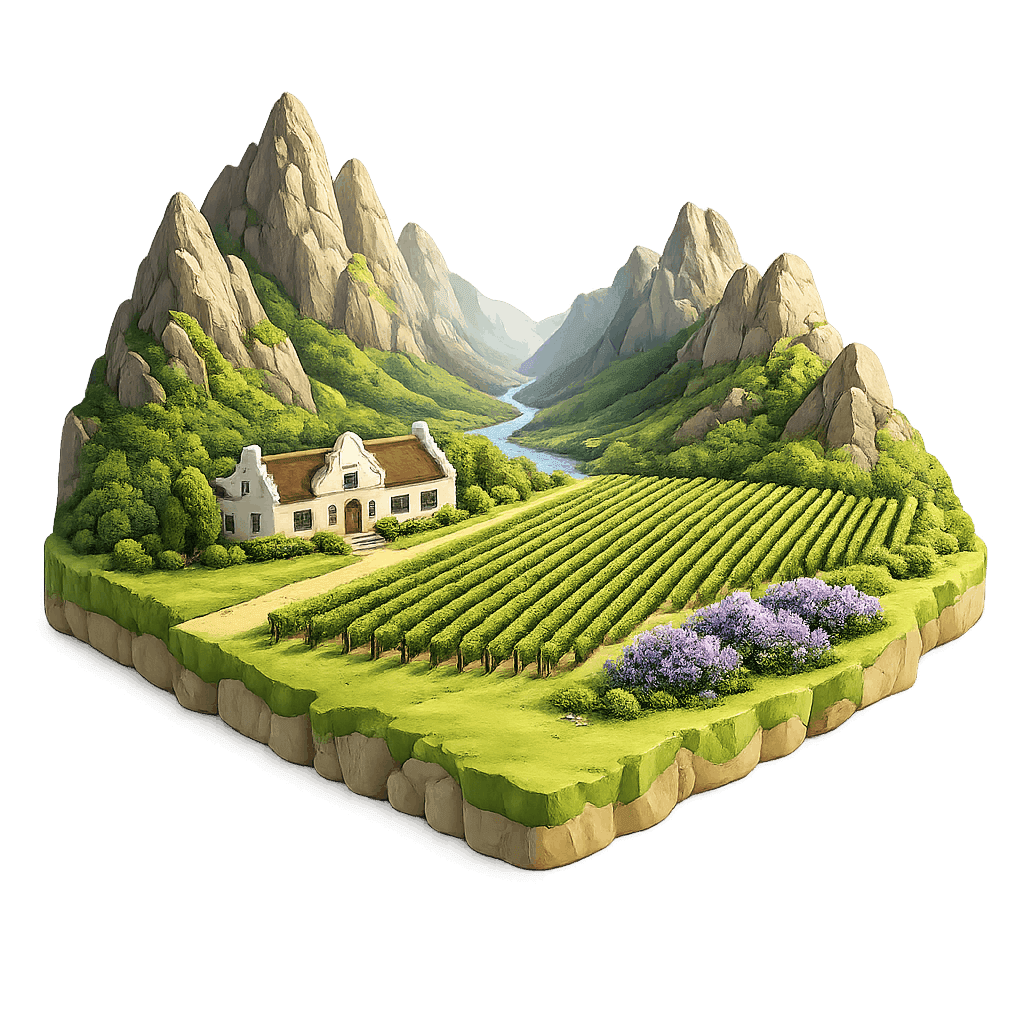
Three sides of towering mountains create a dramatic valley floor that traps cool air and creates distinct shadows. This geography acts like a natural air conditioner, allowing berries to retain zesty acidity while ripening slowly in the warm sun. The soils range from sandy valley floors to decomposed granite on the slopes, offering diverse playgrounds for everything from crisp whites to robust reds.
Three sides of towering mountains create a dramatic valley floor that traps cool air and creates distinct shadows. This geography acts like a natural air conditioner, allowing berries to retain zesty acidity while ripening slowly in the warm sun. The soils range from sandy valley floors to decomposed granite on the slopes, offering diverse playgrounds for everything from crisp whites to robust reds.
Three sides of towering mountains create a dramatic valley floor that traps cool air and creates distinct shadows. This geography acts like a natural air conditioner, allowing berries to retain zesty acidity while ripening slowly in the warm sun. The soils range from sandy valley floors to decomposed granite on the slopes, offering diverse playgrounds for everything from crisp whites to robust reds.
You gotta try
Sparkling MCC
Old Semillon
Rich Cabernet
Start your journey with Methode Cap Classique because these sparkles are legendary here. If you prefer still wines, Semillon is the secret weapon of the valley, often coming from ancient blocks that produce rich and textured nectar. Cabernet Sauvignon also loves it here, offering chocolatey depth that pairs perfectly with the gourmet meals you will definitely be eating during your visit.
Start your journey with Methode Cap Classique because these sparkles are legendary here. If you prefer still wines, Semillon is the secret weapon of the valley, often coming from ancient blocks that produce rich and textured nectar. Cabernet Sauvignon also loves it here, offering chocolatey depth that pairs perfectly with the gourmet meals you will definitely be eating during your visit.
Start your journey with Methode Cap Classique because these sparkles are legendary here. If you prefer still wines, Semillon is the secret weapon of the valley, often coming from ancient blocks that produce rich and textured nectar. Cabernet Sauvignon also loves it here, offering chocolatey depth that pairs perfectly with the gourmet meals you will definitely be eating during your visit.
LOCAL TALES
Elephants Before Baguettes
Elephants Before Baguettes
Elephants Before Baguettes
Before the berets and cheese platters arrived, this valley had a much wilder name and resident population. It was originally called Olifantshoek or Elephants Corner because vast herds of elephants migrated through the mountain pass to give birth in the sheltered valley. Imagine sipping your Chardonnay while dodging a massive pachyderm! The elephants eventually moved on to wilder pastures, leaving paths that would become the roads we drive today. While you will not see them roaming the vineyards anymore, the majestic scale of the mountains surrounding the valley serves as a constant reminder of the giants that once called this lush basin their nursery and home.
Before the berets and cheese platters arrived, this valley had a much wilder name and resident population. It was originally called Olifantshoek or Elephants Corner because vast herds of elephants migrated through the mountain pass to give birth in the sheltered valley. Imagine sipping your Chardonnay while dodging a massive pachyderm! The elephants eventually moved on to wilder pastures, leaving paths that would become the roads we drive today. While you will not see them roaming the vineyards anymore, the majestic scale of the mountains surrounding the valley serves as a constant reminder of the giants that once called this lush basin their nursery and home.
Before the berets and cheese platters arrived, this valley had a much wilder name and resident population. It was originally called Olifantshoek or Elephants Corner because vast herds of elephants migrated through the mountain pass to give birth in the sheltered valley. Imagine sipping your Chardonnay while dodging a massive pachyderm! The elephants eventually moved on to wilder pastures, leaving paths that would become the roads we drive today. While you will not see them roaming the vineyards anymore, the majestic scale of the mountains surrounding the valley serves as a constant reminder of the giants that once called this lush basin their nursery and home.
The Huguenot Arrival
The Huguenot Arrival
The Huguenot Arrival
In 1688, a group of French Protestants fleeing persecution landed at the Cape with little more than their clothes and a Bible. The Dutch governor gave them land in this valley, hoping their agricultural skills would prove useful to the colony. He was absolutely right. These refugees, known as Huguenots, recognized the potential of the soil immediately. They transformed the wild landscape into neat rows of vines, naming their farms after the areas they left behind in France like La Motte and Champagne. They did not just bring vines, they brought a culture of food and wine that turned a rugged African valley into the culinary capital we adore today.
In 1688, a group of French Protestants fleeing persecution landed at the Cape with little more than their clothes and a Bible. The Dutch governor gave them land in this valley, hoping their agricultural skills would prove useful to the colony. He was absolutely right. These refugees, known as Huguenots, recognized the potential of the soil immediately. They transformed the wild landscape into neat rows of vines, naming their farms after the areas they left behind in France like La Motte and Champagne. They did not just bring vines, they brought a culture of food and wine that turned a rugged African valley into the culinary capital we adore today.
In 1688, a group of French Protestants fleeing persecution landed at the Cape with little more than their clothes and a Bible. The Dutch governor gave them land in this valley, hoping their agricultural skills would prove useful to the colony. He was absolutely right. These refugees, known as Huguenots, recognized the potential of the soil immediately. They transformed the wild landscape into neat rows of vines, naming their farms after the areas they left behind in France like La Motte and Champagne. They did not just bring vines, they brought a culture of food and wine that turned a rugged African valley into the culinary capital we adore today.
Storming the Marquee
Storming the Marquee
Storming the Marquee
Every July, this quiet town transforms into a sea of red, white, and blue to celebrate Bastille Day. The festival is not just a polite nod to the past but a full-blown party celebrating freedom and excellent wine. Locals and tourists don berets and striped shirts to storm the marquee tents rather than a prison. It is a spectacle where boerewors meets brie, and high-end Methode Cap Classique flows like water. The event put Franschhoek on the global map as a fun-loving destination that takes its heritage seriously but knows exactly how to throw a party. It proves that history does not have to be dusty to be relevant.
Every July, this quiet town transforms into a sea of red, white, and blue to celebrate Bastille Day. The festival is not just a polite nod to the past but a full-blown party celebrating freedom and excellent wine. Locals and tourists don berets and striped shirts to storm the marquee tents rather than a prison. It is a spectacle where boerewors meets brie, and high-end Methode Cap Classique flows like water. The event put Franschhoek on the global map as a fun-loving destination that takes its heritage seriously but knows exactly how to throw a party. It proves that history does not have to be dusty to be relevant.
Every July, this quiet town transforms into a sea of red, white, and blue to celebrate Bastille Day. The festival is not just a polite nod to the past but a full-blown party celebrating freedom and excellent wine. Locals and tourists don berets and striped shirts to storm the marquee tents rather than a prison. It is a spectacle where boerewors meets brie, and high-end Methode Cap Classique flows like water. The event put Franschhoek on the global map as a fun-loving destination that takes its heritage seriously but knows exactly how to throw a party. It proves that history does not have to be dusty to be relevant.
LOCAL WINE STYLES
South African Pinotage
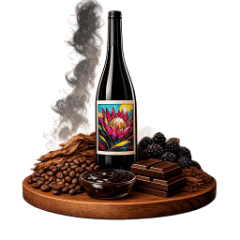
Created by a mad scientist moment in a garden, Pinotage is the bold lovechild of Pinot Noir and Cinsault. It swings from fruity and fun to smoky and brooding, offering a uniquely wild ride in every glass.
Created by a mad scientist moment in a garden, Pinotage is the bold lovechild of Pinot Noir and Cinsault. It swings from fruity and fun to smoky and brooding, offering a uniquely wild ride in every glass.
Created by a mad scientist moment in a garden, Pinotage is the bold lovechild of Pinot Noir and Cinsault. It swings from fruity and fun to smoky and brooding, offering a uniquely wild ride in every glass.
South African Bordeaux Blend
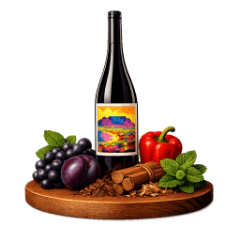
Imagine taking the absolute best traditions of France and giving them a sunny vacation in the Southern Hemisphere. That is exactly what happens here. Winemakers blend Cabernet, Merlot, and friends to create something structured yet incredibly fruity and approachable.
Imagine taking the absolute best traditions of France and giving them a sunny vacation in the Southern Hemisphere. That is exactly what happens here. Winemakers blend Cabernet, Merlot, and friends to create something structured yet incredibly fruity and approachable.
Imagine taking the absolute best traditions of France and giving them a sunny vacation in the Southern Hemisphere. That is exactly what happens here. Winemakers blend Cabernet, Merlot, and friends to create something structured yet incredibly fruity and approachable.
LATEST REVIEWS