«
BROWSE ALL
South Africa
South Africa

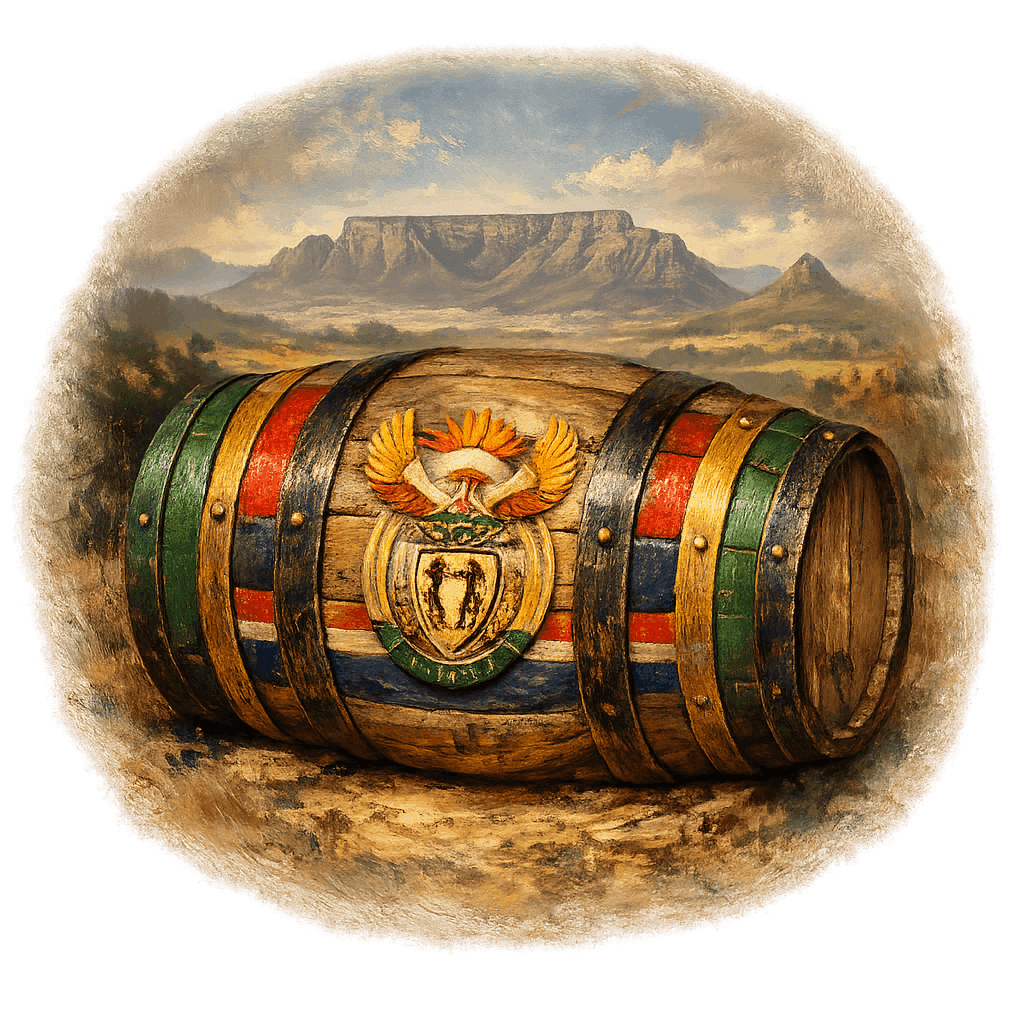
367-year-old traditions meet wild, biodiversity-rich scrubland. It is a historic titan of the "New World" (planted way back in 1659), offering wines that perfectly bridge the gap between European elegance and Southern Hemisphere sunshine.
367-year-old traditions meet wild, biodiversity-rich scrubland. It is a historic titan of the "New World" (planted way back in 1659), offering wines that perfectly bridge the gap between European elegance and Southern Hemisphere sunshine.
367-year-old traditions meet wild, biodiversity-rich scrubland. It is a historic titan of the "New World" (planted way back in 1659), offering wines that perfectly bridge the gap between European elegance and Southern Hemisphere sunshine.
What it's about
Global bridge
Eighth largest
Premium shift
Ranking as the eighth-largest producer globally, this nation occupies a unique sweet spot. It is not quite Old World, yet definitely not typical New World either. Production here is a balancing act between historic estates and modern, gritty independent vintners. Exports are shifting from bulk juice to premium, site-specific bottlings, proving that their ancient soils can compete with anyone, anywhere.
Ranking as the eighth-largest producer globally, this nation occupies a unique sweet spot. It is not quite Old World, yet definitely not typical New World either. Production here is a balancing act between historic estates and modern, gritty independent vintners. Exports are shifting from bulk juice to premium, site-specific bottlings, proving that their ancient soils can compete with anyone, anywhere.
Ranking as the eighth-largest producer globally, this nation occupies a unique sweet spot. It is not quite Old World, yet definitely not typical New World either. Production here is a balancing act between historic estates and modern, gritty independent vintners. Exports are shifting from bulk juice to premium, site-specific bottlings, proving that their ancient soils can compete with anyone, anywhere.
What they're proud of
Heritage seals
Chenin Blanc
Cap Classique
Nothing screams local pride louder than the Old Vine Project. They are the only nation certifying vineyards older than 35 years with a specific heritage seal. Beyond that, they champion Chenin Blanc as their white king and Pinotage as their native red son. Cap Classique sparkling wines also stand tall here, offering Champagne-rivaling quality at a fraction of the price, making locals beam with satisfaction.
Nothing screams local pride louder than the Old Vine Project. They are the only nation certifying vineyards older than 35 years with a specific heritage seal. Beyond that, they champion Chenin Blanc as their white king and Pinotage as their native red son. Cap Classique sparkling wines also stand tall here, offering Champagne-rivaling quality at a fraction of the price, making locals beam with satisfaction.
Nothing screams local pride louder than the Old Vine Project. They are the only nation certifying vineyards older than 35 years with a specific heritage seal. Beyond that, they champion Chenin Blanc as their white king and Pinotage as their native red son. Cap Classique sparkling wines also stand tall here, offering Champagne-rivaling quality at a fraction of the price, making locals beam with satisfaction.
WHAT'S TRENDING
Regenerative farming
Lighter reds
New markets
Regenerative farming is huge right now, with producers obsessed with soil health and biodiversity. You will see a massive shift toward lighter, fresher reds like Cinsault and Grenache, moving away from the heavy oak bombs of the past. There is also a "Sunshine Inside" movement, pushing exports into new African and Asian markets to sidestep tricky tariffs, all while embracing a more natural, low-intervention philosophy.
Regenerative farming is huge right now, with producers obsessed with soil health and biodiversity. You will see a massive shift toward lighter, fresher reds like Cinsault and Grenache, moving away from the heavy oak bombs of the past. There is also a "Sunshine Inside" movement, pushing exports into new African and Asian markets to sidestep tricky tariffs, all while embracing a more natural, low-intervention philosophy.
Regenerative farming is huge right now, with producers obsessed with soil health and biodiversity. You will see a massive shift toward lighter, fresher reds like Cinsault and Grenache, moving away from the heavy oak bombs of the past. There is also a "Sunshine Inside" movement, pushing exports into new African and Asian markets to sidestep tricky tariffs, all while embracing a more natural, low-intervention philosophy.
LOCAL TALES
The Emperor's Last Sip
The Emperor's Last Sip
The Emperor's Last Sip
Long before Cabernet was king, the world was obsessed with a sweet elixir from the Cape called Vin de Constance. It was so famous that even Napoleon Bonaparte became its most devoted fan during his lonely exile on St. Helena. Cut off from his beloved French Burgundies, the fallen Emperor reportedly ordered gallons of this golden nectar to soothe his sorrows. Legend has it that on his deathbed, he refused all food and water, asking only for a glass of Constantia. While the British guarded his island prison, they couldn't stop him from enjoying one last taste of South African sunshine before he checked out.
Long before Cabernet was king, the world was obsessed with a sweet elixir from the Cape called Vin de Constance. It was so famous that even Napoleon Bonaparte became its most devoted fan during his lonely exile on St. Helena. Cut off from his beloved French Burgundies, the fallen Emperor reportedly ordered gallons of this golden nectar to soothe his sorrows. Legend has it that on his deathbed, he refused all food and water, asking only for a glass of Constantia. While the British guarded his island prison, they couldn't stop him from enjoying one last taste of South African sunshine before he checked out.
The Professor's Forgotten Garden
The Professor's Forgotten Garden
The Professor's Forgotten Garden
Pinotage, the country's signature red, owes its existence to sheer dumb luck. In 1925, Professor Abraham Perold crossed Pinot Noir with Cinsault in his garden, hoping to create something unique. But then he took a new job and left the seedlings behind. A university clean-up crew arrived with spades, ready to trash the overgrown garden. Just as they were about to dig up the experimental plants, a young lecturer named Charlie Niehaus cycled past. He recognized the seedlings, stopped the workers, and rescued the batch. If Charlie had decided to take the bus that day, Pinotage would be extinct before it ever reached a bottle.
Pinotage, the country's signature red, owes its existence to sheer dumb luck. In 1925, Professor Abraham Perold crossed Pinot Noir with Cinsault in his garden, hoping to create something unique. But then he took a new job and left the seedlings behind. A university clean-up crew arrived with spades, ready to trash the overgrown garden. Just as they were about to dig up the experimental plants, a young lecturer named Charlie Niehaus cycled past. He recognized the seedlings, stopped the workers, and rescued the batch. If Charlie had decided to take the bus that day, Pinotage would be extinct before it ever reached a bottle.
Rosa's Rescue Mission
Rosa's Rescue Mission
Rosa's Rescue Mission
For decades, old vines in the Cape were seen as useless liabilities - they produced fewer grapes and took up valuable space. Farmers were ripping them out by the acre to plant high-yielding youngsters. Enter Rosa Kruger, a former lawyer with a passion for heritage. She started driving around the backroads, hunting for gnarled, forgotten vineyards and convincing farmers to keep them in the ground. Her crusade birthed the Old Vine Project, making South Africa the only country in the world that officially certifies 'Heritage Vineyards' aged 35 years or older. Now, that little seal on the bottle is a badge of honor, proving that age really does matter.
For decades, old vines in the Cape were seen as useless liabilities - they produced fewer grapes and took up valuable space. Farmers were ripping them out by the acre to plant high-yielding youngsters. Enter Rosa Kruger, a former lawyer with a passion for heritage. She started driving around the backroads, hunting for gnarled, forgotten vineyards and convincing farmers to keep them in the ground. Her crusade birthed the Old Vine Project, making South Africa the only country in the world that officially certifies 'Heritage Vineyards' aged 35 years or older. Now, that little seal on the bottle is a badge of honor, proving that age really does matter.
REGIONS
Stellenbosch
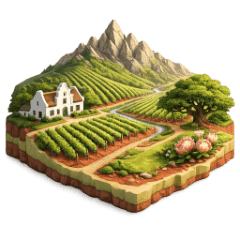
It's basically the undisputed heavyweight champion of South African viticulture. Imagine a lively university town where the homework involves drinking Cabernet Sauvignon and the streets look like they were designed for a postcard from paradise.
It's basically the undisputed heavyweight champion of South African viticulture. Imagine a lively university town where the homework involves drinking Cabernet Sauvignon and the streets look like they were designed for a postcard from paradise.

Paarl
Just north of the usual tourist tracks, this district centers around a gigantic granite dome that glistens like a jewel when wet. Expect a warmer climate delivering powerful reds and surprisingly zesty whites from old bush vines.
Just north of the usual tourist tracks, this district centers around a gigantic granite dome that glistens like a jewel when wet. Expect a warmer climate delivering powerful reds and surprisingly zesty whites from old bush vines.
SUB-REGIONS
Simonsberg-Stellenbosch
(
Stellenbosch
)
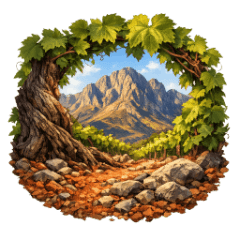
Looming over the valley, this prestigious ward serves as the VIP section of Stellenbosch. It is where Cabernet Sauvignon puts on a tuxedo and demands respect, offering serious structure, deep history, and views that make Instagram weep.
Looming over the valley, this prestigious ward serves as the VIP section of Stellenbosch. It is where Cabernet Sauvignon puts on a tuxedo and demands respect, offering serious structure, deep history, and views that make Instagram weep.
Helderberg
(
Stellenbosch
)
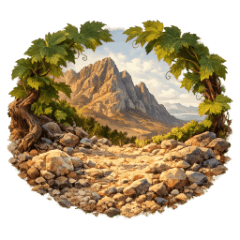
Situated closest to False Bay, this pocket acts like nature’s air conditioner for Cabernet Sauvignon. It is basically the posh neighborhood where big reds go to learn manners, offering structure without roasting your palate.
Situated closest to False Bay, this pocket acts like nature’s air conditioner for Cabernet Sauvignon. It is basically the posh neighborhood where big reds go to learn manners, offering structure without roasting your palate.
WINE STYLES
South African Pinotage
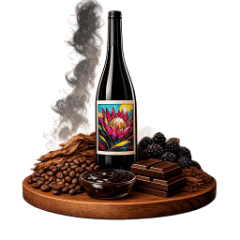
Created by a mad scientist moment in a garden, Pinotage is the bold lovechild of Pinot Noir and Cinsault. It swings from fruity and fun to smoky and brooding, offering a uniquely wild ride in every glass.
Created by a mad scientist moment in a garden, Pinotage is the bold lovechild of Pinot Noir and Cinsault. It swings from fruity and fun to smoky and brooding, offering a uniquely wild ride in every glass.
Created by a mad scientist moment in a garden, Pinotage is the bold lovechild of Pinot Noir and Cinsault. It swings from fruity and fun to smoky and brooding, offering a uniquely wild ride in every glass.
South African Cape Blend
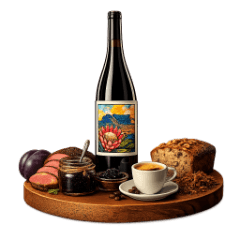
Mandatory Pinotage joins international superstars like Cabernet Sauvignon and Merlot for a uniquely African party. It's a chunky red that proves local flavor plays nicely with global heavyweights in a single bottle.
Mandatory Pinotage joins international superstars like Cabernet Sauvignon and Merlot for a uniquely African party. It's a chunky red that proves local flavor plays nicely with global heavyweights in a single bottle.
Mandatory Pinotage joins international superstars like Cabernet Sauvignon and Merlot for a uniquely African party. It's a chunky red that proves local flavor plays nicely with global heavyweights in a single bottle.
LATEST REVIEWS