«
Bordeaux
,
France
Saint-Estèphe
Brawny Northern Aristocrat
Sitting at the northern tip of the Haut-Médoc, this area is less about polishing its nails and more about getting its boots muddy. It separates itself from southern neighbors with heavier soils and sturdier wines.
Sitting at the northern tip of the Haut-Médoc, this area is less about polishing its nails and more about getting its boots muddy. It separates itself from southern neighbors with heavier soils and sturdier wines.
Sitting at the northern tip of the Haut-Médoc, this area is less about polishing its nails and more about getting its boots muddy. It separates itself from southern neighbors with heavier soils and sturdier wines.





Taste profile
Tannic structure
Dark berries
Earthy grip
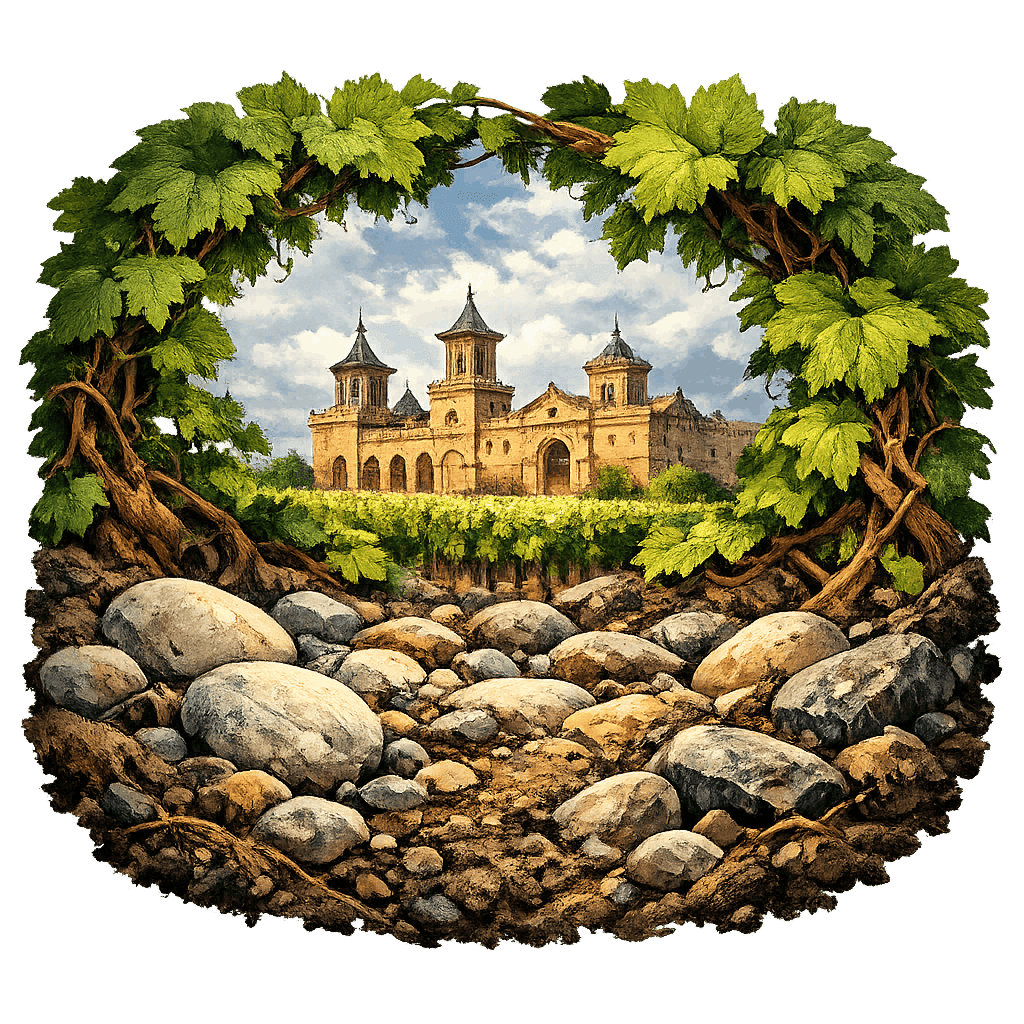
Prepare your palate for a serious handshake. Cabernet Sauvignon dominates here, but because the soil is full of cool, water-retentive clay, Merlot plays a huge role in smoothing out the rough edges. These reds are structured, tannic, and built like tanks. You might find dark berries, earth, and a distinct mineral streak that screams for a hearty steak rather than a delicate salad.
Prepare your palate for a serious handshake. Cabernet Sauvignon dominates here, but because the soil is full of cool, water-retentive clay, Merlot plays a huge role in smoothing out the rough edges. These reds are structured, tannic, and built like tanks. You might find dark berries, earth, and a distinct mineral streak that screams for a hearty steak rather than a delicate salad.
Prepare your palate for a serious handshake. Cabernet Sauvignon dominates here, but because the soil is full of cool, water-retentive clay, Merlot plays a huge role in smoothing out the rough edges. These reds are structured, tannic, and built like tanks. You might find dark berries, earth, and a distinct mineral streak that screams for a hearty steak rather than a delicate salad.
The vibe
Rugged terrain
Windy exposure
Countryside charm
Northernmost of the famous four communal appellations, it feels a bit wilder and more exposed to the Atlantic elements. While Pauillac is busy counting money, this spot feels like the rugged countryside cousin who actually works the land. The landscape is slightly hillier here, giving the vines a nice view of the Gironde estuary while they struggle - in a good way - against the wind.
Northernmost of the famous four communal appellations, it feels a bit wilder and more exposed to the Atlantic elements. While Pauillac is busy counting money, this spot feels like the rugged countryside cousin who actually works the land. The landscape is slightly hillier here, giving the vines a nice view of the Gironde estuary while they struggle - in a good way - against the wind.
Northernmost of the famous four communal appellations, it feels a bit wilder and more exposed to the Atlantic elements. While Pauillac is busy counting money, this spot feels like the rugged countryside cousin who actually works the land. The landscape is slightly hillier here, giving the vines a nice view of the Gironde estuary while they struggle - in a good way - against the wind.
Who's who
Exotic pagodas
Stern classics
Value hunters
Cos d'Estournel is the flashy superstar with its exotic pagoda architecture, looking totally out of place but tasting incredible. Montrose provides the stern, long-lived counterpoint that collectors obsess over. For value hunters who don't have a trust fund, Phélan Ségur and Haut-Marbuzet offer fantastic juice that captures the soul of the region without requiring you to sell a kidney on the black market.
Cos d'Estournel is the flashy superstar with its exotic pagoda architecture, looking totally out of place but tasting incredible. Montrose provides the stern, long-lived counterpoint that collectors obsess over. For value hunters who don't have a trust fund, Phélan Ségur and Haut-Marbuzet offer fantastic juice that captures the soul of the region without requiring you to sell a kidney on the black market.
Cos d'Estournel is the flashy superstar with its exotic pagoda architecture, looking totally out of place but tasting incredible. Montrose provides the stern, long-lived counterpoint that collectors obsess over. For value hunters who don't have a trust fund, Phélan Ségur and Haut-Marbuzet offer fantastic juice that captures the soul of the region without requiring you to sell a kidney on the black market.
LOCAL TALES
The Maharajah's Folly
The Maharajah's Folly
The Maharajah's Folly
Louis-Gaspard d'Estournel wasn't your average French vigneron. Back in the 19th century, this eccentric genius realized his wines traveled exceptionally well to India, returning even better than when they left. Obsessed with the East, he built his winery with absurdly ornate pagodas and adorned it with elephant statues, earning him the nickname 'Maharajah of Saint-Estèphe.' While his neighbors were building boring, traditional chateaux, Louis-Gaspard turned his estate into a wild architectural fantasy. He eventually went broke chasing his passion, forced to sell the property he loved, but his bizarre, beautiful legacy remains the most recognizable landmark in the entire region today.
Louis-Gaspard d'Estournel wasn't your average French vigneron. Back in the 19th century, this eccentric genius realized his wines traveled exceptionally well to India, returning even better than when they left. Obsessed with the East, he built his winery with absurdly ornate pagodas and adorned it with elephant statues, earning him the nickname 'Maharajah of Saint-Estèphe.' While his neighbors were building boring, traditional chateaux, Louis-Gaspard turned his estate into a wild architectural fantasy. He eventually went broke chasing his passion, forced to sell the property he loved, but his bizarre, beautiful legacy remains the most recognizable landmark in the entire region today.
The Clay Saviour
The Clay Saviour
The Clay Saviour
Global warming has been sweating out the rest of Bordeaux, but this northern outpost is sitting pretty with a secret weapon beneath the dirt. While vines in sandy soils down south are gasping for a drink during scorching summers, the heavy clay here acts like a giant underground sponge. It holds onto water like a miser holds onto coins, feeding the roots just enough moisture to keep them happy when the heat waves hit. This used to be considered a disadvantage because the grapes ripened later, but now? It is the cool kid on the block, producing fresh, balanced wines while everyone else is accidentally making raisin juice.
Global warming has been sweating out the rest of Bordeaux, but this northern outpost is sitting pretty with a secret weapon beneath the dirt. While vines in sandy soils down south are gasping for a drink during scorching summers, the heavy clay here acts like a giant underground sponge. It holds onto water like a miser holds onto coins, feeding the roots just enough moisture to keep them happy when the heat waves hit. This used to be considered a disadvantage because the grapes ripened later, but now? It is the cool kid on the block, producing fresh, balanced wines while everyone else is accidentally making raisin juice.
Revenge of the Bourgeois
Revenge of the Bourgeois
Revenge of the Bourgeois
If the 1855 Classification is an exclusive country club that hasn't accepted new members in over a century, this region is the vibrant dive bar where the real action happens. It is the spiritual home of the Cru Bourgeois, a ranking for the chateaux that didn't make the imperial cut back in the day but work twice as hard to prove themselves. Because there are fewer 'Classed Growths' here than in Pauillac or Margaux, the mid-tier producers stepped up their game. You can walk into a shop, grab a bottle with 'Cru Bourgeois' on the label from this zip code, and likely outscore a pricier bottle from a snootier appellation.
If the 1855 Classification is an exclusive country club that hasn't accepted new members in over a century, this region is the vibrant dive bar where the real action happens. It is the spiritual home of the Cru Bourgeois, a ranking for the chateaux that didn't make the imperial cut back in the day but work twice as hard to prove themselves. Because there are fewer 'Classed Growths' here than in Pauillac or Margaux, the mid-tier producers stepped up their game. You can walk into a shop, grab a bottle with 'Cru Bourgeois' on the label from this zip code, and likely outscore a pricier bottle from a snootier appellation.
LOCAL WINE STYLES
Bordeaux Left Bank
Think of a stern but rich uncle who owns a mahogany library. These blends rely heavily on Cabernet Sauvignon to provide structure and power, mellowing out only after years of sitting in a dark cellar.
Think of a stern but rich uncle who owns a mahogany library. These blends rely heavily on Cabernet Sauvignon to provide structure and power, mellowing out only after years of sitting in a dark cellar.
Bordeaux Red Blend
Imagine a structured, polished hug from a French count who lifts weights. This blend combines strength with elegance, offering layers of dark fruit and savory spice that unfold slowly like a good mystery novel.
Imagine a structured, polished hug from a French count who lifts weights. This blend combines strength with elegance, offering layers of dark fruit and savory spice that unfold slowly like a good mystery novel.
LATEST REVIEWS