«
Mosel
,
Germany

Mittelmosel
Riesling's Steep Heart
Welcome to the undisputed heavyweight champion of the region. This winding stretch of river hosts the most iconic vineyards in the country, where impossible slopes catch every ray of sunshine to create liquid gold.
Welcome to the undisputed heavyweight champion of the region. This winding stretch of river hosts the most iconic vineyards in the country, where impossible slopes catch every ray of sunshine to create liquid gold.
Welcome to the undisputed heavyweight champion of the region. This winding stretch of river hosts the most iconic vineyards in the country, where impossible slopes catch every ray of sunshine to create liquid gold.





Taste profile
Slate Spark
Peach Perfect
Electric Acid
Expect a masterclass in tension. The wines here vibrate with energy, juggling lush fruit notes like white peach and ripe melon against a backbone of slate-driven minerality. Acidity acts like a lightning bolt, keeping everything fresh even in the sweeter styles. Whether you are drinking a featherlight Kabinett or a rich Auslese, the balance is supernatural, often finishing with a distinct saline kick that makes you crave another sip.
Expect a masterclass in tension. The wines here vibrate with energy, juggling lush fruit notes like white peach and ripe melon against a backbone of slate-driven minerality. Acidity acts like a lightning bolt, keeping everything fresh even in the sweeter styles. Whether you are drinking a featherlight Kabinett or a rich Auslese, the balance is supernatural, often finishing with a distinct saline kick that makes you crave another sip.
Expect a masterclass in tension. The wines here vibrate with energy, juggling lush fruit notes like white peach and ripe melon against a backbone of slate-driven minerality. Acidity acts like a lightning bolt, keeping everything fresh even in the sweeter styles. Whether you are drinking a featherlight Kabinett or a rich Auslese, the balance is supernatural, often finishing with a distinct saline kick that makes you crave another sip.
The vibe
Vertical Drama
Sundial Watch
River Loops
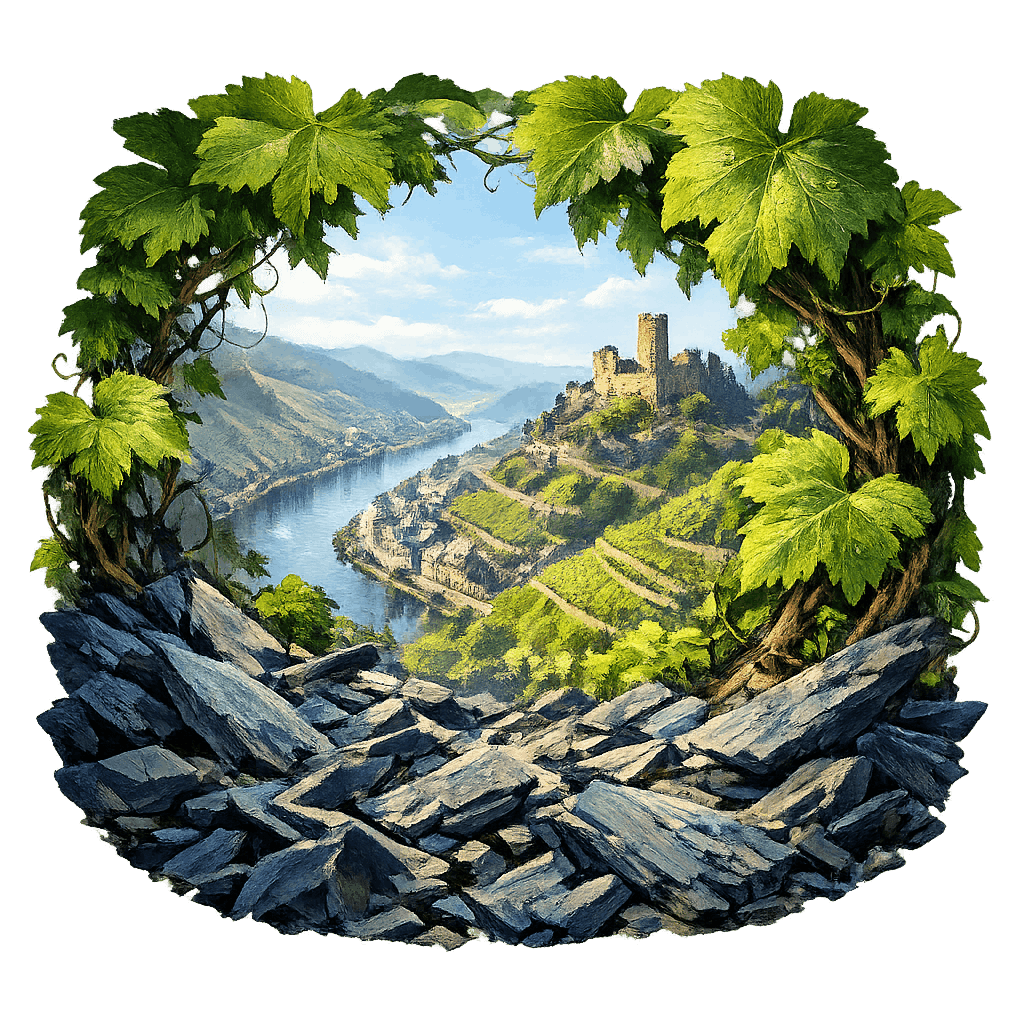
Picture a dramatic canyon where the vineyards are so vertical they practically fall into the river. Quaint timber-framed villages dot the banks, looking up at massive stone sundials built directly into the cliffs. It is a place where history feels alive, tourism is bustling, and walking up a vineyard row counts as an extreme sport. The river loops so aggressively that the sun seems to rise and set in random places.
Picture a dramatic canyon where the vineyards are so vertical they practically fall into the river. Quaint timber-framed villages dot the banks, looking up at massive stone sundials built directly into the cliffs. It is a place where history feels alive, tourism is bustling, and walking up a vineyard row counts as an extreme sport. The river loops so aggressively that the sun seems to rise and set in random places.
Picture a dramatic canyon where the vineyards are so vertical they practically fall into the river. Quaint timber-framed villages dot the banks, looking up at massive stone sundials built directly into the cliffs. It is a place where history feels alive, tourism is bustling, and walking up a vineyard row counts as an extreme sport. The river loops so aggressively that the sun seems to rise and set in random places.
Who's who
Global Icons
Molitor Magic
Rising Stars
Legends define this area. Names like Dr. Loosen and J.J. Prüm are the rockstars everyone knows, consistently delivering world-class bottles that age for decades. However, giants like Markus Molitor are rewriting the rules with massive portfolios, while a new generation of growers is busy rescuing ancient, hard-to-work parcels that yield incredible results. Even the local cooperatives here punch well above their weight, offering great value from famous sites.
Legends define this area. Names like Dr. Loosen and J.J. Prüm are the rockstars everyone knows, consistently delivering world-class bottles that age for decades. However, giants like Markus Molitor are rewriting the rules with massive portfolios, while a new generation of growers is busy rescuing ancient, hard-to-work parcels that yield incredible results. Even the local cooperatives here punch well above their weight, offering great value from famous sites.
Legends define this area. Names like Dr. Loosen and J.J. Prüm are the rockstars everyone knows, consistently delivering world-class bottles that age for decades. However, giants like Markus Molitor are rewriting the rules with massive portfolios, while a new generation of growers is busy rescuing ancient, hard-to-work parcels that yield incredible results. Even the local cooperatives here punch well above their weight, offering great value from famous sites.
LOCAL TALES
The Doctor is In
The Doctor is In
The Doctor is In
In the 14th century, Archbishop Boemund II of Trier fell deathly ill at Landshut Castle. His army of physicians brewed every potion imaginable, but the fever wouldn't break. Just as hope was fading, an old knight brought a flask of wine from a specific steep hill nearby. The Archbishop drank the golden liquid and, miraculously, made a full recovery. He declared, 'This wine is the true doctor!' giving the famous Bernkasteler Doctor vineyard its name. To this day, it remains one of the most expensive and legendary patches of dirt in Germany, proving that sometimes a good glass of Riesling beats an apple a day.
In the 14th century, Archbishop Boemund II of Trier fell deathly ill at Landshut Castle. His army of physicians brewed every potion imaginable, but the fever wouldn't break. Just as hope was fading, an old knight brought a flask of wine from a specific steep hill nearby. The Archbishop drank the golden liquid and, miraculously, made a full recovery. He declared, 'This wine is the true doctor!' giving the famous Bernkasteler Doctor vineyard its name. To this day, it remains one of the most expensive and legendary patches of dirt in Germany, proving that sometimes a good glass of Riesling beats an apple a day.
Time on the Rocks
Time on the Rocks
Time on the Rocks
If you look up at the cliffs near Wehlen or Zeltingen, you will spot massive sundials painted or built directly onto the slate rocks. These 'Sonnenuhr' aren't just quaint decorations for tourists, they were vital tools in the 19th century. Before personal watches were affordable for farmhands, Jodocus Prüm constructed the Wehlener Sonnenuhr in 1842 to help workers know when to break for lunch or end their shift. Today, the name serves a dual purpose: it marks the time, but more importantly, it marks the vineyards with the absolute best sun exposure, guaranteeing ripe grapes and happy drinkers.
If you look up at the cliffs near Wehlen or Zeltingen, you will spot massive sundials painted or built directly onto the slate rocks. These 'Sonnenuhr' aren't just quaint decorations for tourists, they were vital tools in the 19th century. Before personal watches were affordable for farmhands, Jodocus Prüm constructed the Wehlener Sonnenuhr in 1842 to help workers know when to break for lunch or end their shift. Today, the name serves a dual purpose: it marks the time, but more importantly, it marks the vineyards with the absolute best sun exposure, guaranteeing ripe grapes and happy drinkers.
The Survivor Vines
The Survivor Vines
The Survivor Vines
When the phylloxera louse decimated nearly all of Europe's vineyards in the late 19th century, the Mittelmosel stood strong like a fortress. The pest, which attacks root systems, simply couldn't navigate the sharp, jagged slate soil of the region. As a result, while the rest of the world had to graft their European varieties onto American rootstocks to survive, many growers here kept their original vines intact. You can still find ungrafted Riesling stocks that are over 100 years old, often referred to as 'wurzelecht.' These ancient survivors produce wines with a unique purity and complexity that many argue is impossible to replicate with modern grafting.
When the phylloxera louse decimated nearly all of Europe's vineyards in the late 19th century, the Mittelmosel stood strong like a fortress. The pest, which attacks root systems, simply couldn't navigate the sharp, jagged slate soil of the region. As a result, while the rest of the world had to graft their European varieties onto American rootstocks to survive, many growers here kept their original vines intact. You can still find ungrafted Riesling stocks that are over 100 years old, often referred to as 'wurzelecht.' These ancient survivors produce wines with a unique purity and complexity that many argue is impossible to replicate with modern grafting.
LOCAL WINE STYLES
German Riesling
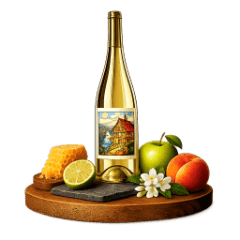
Imagine biting into a crisp green apple while sliding down a slate mountain. This style balances razor-sharp acidity with varying levels of sweetness, creating a tension that vibrates on your tongue like a plucked guitar string.
Imagine biting into a crisp green apple while sliding down a slate mountain. This style balances razor-sharp acidity with varying levels of sweetness, creating a tension that vibrates on your tongue like a plucked guitar string.
German Mosel Riesling
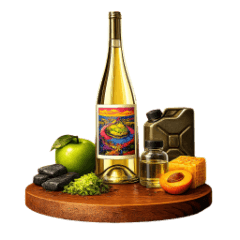
Licking a wet slate rock while chewing on a lemon drop sounds weird, but here it works. This wine balances piercing acidity with delicate sweetness, creating a tension that vibrates on your tongue like electricity.
Licking a wet slate rock while chewing on a lemon drop sounds weird, but here it works. This wine balances piercing acidity with delicate sweetness, creating a tension that vibrates on your tongue like electricity.
LATEST REVIEWS