«
Piedmont
,
Italy

Ghemme
Rustic Spanna Sanctuary
Often treated like the scrappy underdog compared to its big cousins down south, this DOCG delivers Nebbiolo with serious attitude. It is where ancient glacial soils meet wines that demand patience and a hearty steak.
Often treated like the scrappy underdog compared to its big cousins down south, this DOCG delivers Nebbiolo with serious attitude. It is where ancient glacial soils meet wines that demand patience and a hearty steak.
Often treated like the scrappy underdog compared to its big cousins down south, this DOCG delivers Nebbiolo with serious attitude. It is where ancient glacial soils meet wines that demand patience and a hearty steak.
LEADERS

Taste profile
High Tannins
Earthy Spice
Age Worthy
Prepare your palate for a wrestling match that ends in a warm hug. Spanna - the local name for Nebbiolo - creates wines that are notoriously tannic and high in acidity when young. Give them time, and they transform into elegant masterpieces smelling of tar, dried roses, and forest floor. Vespolina usually joins the blend to add a spicy, peppery kick that wakes up the senses.
Prepare your palate for a wrestling match that ends in a warm hug. Spanna - the local name for Nebbiolo - creates wines that are notoriously tannic and high in acidity when young. Give them time, and they transform into elegant masterpieces smelling of tar, dried roses, and forest floor. Vespolina usually joins the blend to add a spicy, peppery kick that wakes up the senses.
Prepare your palate for a wrestling match that ends in a warm hug. Spanna - the local name for Nebbiolo - creates wines that are notoriously tannic and high in acidity when young. Give them time, and they transform into elegant masterpieces smelling of tar, dried roses, and forest floor. Vespolina usually joins the blend to add a spicy, peppery kick that wakes up the senses.
The vibe
Glacial Soils
Quietly Rustic
Mountain Air
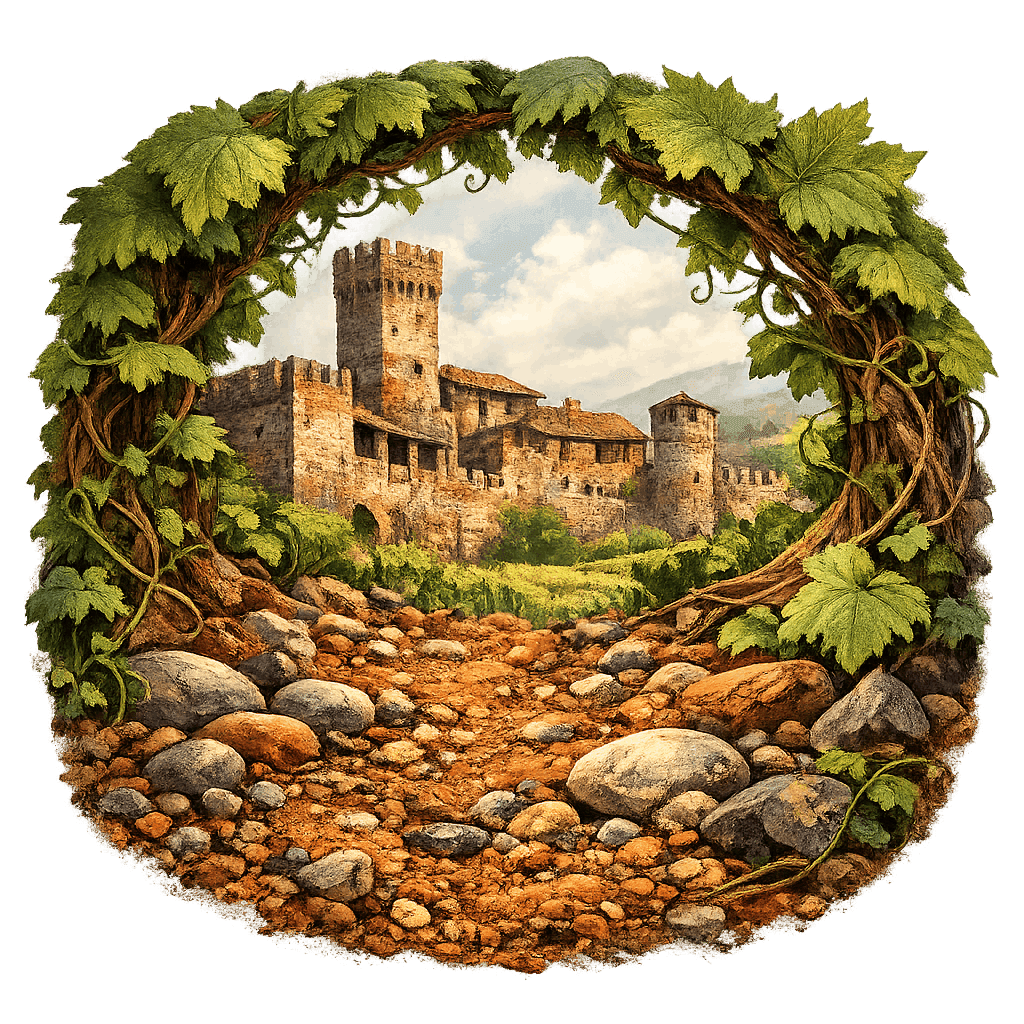
We are way up north in Alto Piemonte, where the glaciers left behind a chaotic mess of rocks and clay. It feels quieter here, far removed from the tourist buses of Alba. The air is crisper, the mountains loom larger, and there is a distinct medieval gritty charm to the brick red architecture that screams history without the polished finish.
We are way up north in Alto Piemonte, where the glaciers left behind a chaotic mess of rocks and clay. It feels quieter here, far removed from the tourist buses of Alba. The air is crisper, the mountains loom larger, and there is a distinct medieval gritty charm to the brick red architecture that screams history without the polished finish.
We are way up north in Alto Piemonte, where the glaciers left behind a chaotic mess of rocks and clay. It feels quieter here, far removed from the tourist buses of Alba. The air is crisper, the mountains loom larger, and there is a distinct medieval gritty charm to the brick red architecture that screams history without the polished finish.
Who's who
Rovellotti
Torraccia
Platinetti
Rovellotti is practically royalty here, crafting traditional examples that define the appellation with zero compromise. If you want something that bridges modern precision with old-school soul, look for Torraccia del Piantavigna. For the adventurers, Platinetti Guido makes stunning wines that show off the softer, more approachable side of this rugged terrain. It is a small club, so everyone knows everyone.
Rovellotti is practically royalty here, crafting traditional examples that define the appellation with zero compromise. If you want something that bridges modern precision with old-school soul, look for Torraccia del Piantavigna. For the adventurers, Platinetti Guido makes stunning wines that show off the softer, more approachable side of this rugged terrain. It is a small club, so everyone knows everyone.
Rovellotti is practically royalty here, crafting traditional examples that define the appellation with zero compromise. If you want something that bridges modern precision with old-school soul, look for Torraccia del Piantavigna. For the adventurers, Platinetti Guido makes stunning wines that show off the softer, more approachable side of this rugged terrain. It is a small club, so everyone knows everyone.
LOCAL TALES
The Booze Bunker
The Booze Bunker
The Booze Bunker
Back in the day, specifically during the Roman era, Ghemme was already a hotspot for thirsty centurions. Pliny the Elder, who essentially wrote the first wine blog, noted the Spionia grape—the ancient ancestor of Spanna. But the real drama came later during the Middle Ages. The local Ricetto - a fortified communal storage area - wasn't just for keeping grain safe. It became the town's panic room during wars between the Guelphs and Ghibellines. While they were busy fighting, the locals were busy making sure their precious wine barrels didn't catch fire or get stolen by a passing army. It turns out, protecting the booze was just as important as protecting the gold.
Back in the day, specifically during the Roman era, Ghemme was already a hotspot for thirsty centurions. Pliny the Elder, who essentially wrote the first wine blog, noted the Spionia grape—the ancient ancestor of Spanna. But the real drama came later during the Middle Ages. The local Ricetto - a fortified communal storage area - wasn't just for keeping grain safe. It became the town's panic room during wars between the Guelphs and Ghibellines. While they were busy fighting, the locals were busy making sure their precious wine barrels didn't catch fire or get stolen by a passing army. It turns out, protecting the booze was just as important as protecting the gold.
What is in a Name?
What is in a Name?
What is in a Name?
You might get confused when looking at a label here because locals stubbornly refuse to call their star variety by its famous name. While the rest of the world bows down to Nebbiolo, the folks in Ghemme insist on calling it Spanna. It is not just them trying to be difficult - okay, maybe a little - but it highlights a genetic variation that adapted to these acidic, glacial soils over centuries. Spanna tends to be a bit more rustic and spicy than the clones found in Barolo. So if you ask for Nebbiolo at a local bar, expect a slight eye roll before they pour you a glass of Spanna.
You might get confused when looking at a label here because locals stubbornly refuse to call their star variety by its famous name. While the rest of the world bows down to Nebbiolo, the folks in Ghemme insist on calling it Spanna. It is not just them trying to be difficult - okay, maybe a little - but it highlights a genetic variation that adapted to these acidic, glacial soils over centuries. Spanna tends to be a bit more rustic and spicy than the clones found in Barolo. So if you ask for Nebbiolo at a local bar, expect a slight eye roll before they pour you a glass of Spanna.
The Forest Fights Back
The Forest Fights Back
The Forest Fights Back
For a long time, this region was practically abandoned. Post-WWII industrialization saw everyone trading their pruning shears for factory jobs in nearby cities. The forest literally took back the vineyards, swallowing up terraced hillsides. But recently, there has been a massive comeback. Young winemakers and investors realized that climate change is making the hotter south difficult, while the cooler, breezy Ghemme is entering its golden age. They are hacking back the overgrowth and restoring ancient stone walls. It is a full-blown renaissance, proving that you can't keep a good terroir down forever. The wines are cooler, fresher, and suddenly very trendy among sommeliers who love a comeback story.
For a long time, this region was practically abandoned. Post-WWII industrialization saw everyone trading their pruning shears for factory jobs in nearby cities. The forest literally took back the vineyards, swallowing up terraced hillsides. But recently, there has been a massive comeback. Young winemakers and investors realized that climate change is making the hotter south difficult, while the cooler, breezy Ghemme is entering its golden age. They are hacking back the overgrowth and restoring ancient stone walls. It is a full-blown renaissance, proving that you can't keep a good terroir down forever. The wines are cooler, fresher, and suddenly very trendy among sommeliers who love a comeback story.
LATEST REVIEWS