«
Lazio
,
Italy
Cesanese del Piglio
Lazio's Spicy Jewel
Italy's capital region often gets ignored for quality reds, but this spot changes the narrative completely. It holds the only guaranteed quality certification for red wine in the area, offering something distinctly local and punchy.
Italy's capital region often gets ignored for quality reds, but this spot changes the narrative completely. It holds the only guaranteed quality certification for red wine in the area, offering something distinctly local and punchy.
Italy's capital region often gets ignored for quality reds, but this spot changes the narrative completely. It holds the only guaranteed quality certification for red wine in the area, offering something distinctly local and punchy.
Taste profile
Pepper Kick
Red Cherry
Earthy Elegance
Cesanese brings serious personality to the glass. Expect a fascinating mix of red cherries, wild berries, and a distinct kick of white pepper that wakes up the palate. Tannins here are noticeable but usually polished. Some folks call it the Pinot Noir of Rome because it balances elegance with an earthy, rustic edge that pairs perfectly with hearty pasta dishes.
Cesanese brings serious personality to the glass. Expect a fascinating mix of red cherries, wild berries, and a distinct kick of white pepper that wakes up the palate. Tannins here are noticeable but usually polished. Some folks call it the Pinot Noir of Rome because it balances elegance with an earthy, rustic edge that pairs perfectly with hearty pasta dishes.
Cesanese brings serious personality to the glass. Expect a fascinating mix of red cherries, wild berries, and a distinct kick of white pepper that wakes up the palate. Tannins here are noticeable but usually polished. Some folks call it the Pinot Noir of Rome because it balances elegance with an earthy, rustic edge that pairs perfectly with hearty pasta dishes.
The vibe
Rural Authenticity
Hilltop Towns
Papal Retreat
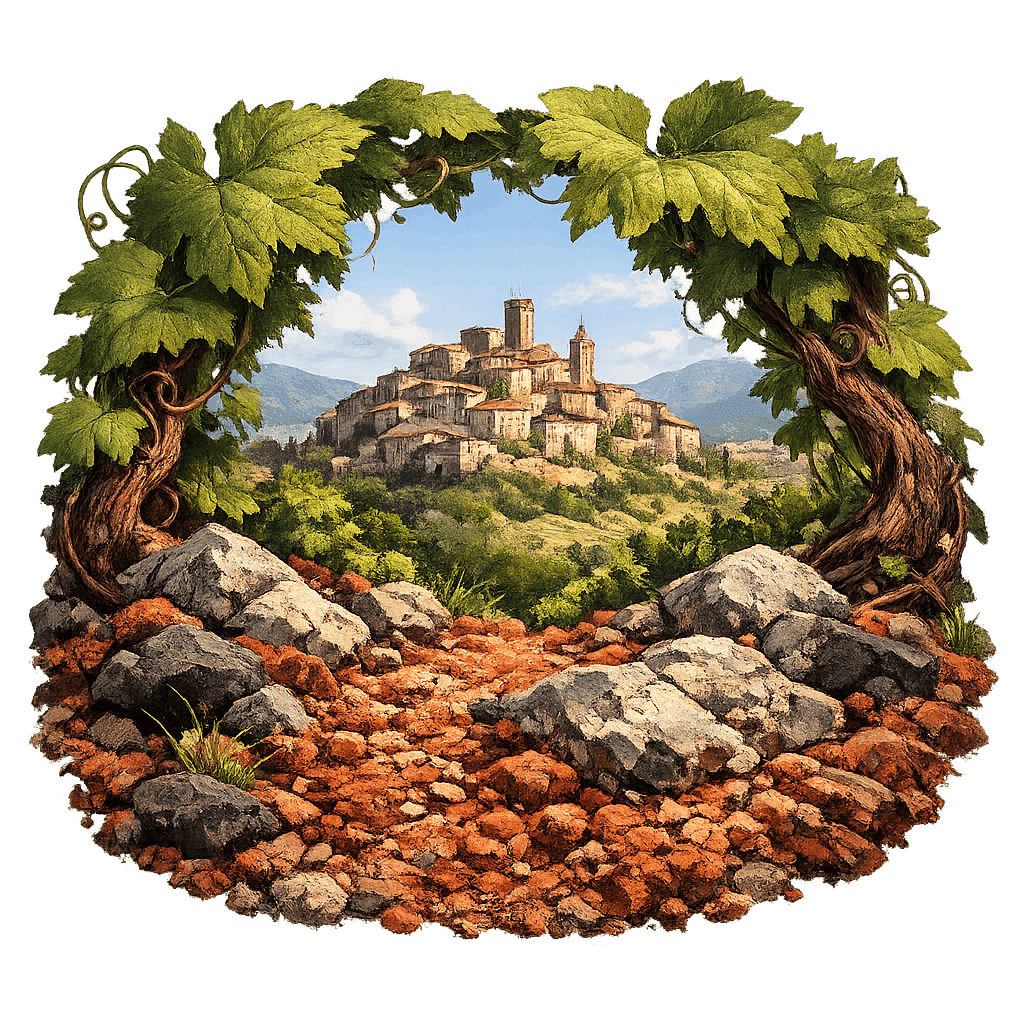
Forget the chaotic traffic of Rome. We are deep in the Ciociaria area where hilltop medieval towns look like they haven't changed in centuries. It is quiet, rural, and incredibly authentic. You are more likely to find a tractor blocking the road than a tour bus. This is the countryside where popes used to hang out to escape the Vatican heat.
Forget the chaotic traffic of Rome. We are deep in the Ciociaria area where hilltop medieval towns look like they haven't changed in centuries. It is quiet, rural, and incredibly authentic. You are more likely to find a tractor blocking the road than a tour bus. This is the countryside where popes used to hang out to escape the Vatican heat.
Forget the chaotic traffic of Rome. We are deep in the Ciociaria area where hilltop medieval towns look like they haven't changed in centuries. It is quiet, rural, and incredibly authentic. You are more likely to find a tractor blocking the road than a tour bus. This is the countryside where popes used to hang out to escape the Vatican heat.
Who's who
Coletti Conti
Casale Ioria
Pileum
A mix of old-school farmers and modern visionaries are putting this place on the map. Look for names like Coletti Conti or Casale della Ioria who really championed the quality revolution here. Pileum is another solid bet for consistency. They are mostly small-scale family operations proving that Lazio can actually produce world-class reds if you treat the land right.
A mix of old-school farmers and modern visionaries are putting this place on the map. Look for names like Coletti Conti or Casale della Ioria who really championed the quality revolution here. Pileum is another solid bet for consistency. They are mostly small-scale family operations proving that Lazio can actually produce world-class reds if you treat the land right.
A mix of old-school farmers and modern visionaries are putting this place on the map. Look for names like Coletti Conti or Casale della Ioria who really championed the quality revolution here. Pileum is another solid bet for consistency. They are mostly small-scale family operations proving that Lazio can actually produce world-class reds if you treat the land right.
LOCAL TALES
The Original Holy Water
The Original Holy Water
The Original Holy Water
While everyone talks about Châteauneuf-du-Pape in France as the ultimate papal wine, this area has a much older claim to the holy throne. Anagni, located right in the heart of the production zone, is known as the City of Popes. During the Middle Ages, four different pontiffs were born here or spent their summers sipping the local juice to escape the Roman swamps. Boniface VIII was famously slapped here - figuratively and perhaps literally - but he definitely consoled himself with the local red. It is wine with a divine seal of approval that predates the French connection by quite a stretch, making it the original holy water for the clergy.
While everyone talks about Châteauneuf-du-Pape in France as the ultimate papal wine, this area has a much older claim to the holy throne. Anagni, located right in the heart of the production zone, is known as the City of Popes. During the Middle Ages, four different pontiffs were born here or spent their summers sipping the local juice to escape the Roman swamps. Boniface VIII was famously slapped here - figuratively and perhaps literally - but he definitely consoled himself with the local red. It is wine with a divine seal of approval that predates the French connection by quite a stretch, making it the original holy water for the clergy.
Breaking the Glass Ceiling
Breaking the Glass Ceiling
Breaking the Glass Ceiling
For the longest time, Roman wine meant watery white stuff you chugged from a carafe at a trattoria while eating carbonara. Nobody took the reds seriously until Piglio stepped up. In 2008, it became the very first DOCG for red wine in the entire Lazio region. That is the highest classification level in Italy. It was a massive mic-drop moment for the locals who had been telling everyone for years that their indigenous fruit was special. Suddenly, sommeliers started paying attention to this spicy, complex beast, realizing it wasn't just cheap house wine but something capable of aging and evolving like the big boys up north.
For the longest time, Roman wine meant watery white stuff you chugged from a carafe at a trattoria while eating carbonara. Nobody took the reds seriously until Piglio stepped up. In 2008, it became the very first DOCG for red wine in the entire Lazio region. That is the highest classification level in Italy. It was a massive mic-drop moment for the locals who had been telling everyone for years that their indigenous fruit was special. Suddenly, sommeliers started paying attention to this spicy, complex beast, realizing it wasn't just cheap house wine but something capable of aging and evolving like the big boys up north.
The Clone Wars
The Clone Wars
The Clone Wars
Winemakers here are obsessed with a specific family feud involving the fruit itself. You have two main players: Cesanese Comune, which yields a lot of juice and is happy-go-lucky, and Cesanese d’Affile, the moody, low-yielding, high-quality sibling. The best producers are betting everything on d'Affile because it brings the complexity and finesse. It is a bit of a nightmare to farm since it ripens super late - sometimes into November - risking rain and rot. But when they nail it, the result is magical. It is basically a high-stakes gambling game played annually by farmers who refuse to plant easier international options like Merlot to maintain local pride.
Winemakers here are obsessed with a specific family feud involving the fruit itself. You have two main players: Cesanese Comune, which yields a lot of juice and is happy-go-lucky, and Cesanese d’Affile, the moody, low-yielding, high-quality sibling. The best producers are betting everything on d'Affile because it brings the complexity and finesse. It is a bit of a nightmare to farm since it ripens super late - sometimes into November - risking rain and rot. But when they nail it, the result is magical. It is basically a high-stakes gambling game played annually by farmers who refuse to plant easier international options like Merlot to maintain local pride.
LATEST REVIEWS