«
Valle d'Aosta
,
Italy
Arnad-Montjovet
Spiced Mountain Nebbiolo
If Donnas is the strict older brother, Arnad-Montjovet is the cool uncle who brings snacks. Located just up the valley, it offers a slightly friendlier take on mountain reds without losing that rocky edge.
If Donnas is the strict older brother, Arnad-Montjovet is the cool uncle who brings snacks. Located just up the valley, it offers a slightly friendlier take on mountain reds without losing that rocky edge.
If Donnas is the strict older brother, Arnad-Montjovet is the cool uncle who brings snacks. Located just up the valley, it offers a slightly friendlier take on mountain reds without losing that rocky edge.

Taste profile
Spiced red
Herbal kick
Almond finish
Picotendro is the star here, which is just the local alias for Nebbiolo. Winemakers blend it with smoother locals like Vien de Nus to soften the tannins. You get waves of wild strawberry mixed with white pepper and herbs. It is rustic but polite, like a lumberjack holding a door open. The finish usually carries a distinct almond note that screams for salty food.
Picotendro is the star here, which is just the local alias for Nebbiolo. Winemakers blend it with smoother locals like Vien de Nus to soften the tannins. You get waves of wild strawberry mixed with white pepper and herbs. It is rustic but polite, like a lumberjack holding a door open. The finish usually carries a distinct almond note that screams for salty food.
Picotendro is the star here, which is just the local alias for Nebbiolo. Winemakers blend it with smoother locals like Vien de Nus to soften the tannins. You get waves of wild strawberry mixed with white pepper and herbs. It is rustic but polite, like a lumberjack holding a door open. The finish usually carries a distinct almond note that screams for salty food.
The vibe
Medieval castles
Lard land
Rocky hills
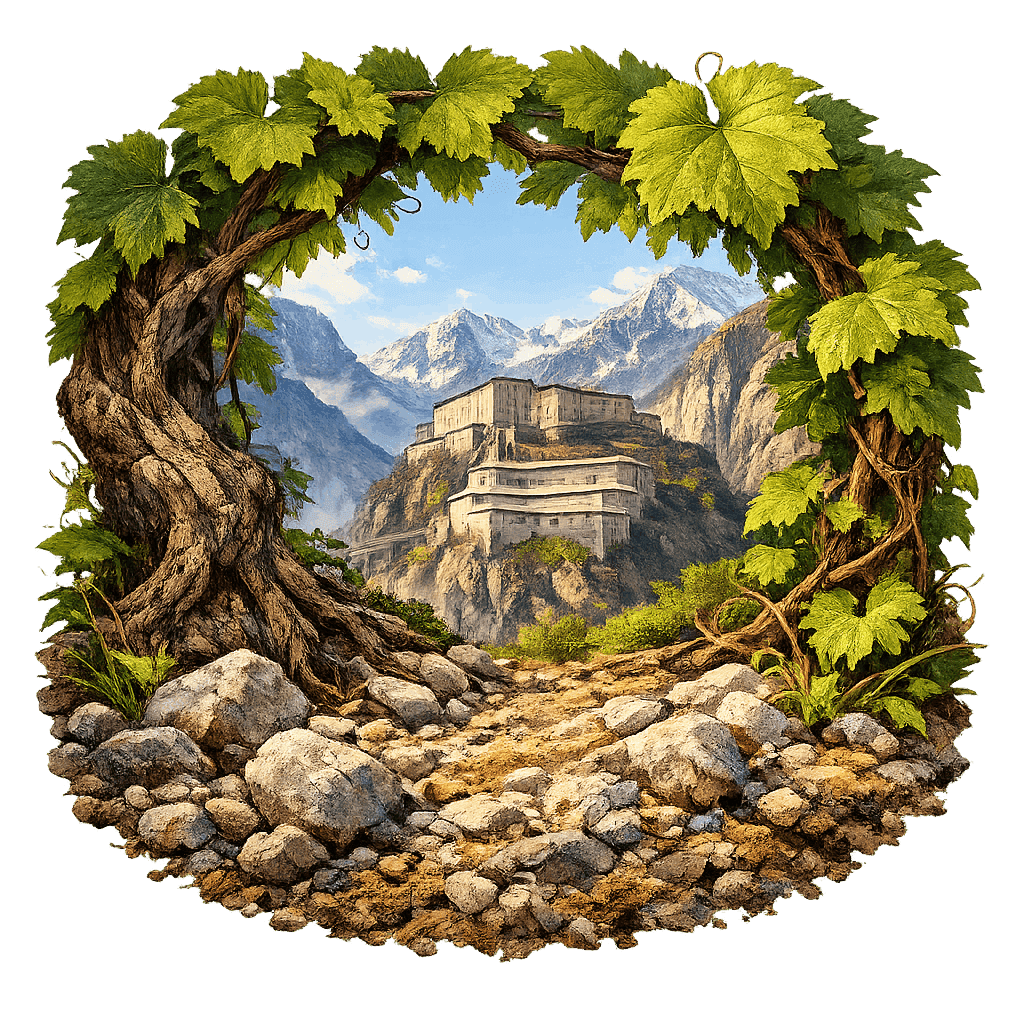
Driving through here feels like entering a medieval fantasy novel. You are surrounded by imposing fortresses and stone villages clinging to the hillsides. Life revolves around the famous local lard - yes, cured pig fat - and hard work in steep vineyards. It feels ancient and quiet, with a landscape that demands respect and good hiking boots. The air smells like slate and forestry.
Driving through here feels like entering a medieval fantasy novel. You are surrounded by imposing fortresses and stone villages clinging to the hillsides. Life revolves around the famous local lard - yes, cured pig fat - and hard work in steep vineyards. It feels ancient and quiet, with a landscape that demands respect and good hiking boots. The air smells like slate and forestry.
Driving through here feels like entering a medieval fantasy novel. You are surrounded by imposing fortresses and stone villages clinging to the hillsides. Life revolves around the famous local lard - yes, cured pig fat - and hard work in steep vineyards. It feels ancient and quiet, with a landscape that demands respect and good hiking boots. The air smells like slate and forestry.
Who's who
La Kiuva
Dino Bonin
Hidden gems
Finding bottles here is a scavenger hunt. La Kiuva is the main cooperative keeping the lights on, producing reliable and affordable examples that actually make it out of Italy. Small growers like Dino Bonin are harder to spot but worth the effort if you enjoy rare finds. Most production is consumed locally by thirsty hikers and villagers who know exactly how good this stuff is.
Finding bottles here is a scavenger hunt. La Kiuva is the main cooperative keeping the lights on, producing reliable and affordable examples that actually make it out of Italy. Small growers like Dino Bonin are harder to spot but worth the effort if you enjoy rare finds. Most production is consumed locally by thirsty hikers and villagers who know exactly how good this stuff is.
Finding bottles here is a scavenger hunt. La Kiuva is the main cooperative keeping the lights on, producing reliable and affordable examples that actually make it out of Italy. Small growers like Dino Bonin are harder to spot but worth the effort if you enjoy rare finds. Most production is consumed locally by thirsty hikers and villagers who know exactly how good this stuff is.
LOCAL TALES
The Small Tender One
The Small Tender One
The Small Tender One
Locals call Nebbiolo by the name Picotendro, which translates roughly to the small tender one. It sounds like a cute pet name you would give a kitten, but do not let that fool you. Picotendro has to survive alpine winters and summers that roast the rocks. The name actually refers to the small size of the berries and their fragility just before harvest. Farmers have spent centuries babying these clusters on terrifyingly steep terraces. If you call it Nebbiolo at a local bar, you might get a polite nod, but call it Picotendro and you are suddenly family. It is a linguistic secret handshake that proves you understand the specific struggle of growing fruit on a cliff.
Locals call Nebbiolo by the name Picotendro, which translates roughly to the small tender one. It sounds like a cute pet name you would give a kitten, but do not let that fool you. Picotendro has to survive alpine winters and summers that roast the rocks. The name actually refers to the small size of the berries and their fragility just before harvest. Farmers have spent centuries babying these clusters on terrifyingly steep terraces. If you call it Nebbiolo at a local bar, you might get a polite nod, but call it Picotendro and you are suddenly family. It is a linguistic secret handshake that proves you understand the specific struggle of growing fruit on a cliff.
White Gold of the Alps
White Gold of the Alps
White Gold of the Alps
You cannot talk about Arnad-Montjovet without mentioning the white gold of the region. I am talking about Lard d'Arnad. This is not just grease - it is PDO protected cured pork backfat seasoned with rosemary, garlic, sage, and bay leaves, then aged in wooden chestnut tubs. Why does this matter for wine? Because the local reds were basically engineered by nature to cut through that rich, melting fat. The acidity in the wine acts like a laser beam through the richness of the lard on toast. It is arguably the best food and wine pairing in the entire Alps. Visiting a cellar here without eating a slice of this fatty heaven is legally considered a crime against taste buds.
You cannot talk about Arnad-Montjovet without mentioning the white gold of the region. I am talking about Lard d'Arnad. This is not just grease - it is PDO protected cured pork backfat seasoned with rosemary, garlic, sage, and bay leaves, then aged in wooden chestnut tubs. Why does this matter for wine? Because the local reds were basically engineered by nature to cut through that rich, melting fat. The acidity in the wine acts like a laser beam through the richness of the lard on toast. It is arguably the best food and wine pairing in the entire Alps. Visiting a cellar here without eating a slice of this fatty heaven is legally considered a crime against taste buds.
Napoleon Was Here
Napoleon Was Here
Napoleon Was Here
While drinking these wines, look up. You are likely sitting in the shadow of the Forte di Bard or the Castello di Verrès. This valley was the main highway for armies passing between Italy and France for centuries. Napoleon actually marched his troops right through here, and local legend says his soldiers might have helped themselves to quite a bit of the local vintage to keep warm. The fortifications meant safety, and safety meant monks and nobles had time to refine viticulture. Every sip you take is essentially a byproduct of medieval military strategy. Those stone walls protected the vines just as much as they protected the people, allowing this specific clone of Nebbiolo to survive the chaos of history.
While drinking these wines, look up. You are likely sitting in the shadow of the Forte di Bard or the Castello di Verrès. This valley was the main highway for armies passing between Italy and France for centuries. Napoleon actually marched his troops right through here, and local legend says his soldiers might have helped themselves to quite a bit of the local vintage to keep warm. The fortifications meant safety, and safety meant monks and nobles had time to refine viticulture. Every sip you take is essentially a byproduct of medieval military strategy. Those stone walls protected the vines just as much as they protected the people, allowing this specific clone of Nebbiolo to survive the chaos of history.
LATEST REVIEWS