«
Piedmont
,
Italy

Alto Piemonte
Alpine Volcanic Cool
Way up north where glaciers meet ancient volcanoes, you find Nebbiolo with a serious attitude adjustment. It is crisp, mineral-laden, and significantly cheaper than its famous cousins down south, offering high-altitude freshness that is impossible to fake.
Way up north where glaciers meet ancient volcanoes, you find Nebbiolo with a serious attitude adjustment. It is crisp, mineral-laden, and significantly cheaper than its famous cousins down south, offering high-altitude freshness that is impossible to fake.
Way up north where glaciers meet ancient volcanoes, you find Nebbiolo with a serious attitude adjustment. It is crisp, mineral-laden, and significantly cheaper than its famous cousins down south, offering high-altitude freshness that is impossible to fake.
Taste profile
Electric acidity
Salty mineral
Alpine herbs
Prepare your palate for a serious acid trip - the good kind. Wines here are nervous, high-toned, and etched with salty minerality thanks to those volcanic and glacial soils. Nebbiolo (called Spanna here) is lighter in color but fierce in structure, smelling like crushed rocks, wild berries, and alpine herbs. Vespolina adds spice while Croatina brings the color. They demand hearty food and a bit of patience.
Prepare your palate for a serious acid trip - the good kind. Wines here are nervous, high-toned, and etched with salty minerality thanks to those volcanic and glacial soils. Nebbiolo (called Spanna here) is lighter in color but fierce in structure, smelling like crushed rocks, wild berries, and alpine herbs. Vespolina adds spice while Croatina brings the color. They demand hearty food and a bit of patience.
Prepare your palate for a serious acid trip - the good kind. Wines here are nervous, high-toned, and etched with salty minerality thanks to those volcanic and glacial soils. Nebbiolo (called Spanna here) is lighter in color but fierce in structure, smelling like crushed rocks, wild berries, and alpine herbs. Vespolina adds spice while Croatina brings the color. They demand hearty food and a bit of patience.
The vibe
Ancient volcanoes
Dense forests
High altitude
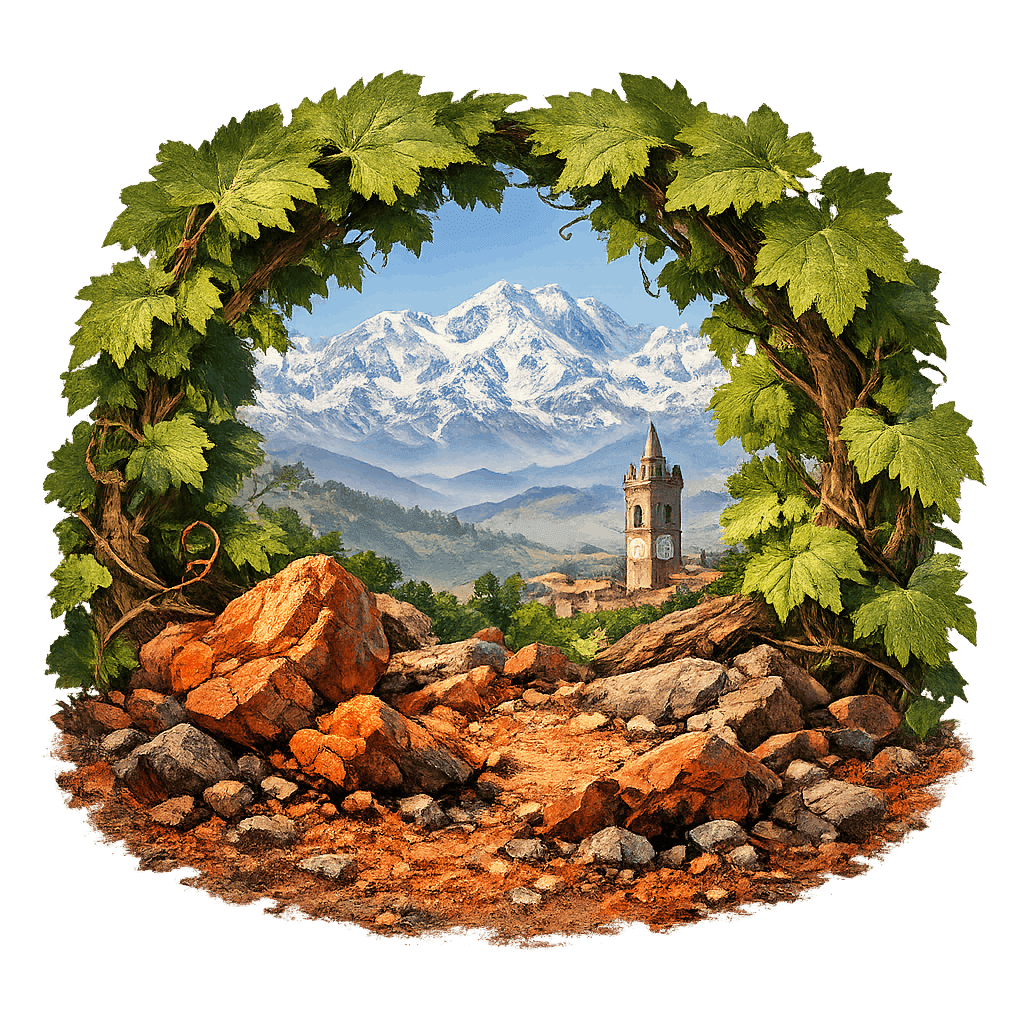
Imagine the Langhe but delete the tour buses and add a massive supervolcano. You are in the foothills of the Alps, surrounded by dense forests and dramatic peaks. It feels wilder and more primal here. The rhythm is slower, the air is thinner, and the soil is basically exploded magma from millions of years ago. Hiking boots are more appropriate than loafers in these vineyards.
Imagine the Langhe but delete the tour buses and add a massive supervolcano. You are in the foothills of the Alps, surrounded by dense forests and dramatic peaks. It feels wilder and more primal here. The rhythm is slower, the air is thinner, and the soil is basically exploded magma from millions of years ago. Hiking boots are more appropriate than loafers in these vineyards.
Imagine the Langhe but delete the tour buses and add a massive supervolcano. You are in the foothills of the Alps, surrounded by dense forests and dramatic peaks. It feels wilder and more primal here. The rhythm is slower, the air is thinner, and the soil is basically exploded magma from millions of years ago. Hiking boots are more appropriate than loafers in these vineyards.
Who's who
Nervi Conterno
Crooked bottles
Historic families
Just when locals thought they were flying under the radar, big-shot Roberto Conterno bought the historic Nervi estate in Gattinara, proving this region is the next big thing. Look out for the quirky crooked bottles from Travaglini, which are impossible to stack but full of history. Antoniolo and Ferrando are legends keeping the traditional flame alive in their respective corners of this fragmented map.
Just when locals thought they were flying under the radar, big-shot Roberto Conterno bought the historic Nervi estate in Gattinara, proving this region is the next big thing. Look out for the quirky crooked bottles from Travaglini, which are impossible to stack but full of history. Antoniolo and Ferrando are legends keeping the traditional flame alive in their respective corners of this fragmented map.
Just when locals thought they were flying under the radar, big-shot Roberto Conterno bought the historic Nervi estate in Gattinara, proving this region is the next big thing. Look out for the quirky crooked bottles from Travaglini, which are impossible to stack but full of history. Antoniolo and Ferrando are legends keeping the traditional flame alive in their respective corners of this fragmented map.
LOCAL TALES
The Sleeping Beauty
The Sleeping Beauty
The Sleeping Beauty
Long before Barolo became the king of Italian wine, Alto Piemonte was actually the celebrity of the region. In the 19th century, Gattinara was planting way more acreage than its southern neighbors, and Quintino Sella (the statesman who toasted the Unification) was raising a glass of these mountain reds. But then phylloxera hit, followed by a massive hailstorm in 1905, and finally the industrial boom that pulled farmers into factories in Milan and Turin. The forests reclaimed the vineyards, leaving stone terraces hidden in the woods like Mayan ruins. Today, winemakers are basically wine archaeologists, reclaiming these lost plots from the aggressive trees to bring the glory days back.
Long before Barolo became the king of Italian wine, Alto Piemonte was actually the celebrity of the region. In the 19th century, Gattinara was planting way more acreage than its southern neighbors, and Quintino Sella (the statesman who toasted the Unification) was raising a glass of these mountain reds. But then phylloxera hit, followed by a massive hailstorm in 1905, and finally the industrial boom that pulled farmers into factories in Milan and Turin. The forests reclaimed the vineyards, leaving stone terraces hidden in the woods like Mayan ruins. Today, winemakers are basically wine archaeologists, reclaiming these lost plots from the aggressive trees to bring the glory days back.
Magma in a Glass
Magma in a Glass
Magma in a Glass
We need to talk about the fact that you are drinking wine grown inside a fossilized supervolcano. The Sesia Supervolcano exploded nearly 300 million years ago, which is terrifying to think about but great for your glass. The explosion was so massive it flipped the earth's crust upside down, exposing deep mantle rocks to the surface. This means the roots of Nebbiolo are digging into dirt that shouldn't legally be on the surface of the planet. It gives the wines a stinging, metallic, blood-like minerality that you just cannot replicate on boring limestone. It is literally tectonic violence in a bottle.
We need to talk about the fact that you are drinking wine grown inside a fossilized supervolcano. The Sesia Supervolcano exploded nearly 300 million years ago, which is terrifying to think about but great for your glass. The explosion was so massive it flipped the earth's crust upside down, exposing deep mantle rocks to the surface. This means the roots of Nebbiolo are digging into dirt that shouldn't legally be on the surface of the planet. It gives the wines a stinging, metallic, blood-like minerality that you just cannot replicate on boring limestone. It is literally tectonic violence in a bottle.
The Melted Bottle
The Melted Bottle
The Melted Bottle
You cannot visit this region without encountering the weirdest bottle in the wine world. If you order a Travaglini Gattinara, it comes in a warped, asymmetrical glass vessel that looks like it melted in the sun. It isn't a drunk glassblower's mistake - it was designed in 1958 to catch sediment. The idea was that the angles would trap the sludge in the shoulder while decanting, letting you pour clear wine without a candle or fancy equipment. It is a nightmare for sommeliers trying to store it in a standard wine rack, but it remains an iconic symbol of the region's quirky, practical, and distinct personality.
You cannot visit this region without encountering the weirdest bottle in the wine world. If you order a Travaglini Gattinara, it comes in a warped, asymmetrical glass vessel that looks like it melted in the sun. It isn't a drunk glassblower's mistake - it was designed in 1958 to catch sediment. The idea was that the angles would trap the sludge in the shoulder while decanting, letting you pour clear wine without a candle or fancy equipment. It is a nightmare for sommeliers trying to store it in a standard wine rack, but it remains an iconic symbol of the region's quirky, practical, and distinct personality.
LATEST REVIEWS