«
Hungary

Tokaji
Tokaji
Tokaji
Sweet Golden Legend
Imagine a place where mold is actually the guest of honor rather than a kitchen nightmare. This legendary Hungarian spot produces dessert wines so famous they used to be prescription medicine for aristocrats.
Imagine a place where mold is actually the guest of honor rather than a kitchen nightmare. This legendary Hungarian spot produces dessert wines so famous they used to be prescription medicine for aristocrats.
Imagine a place where mold is actually the guest of honor rather than a kitchen nightmare. This legendary Hungarian spot produces dessert wines so famous they used to be prescription medicine for aristocrats.



Why it's unique
Oldest classification
Noble rot
Kingly wines
It boasts the world's first vineyard classification system, beating Bordeaux to the punch by quite a bit. Botrytis cinerea, or noble rot, attacks Furmint and Hárslevelű here with surgical precision, shriveling berries into raisins packed with sugar and acid. This results in the legendary Aszú wines, historically dubbed the king of wines and wine of kings by Louis XIV himself.
It boasts the world's first vineyard classification system, beating Bordeaux to the punch by quite a bit. Botrytis cinerea, or noble rot, attacks Furmint and Hárslevelű here with surgical precision, shriveling berries into raisins packed with sugar and acid. This results in the legendary Aszú wines, historically dubbed the king of wines and wine of kings by Louis XIV himself.
It boasts the world's first vineyard classification system, beating Bordeaux to the punch by quite a bit. Botrytis cinerea, or noble rot, attacks Furmint and Hárslevelű here with surgical precision, shriveling berries into raisins packed with sugar and acid. This results in the legendary Aszú wines, historically dubbed the king of wines and wine of kings by Louis XIV himself.
Terroir
River mists
Volcanic soil
High acidity
Two rivers, the Bodrog and the Tisza, meet here to create a distinct microclimate full of autumn mists perfect for encouraging fungal magic on the berries. Underneath the vines, you find a chaotic mix of volcanic soils, clay, and loess that imparts a fierce, fiery acidity. This acidity is the secret weapon that keeps these sugar bombs from tasting like straight syrup.
Two rivers, the Bodrog and the Tisza, meet here to create a distinct microclimate full of autumn mists perfect for encouraging fungal magic on the berries. Underneath the vines, you find a chaotic mix of volcanic soils, clay, and loess that imparts a fierce, fiery acidity. This acidity is the secret weapon that keeps these sugar bombs from tasting like straight syrup.
Two rivers, the Bodrog and the Tisza, meet here to create a distinct microclimate full of autumn mists perfect for encouraging fungal magic on the berries. Underneath the vines, you find a chaotic mix of volcanic soils, clay, and loess that imparts a fierce, fiery acidity. This acidity is the secret weapon that keeps these sugar bombs from tasting like straight syrup.
You gotta try
Dry Furmint
Aszú 6
Pure Eszencia
Start with a dry Furmint to see how electric this region can be without the sugar. Then, you absolutely must dive into an Aszú 5 or 6 Puttonyos. It is liquid apricot jam mixed with marmalade and honey, yet it finishes clean. If you feel incredibly wealthy or just reckless, find a spoon and try Eszencia, which is practically pure nectar.
Start with a dry Furmint to see how electric this region can be without the sugar. Then, you absolutely must dive into an Aszú 5 or 6 Puttonyos. It is liquid apricot jam mixed with marmalade and honey, yet it finishes clean. If you feel incredibly wealthy or just reckless, find a spoon and try Eszencia, which is practically pure nectar.
Start with a dry Furmint to see how electric this region can be without the sugar. Then, you absolutely must dive into an Aszú 5 or 6 Puttonyos. It is liquid apricot jam mixed with marmalade and honey, yet it finishes clean. If you feel incredibly wealthy or just reckless, find a spoon and try Eszencia, which is practically pure nectar.
LOCAL TALES
The Accidental Invention
The Accidental Invention
The Accidental Invention
Back in the 1630s, things were tense. The Turks were knocking on the door, and fear ran high. A preacher named Laczkó Máté urged the Lorántffy family to delay the harvest because of imminent invasion. By the time they finally felt safe enough to pick, the berries were ugly, shriveled, and covered in gray fuzz. They thought the crop was ruined but pressed it anyway out of desperation. While local lore credits this moment as the invention of Aszú, historical records show the style actually existed by 1571. Regardless, the decision to embrace the rot was brilliant, creating a sweetness that would eventually charm every royal court in Europe.
Back in the 1630s, things were tense. The Turks were knocking on the door, and fear ran high. A preacher named Laczkó Máté urged the Lorántffy family to delay the harvest because of imminent invasion. By the time they finally felt safe enough to pick, the berries were ugly, shriveled, and covered in gray fuzz. They thought the crop was ruined but pressed it anyway out of desperation. While local lore credits this moment as the invention of Aszú, historical records show the style actually existed by 1571. Regardless, the decision to embrace the rot was brilliant, creating a sweetness that would eventually charm every royal court in Europe.
Back in the 1630s, things were tense. The Turks were knocking on the door, and fear ran high. A preacher named Laczkó Máté urged the Lorántffy family to delay the harvest because of imminent invasion. By the time they finally felt safe enough to pick, the berries were ugly, shriveled, and covered in gray fuzz. They thought the crop was ruined but pressed it anyway out of desperation. While local lore credits this moment as the invention of Aszú, historical records show the style actually existed by 1571. Regardless, the decision to embrace the rot was brilliant, creating a sweetness that would eventually charm every royal court in Europe.
Spoons of Life
Spoons of Life
Spoons of Life
Eszencia is the stuff of myths. It is not really wine in the traditional sense, it is the free-run juice that drips from the Aszú berries solely under their own weight in the vat. Because the sugar content is absurdly high - sometimes reaching levels of maple syrup - yeast struggles to survive, let alone work. Fermentation takes years, sometimes decades, to reach maybe 2% or 3% alcohol. Historically, this wasn't something you drank from a glass. Rich aristocrats would consume it from a crystal spoon as a health tonic. It was believed to cure everything from the common cold to dying, reviving people on their deathbeds for one last toast.
Eszencia is the stuff of myths. It is not really wine in the traditional sense, it is the free-run juice that drips from the Aszú berries solely under their own weight in the vat. Because the sugar content is absurdly high - sometimes reaching levels of maple syrup - yeast struggles to survive, let alone work. Fermentation takes years, sometimes decades, to reach maybe 2% or 3% alcohol. Historically, this wasn't something you drank from a glass. Rich aristocrats would consume it from a crystal spoon as a health tonic. It was believed to cure everything from the common cold to dying, reviving people on their deathbeds for one last toast.
Eszencia is the stuff of myths. It is not really wine in the traditional sense, it is the free-run juice that drips from the Aszú berries solely under their own weight in the vat. Because the sugar content is absurdly high - sometimes reaching levels of maple syrup - yeast struggles to survive, let alone work. Fermentation takes years, sometimes decades, to reach maybe 2% or 3% alcohol. Historically, this wasn't something you drank from a glass. Rich aristocrats would consume it from a crystal spoon as a health tonic. It was believed to cure everything from the common cold to dying, reviving people on their deathbeds for one last toast.
Curtain Calls
Curtain Calls
Curtain Calls
For a long chunk of the 20th century, quantity ruled over quality here. During the communist era, the intricate, laborious process of hand-picking individual botrytized berries was swapped for mass production. The goal was to ship as much sweet booze as possible to the Soviet Union. The distinctive, oxidation-heavy style became standard not by choice, but by industrial necessity. However, after the Iron Curtain fell, investors and winemakers rushed back in. They cleaned up the cellars, reintroduced strict selection, and proved that Furmint could be a world-class dry wine too. Today, the region is back to its golden, glorious self, reclaiming its throne as a producer of one of the world's most complex elixirs.
For a long chunk of the 20th century, quantity ruled over quality here. During the communist era, the intricate, laborious process of hand-picking individual botrytized berries was swapped for mass production. The goal was to ship as much sweet booze as possible to the Soviet Union. The distinctive, oxidation-heavy style became standard not by choice, but by industrial necessity. However, after the Iron Curtain fell, investors and winemakers rushed back in. They cleaned up the cellars, reintroduced strict selection, and proved that Furmint could be a world-class dry wine too. Today, the region is back to its golden, glorious self, reclaiming its throne as a producer of one of the world's most complex elixirs.
For a long chunk of the 20th century, quantity ruled over quality here. During the communist era, the intricate, laborious process of hand-picking individual botrytized berries was swapped for mass production. The goal was to ship as much sweet booze as possible to the Soviet Union. The distinctive, oxidation-heavy style became standard not by choice, but by industrial necessity. However, after the Iron Curtain fell, investors and winemakers rushed back in. They cleaned up the cellars, reintroduced strict selection, and proved that Furmint could be a world-class dry wine too. Today, the region is back to its golden, glorious self, reclaiming its throne as a producer of one of the world's most complex elixirs.
LOCAL WINE STYLES
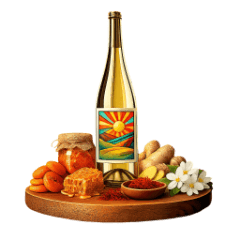
Hungarian Tokaji Aszú
Imagine sipping pure sunshine trapped in a bottle during a perfect autumn sunset. This isn't just dessert in a glass - it is a complex, viscous miracle where sweetness fights a glorious duel with zesty acidity.
Imagine sipping pure sunshine trapped in a bottle during a perfect autumn sunset. This isn't just dessert in a glass - it is a complex, viscous miracle where sweetness fights a glorious duel with zesty acidity.
Imagine sipping pure sunshine trapped in a bottle during a perfect autumn sunset. This isn't just dessert in a glass - it is a complex, viscous miracle where sweetness fights a glorious duel with zesty acidity.
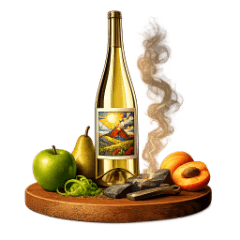
Hungarian Dry Furmint
Forget sweet stuff for a second. This is what happens when producers realize their star performer is also amazing without sugar. Crisp, fiery, and full of volcanic energy, it is basically liquid electricity in a glass.
Forget sweet stuff for a second. This is what happens when producers realize their star performer is also amazing without sugar. Crisp, fiery, and full of volcanic energy, it is basically liquid electricity in a glass.
Forget sweet stuff for a second. This is what happens when producers realize their star performer is also amazing without sugar. Crisp, fiery, and full of volcanic energy, it is basically liquid electricity in a glass.
LATEST REVIEWS