«
Georgia

Racha-Lechkhumi
Racha-Lechkhumi
Racha-Lechkhumi
Sweet Alpine Secrets
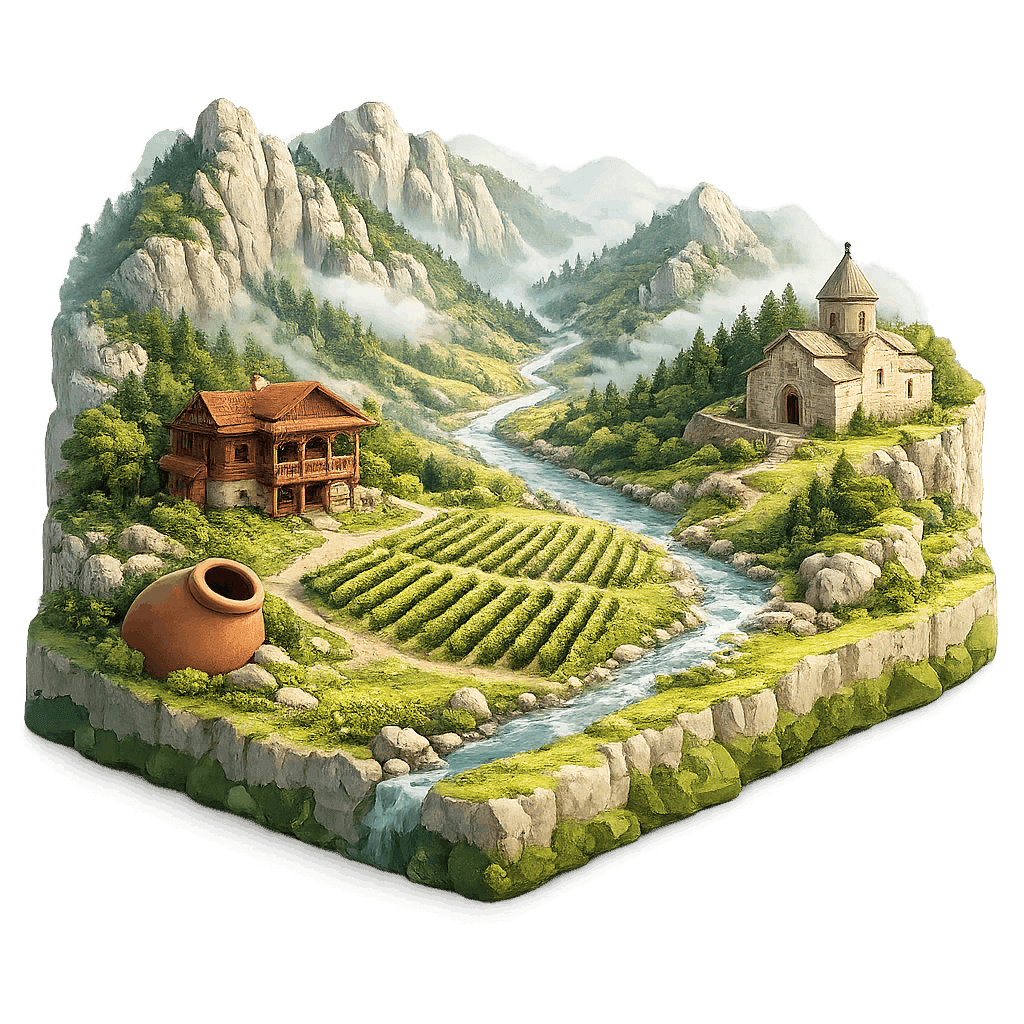
Hidden deep in the Caucasus, this area is the tiny, sparkling jewel box of Georgian winemaking. It is where sugar levels spike naturally because the sun hits these steep slopes just right, creating liquid candy.
Hidden deep in the Caucasus, this area is the tiny, sparkling jewel box of Georgian winemaking. It is where sugar levels spike naturally because the sun hits these steep slopes just right, creating liquid candy.
Hidden deep in the Caucasus, this area is the tiny, sparkling jewel box of Georgian winemaking. It is where sugar levels spike naturally because the sun hits these steep slopes just right, creating liquid candy.





Why it's unique
Natural sweetness
Tiny production
Rare gems
Most people think semi-sweet wine is cheap supermarket plonk, but Racha-Lechkhumi proves them dead wrong. This is the birthplace of Khvanchkara, a naturally semi-sweet red that does not need added sugar to taste amazing. Production is incredibly small-scale, meaning bottles from these precipitous vineyards are hunted down like rare artifacts by collectors who know their stuff.
Most people think semi-sweet wine is cheap supermarket plonk, but Racha-Lechkhumi proves them dead wrong. This is the birthplace of Khvanchkara, a naturally semi-sweet red that does not need added sugar to taste amazing. Production is incredibly small-scale, meaning bottles from these precipitous vineyards are hunted down like rare artifacts by collectors who know their stuff.
Most people think semi-sweet wine is cheap supermarket plonk, but Racha-Lechkhumi proves them dead wrong. This is the birthplace of Khvanchkara, a naturally semi-sweet red that does not need added sugar to taste amazing. Production is incredibly small-scale, meaning bottles from these precipitous vineyards are hunted down like rare artifacts by collectors who know their stuff.
Terroir
River warmth
Mountain shield
Slow ripening
Think steep cliffs and river valleys acting like a natural greenhouse. The Rioni river moderates the temperature while the surrounding mountains block freezing winds, allowing Aleksandrouli and Mujuretuli to ripen slowly. This specific microclimate lets the fruit accumulate massive sugars while keeping enough acid so you do not feel like you are drinking syrup.
Think steep cliffs and river valleys acting like a natural greenhouse. The Rioni river moderates the temperature while the surrounding mountains block freezing winds, allowing Aleksandrouli and Mujuretuli to ripen slowly. This specific microclimate lets the fruit accumulate massive sugars while keeping enough acid so you do not feel like you are drinking syrup.
Think steep cliffs and river valleys acting like a natural greenhouse. The Rioni river moderates the temperature while the surrounding mountains block freezing winds, allowing Aleksandrouli and Mujuretuli to ripen slowly. This specific microclimate lets the fruit accumulate massive sugars while keeping enough acid so you do not feel like you are drinking syrup.
You gotta try
Khvanchkara blend
Rare Usakhelauri
Berry explosions
You absolutely must find a bottle of Khvanchkara, the legendary blend of Aleksandrouli and Mujuretuli. It tastes like raspberries exploding in your mouth. If you want to impress a snob, hunt down Usakhelauri. It is wildly expensive and grows on barely any land, but the intense berry flavors are unlike anything else on the planet.
You absolutely must find a bottle of Khvanchkara, the legendary blend of Aleksandrouli and Mujuretuli. It tastes like raspberries exploding in your mouth. If you want to impress a snob, hunt down Usakhelauri. It is wildly expensive and grows on barely any land, but the intense berry flavors are unlike anything else on the planet.
You absolutely must find a bottle of Khvanchkara, the legendary blend of Aleksandrouli and Mujuretuli. It tastes like raspberries exploding in your mouth. If you want to impress a snob, hunt down Usakhelauri. It is wildly expensive and grows on barely any land, but the intense berry flavors are unlike anything else on the planet.
LOCAL TALES
The Dictator's Choice
The Dictator's Choice
The Dictator's Choice
It is impossible to talk about this region without mentioning its most infamous fan. Joseph Stalin, the Soviet leader, was absolutely obsessed with Khvanchkara. Back then it was often called Kipiani Wine, named after the prince who popularized it. Stalin reportedly served this naturally semi-sweet red at the Yalta Conference to Roosevelt and Churchill. While the politics were tense, the wine was apparently smooth enough to keep glasses full. Because of his patronage, this tiny mountain appellation became the holy grail of Soviet winemaking, ensuring its survival through decades of industrialization that ruined quality elsewhere.
It is impossible to talk about this region without mentioning its most infamous fan. Joseph Stalin, the Soviet leader, was absolutely obsessed with Khvanchkara. Back then it was often called Kipiani Wine, named after the prince who popularized it. Stalin reportedly served this naturally semi-sweet red at the Yalta Conference to Roosevelt and Churchill. While the politics were tense, the wine was apparently smooth enough to keep glasses full. Because of his patronage, this tiny mountain appellation became the holy grail of Soviet winemaking, ensuring its survival through decades of industrialization that ruined quality elsewhere.
It is impossible to talk about this region without mentioning its most infamous fan. Joseph Stalin, the Soviet leader, was absolutely obsessed with Khvanchkara. Back then it was often called Kipiani Wine, named after the prince who popularized it. Stalin reportedly served this naturally semi-sweet red at the Yalta Conference to Roosevelt and Churchill. While the politics were tense, the wine was apparently smooth enough to keep glasses full. Because of his patronage, this tiny mountain appellation became the holy grail of Soviet winemaking, ensuring its survival through decades of industrialization that ruined quality elsewhere.
The Nameless Legend
The Nameless Legend
The Nameless Legend
There is a variety here called Usakhelauri, which literally translates to "without a name" or "nameless." Legend says the vines were so rare and the wine so exceptional that locals could not find a word worthy enough to describe it, so they just left it blank. It grows on strictly limited slopes in Lechkhumi, and the yields are comically low. For centuries, the small batches were reserved exclusively for the local nobility and high dignitaries, barely leaving the valley. Today, it stands as one of the most expensive wines in Georgia, proving that sometimes having no name makes you more famous than having a fancy one.
There is a variety here called Usakhelauri, which literally translates to "without a name" or "nameless." Legend says the vines were so rare and the wine so exceptional that locals could not find a word worthy enough to describe it, so they just left it blank. It grows on strictly limited slopes in Lechkhumi, and the yields are comically low. For centuries, the small batches were reserved exclusively for the local nobility and high dignitaries, barely leaving the valley. Today, it stands as one of the most expensive wines in Georgia, proving that sometimes having no name makes you more famous than having a fancy one.
There is a variety here called Usakhelauri, which literally translates to "without a name" or "nameless." Legend says the vines were so rare and the wine so exceptional that locals could not find a word worthy enough to describe it, so they just left it blank. It grows on strictly limited slopes in Lechkhumi, and the yields are comically low. For centuries, the small batches were reserved exclusively for the local nobility and high dignitaries, barely leaving the valley. Today, it stands as one of the most expensive wines in Georgia, proving that sometimes having no name makes you more famous than having a fancy one.
Vertical Gardening
Vertical Gardening
Vertical Gardening
Harvesting in Racha-Lechkhumi is not for the faint of heart or those afraid of heights. Many vineyards are planted on slopes so steep that you practically need climbing gear to prune the vines. Local farmers joke that their goats have better footing than the pickers. This rugged terrain prevents large machinery from ever ruining the landscape, forcing everything to be done by hand. It is back-breaking labor, but the elevation provides the perfect angle for sun exposure. When you drink these wines, you are tasting the result of extreme gardening where one slip could mean rolling all the way down to the Rioni river.
Harvesting in Racha-Lechkhumi is not for the faint of heart or those afraid of heights. Many vineyards are planted on slopes so steep that you practically need climbing gear to prune the vines. Local farmers joke that their goats have better footing than the pickers. This rugged terrain prevents large machinery from ever ruining the landscape, forcing everything to be done by hand. It is back-breaking labor, but the elevation provides the perfect angle for sun exposure. When you drink these wines, you are tasting the result of extreme gardening where one slip could mean rolling all the way down to the Rioni river.
Harvesting in Racha-Lechkhumi is not for the faint of heart or those afraid of heights. Many vineyards are planted on slopes so steep that you practically need climbing gear to prune the vines. Local farmers joke that their goats have better footing than the pickers. This rugged terrain prevents large machinery from ever ruining the landscape, forcing everything to be done by hand. It is back-breaking labor, but the elevation provides the perfect angle for sun exposure. When you drink these wines, you are tasting the result of extreme gardening where one slip could mean rolling all the way down to the Rioni river.
LOCAL WINE STYLES
Racha Khvanchkara Red
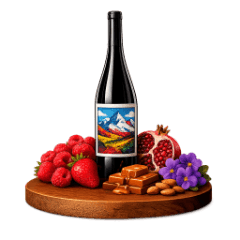
Deep in the Racha mountains, Aleksandrouli and Mujuretuli combine forces to create a naturally semi-sweet masterpiece. It is like biting into a ripe raspberry while wearing a velvet robe - incredibly smooth, fruity, and historically adored.
Deep in the Racha mountains, Aleksandrouli and Mujuretuli combine forces to create a naturally semi-sweet masterpiece. It is like biting into a ripe raspberry while wearing a velvet robe - incredibly smooth, fruity, and historically adored.
Deep in the Racha mountains, Aleksandrouli and Mujuretuli combine forces to create a naturally semi-sweet masterpiece. It is like biting into a ripe raspberry while wearing a velvet robe - incredibly smooth, fruity, and historically adored.
Georgian Ojaleshi
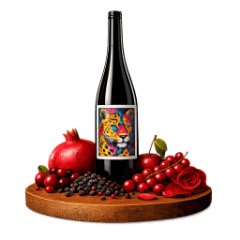
Deep in western Georgia, this late-ripening wonder creates liquids vibrating with pepper and pomegranate energy. It balances distinct sweetness with cracking acidity, proving that red wines do not need heavy oak to feel complete and satisfying.
Deep in western Georgia, this late-ripening wonder creates liquids vibrating with pepper and pomegranate energy. It balances distinct sweetness with cracking acidity, proving that red wines do not need heavy oak to feel complete and satisfying.
Deep in western Georgia, this late-ripening wonder creates liquids vibrating with pepper and pomegranate energy. It balances distinct sweetness with cracking acidity, proving that red wines do not need heavy oak to feel complete and satisfying.
LATEST REVIEWS