«
Greece

Nemea
Nemea
Nemea
Hercules' Red Playground
Located in the Peloponnese, this place is basically the headquarters for deep, velvety reds in Greece. It’s where mythology meets modern winemaking, producing bottles that have as much character as the ancient heroes who supposedly roamed here.
Located in the Peloponnese, this place is basically the headquarters for deep, velvety reds in Greece. It’s where mythology meets modern winemaking, producing bottles that have as much character as the ancient heroes who supposedly roamed here.
Located in the Peloponnese, this place is basically the headquarters for deep, velvety reds in Greece. It’s where mythology meets modern winemaking, producing bottles that have as much character as the ancient heroes who supposedly roamed here.
LEADERS

Why it's unique
Agiorgitiko obsession
Peloponnese powerhouse
Red versatility
You won't find a spot quite like this anywhere else in the Hellenic world because it is singularly devoted to Agiorgitiko. While other regions play the field with international blends, Nemea remains faithfully married to its indigenous star. The wines range from light rosés to massive, age-worthy reds that could probably survive another 12 labours. It’s the closest thing Greece has to a Napa Valley vibe but with way more ruins.
You won't find a spot quite like this anywhere else in the Hellenic world because it is singularly devoted to Agiorgitiko. While other regions play the field with international blends, Nemea remains faithfully married to its indigenous star. The wines range from light rosés to massive, age-worthy reds that could probably survive another 12 labours. It’s the closest thing Greece has to a Napa Valley vibe but with way more ruins.
You won't find a spot quite like this anywhere else in the Hellenic world because it is singularly devoted to Agiorgitiko. While other regions play the field with international blends, Nemea remains faithfully married to its indigenous star. The wines range from light rosés to massive, age-worthy reds that could probably survive another 12 labours. It’s the closest thing Greece has to a Napa Valley vibe but with way more ruins.
Terroir
Three zones
High altitude
Diverse elevations
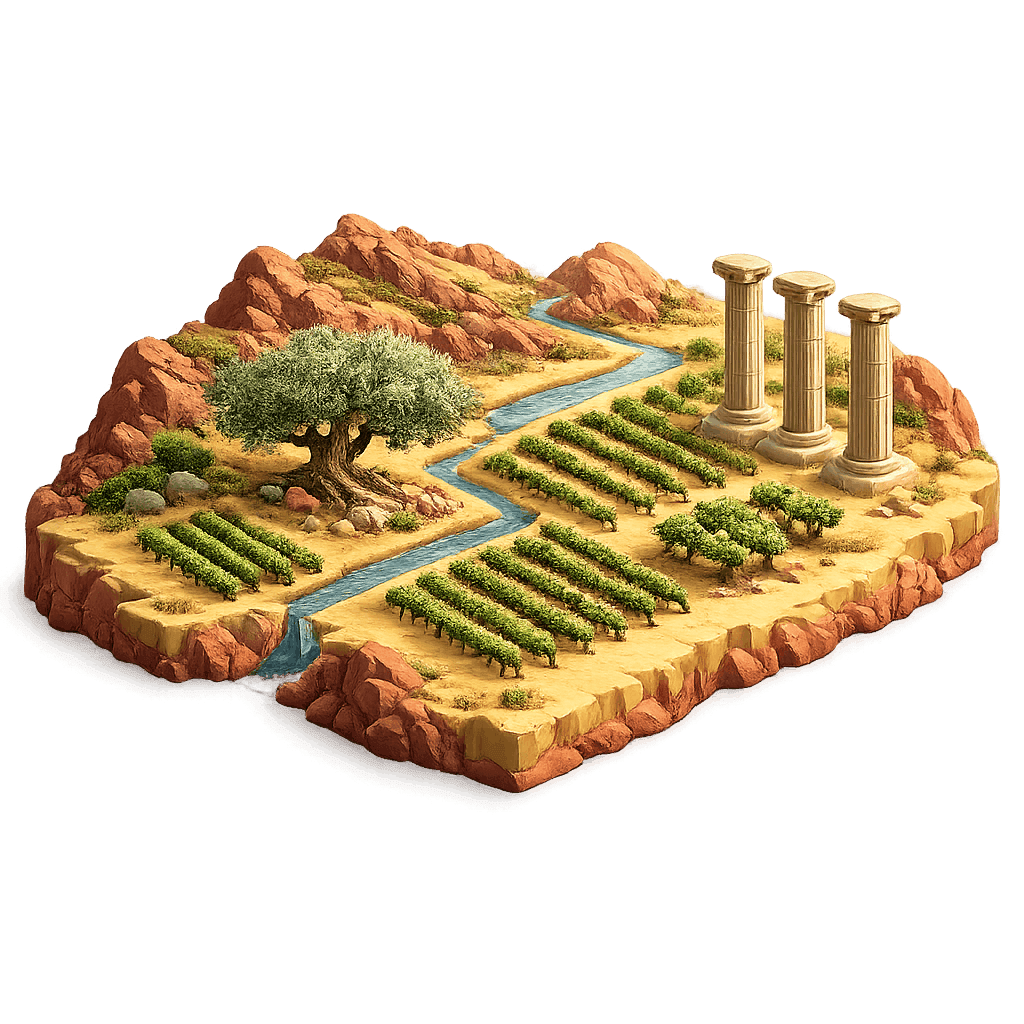
Altitude is the secret sauce here. Although it looks like a hot Mediterranean frying pan on a map, the vineyards are split into three distinct zones climbing up the mountains. Lower spots bake in the sun, making jammy fruit bombs, while the high-altitude plots keep their cool, preserving acidity and freshness. This vertical diversity means Agiorgitiko expresses itself differently depending on exactly how far up the hill it lives.
Altitude is the secret sauce here. Although it looks like a hot Mediterranean frying pan on a map, the vineyards are split into three distinct zones climbing up the mountains. Lower spots bake in the sun, making jammy fruit bombs, while the high-altitude plots keep their cool, preserving acidity and freshness. This vertical diversity means Agiorgitiko expresses itself differently depending on exactly how far up the hill it lives.
Altitude is the secret sauce here. Although it looks like a hot Mediterranean frying pan on a map, the vineyards are split into three distinct zones climbing up the mountains. Lower spots bake in the sun, making jammy fruit bombs, while the high-altitude plots keep their cool, preserving acidity and freshness. This vertical diversity means Agiorgitiko expresses itself differently depending on exactly how far up the hill it lives.
You gotta try
Koutsi reds
Plush Agiorgitiko
Fresh rosés
Grab a bottle labeled Nemea PDO to experience Agiorgitiko in its full glory. If you want something serious, look for the 'Grand Reserve' styles from the Koutsi sub-region, which offer structure and spice. For a summer porch pounder, the bright rosés are unbeatable. These wines often have soft tannins, meaning you don't have to wait ten years to drink them - pop the cork and enjoy the plush, velvety fruit right now.
Grab a bottle labeled Nemea PDO to experience Agiorgitiko in its full glory. If you want something serious, look for the 'Grand Reserve' styles from the Koutsi sub-region, which offer structure and spice. For a summer porch pounder, the bright rosés are unbeatable. These wines often have soft tannins, meaning you don't have to wait ten years to drink them - pop the cork and enjoy the plush, velvety fruit right now.
Grab a bottle labeled Nemea PDO to experience Agiorgitiko in its full glory. If you want something serious, look for the 'Grand Reserve' styles from the Koutsi sub-region, which offer structure and spice. For a summer porch pounder, the bright rosés are unbeatable. These wines often have soft tannins, meaning you don't have to wait ten years to drink them - pop the cork and enjoy the plush, velvety fruit right now.
LOCAL TALES
Blood of Hercules
Blood of Hercules
Blood of Hercules
Long before tourists arrived with selfie sticks, this area was the stomping ground of a very angry Nemean Lion. Legend has it that Hercules had to slay this beast as the first of his twelve labours. Being invulnerable to weapons, the lion forced Hercules to wrestle it with his bare hands. After the dust settled and the hero won, it is said that the spilled blood of the lion soaked into the earth, eventually turning into the deep red Agiorgitiko vines we see today. That’s why locals often call the wine 'Blood of Hercules.' It’s a bit graphic, sure, but it definitely adds a mythological punch to your glass of dinner red.
Long before tourists arrived with selfie sticks, this area was the stomping ground of a very angry Nemean Lion. Legend has it that Hercules had to slay this beast as the first of his twelve labours. Being invulnerable to weapons, the lion forced Hercules to wrestle it with his bare hands. After the dust settled and the hero won, it is said that the spilled blood of the lion soaked into the earth, eventually turning into the deep red Agiorgitiko vines we see today. That’s why locals often call the wine 'Blood of Hercules.' It’s a bit graphic, sure, but it definitely adds a mythological punch to your glass of dinner red.
Long before tourists arrived with selfie sticks, this area was the stomping ground of a very angry Nemean Lion. Legend has it that Hercules had to slay this beast as the first of his twelve labours. Being invulnerable to weapons, the lion forced Hercules to wrestle it with his bare hands. After the dust settled and the hero won, it is said that the spilled blood of the lion soaked into the earth, eventually turning into the deep red Agiorgitiko vines we see today. That’s why locals often call the wine 'Blood of Hercules.' It’s a bit graphic, sure, but it definitely adds a mythological punch to your glass of dinner red.
Running for Wine
Running for Wine
Running for Wine
You cannot throw a rock in Nemea without hitting something ancient, but the Temple of Zeus is the real showstopper. Back in the day, this wasn't just a religious site - it was the host of the Nemean Games, which were like the Olympics but with more wine and fewer corporate sponsors. Athletes would compete in the stadium, and afterwards, everyone would celebrate with the local red stuff. The modern Nemean Games have actually been revived recently, allowing people to run barefoot in the ancient stadium. While the sprinting is optional, I highly recommend keeping the post-race tradition of drinking copious amounts of local wine alive. It’s strictly for historical accuracy, of course.
You cannot throw a rock in Nemea without hitting something ancient, but the Temple of Zeus is the real showstopper. Back in the day, this wasn't just a religious site - it was the host of the Nemean Games, which were like the Olympics but with more wine and fewer corporate sponsors. Athletes would compete in the stadium, and afterwards, everyone would celebrate with the local red stuff. The modern Nemean Games have actually been revived recently, allowing people to run barefoot in the ancient stadium. While the sprinting is optional, I highly recommend keeping the post-race tradition of drinking copious amounts of local wine alive. It’s strictly for historical accuracy, of course.
You cannot throw a rock in Nemea without hitting something ancient, but the Temple of Zeus is the real showstopper. Back in the day, this wasn't just a religious site - it was the host of the Nemean Games, which were like the Olympics but with more wine and fewer corporate sponsors. Athletes would compete in the stadium, and afterwards, everyone would celebrate with the local red stuff. The modern Nemean Games have actually been revived recently, allowing people to run barefoot in the ancient stadium. While the sprinting is optional, I highly recommend keeping the post-race tradition of drinking copious amounts of local wine alive. It’s strictly for historical accuracy, of course.
The Saint's Protection
The Saint's Protection
The Saint's Protection
The name Agiorgitiko is a tongue twister for non-Greeks, but it essentially translates to 'St. George's.' This comes from the old name of the village Nemea, which was Agios Georgios. During the Byzantine era and later under Ottoman rule, the church played a huge role in keeping winemaking alive here. Since the Ottomans weren't exactly keen on alcohol, having the wine associated with a saint gave it a bit of protection and legitimacy. The village eventually changed its name back to the ancient Nemea to sound more classical, but the vines kept the saint’s name. It’s a nice nod to the history that kept these vineyards from being ripped out centuries ago.
The name Agiorgitiko is a tongue twister for non-Greeks, but it essentially translates to 'St. George's.' This comes from the old name of the village Nemea, which was Agios Georgios. During the Byzantine era and later under Ottoman rule, the church played a huge role in keeping winemaking alive here. Since the Ottomans weren't exactly keen on alcohol, having the wine associated with a saint gave it a bit of protection and legitimacy. The village eventually changed its name back to the ancient Nemea to sound more classical, but the vines kept the saint’s name. It’s a nice nod to the history that kept these vineyards from being ripped out centuries ago.
The name Agiorgitiko is a tongue twister for non-Greeks, but it essentially translates to 'St. George's.' This comes from the old name of the village Nemea, which was Agios Georgios. During the Byzantine era and later under Ottoman rule, the church played a huge role in keeping winemaking alive here. Since the Ottomans weren't exactly keen on alcohol, having the wine associated with a saint gave it a bit of protection and legitimacy. The village eventually changed its name back to the ancient Nemea to sound more classical, but the vines kept the saint’s name. It’s a nice nod to the history that kept these vineyards from being ripped out centuries ago.
LOCAL WINE STYLES
Nemea Agiorgitiko
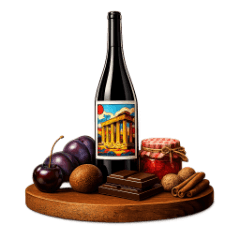
Imagine diving into a pool of ripe cherries and cinnamon sticks without getting sticky. This Greek delight offers a plush texture that hugs your palate rather than punching it, making it incredibly easy to love immediately.
Imagine diving into a pool of ripe cherries and cinnamon sticks without getting sticky. This Greek delight offers a plush texture that hugs your palate rather than punching it, making it incredibly easy to love immediately.
Imagine diving into a pool of ripe cherries and cinnamon sticks without getting sticky. This Greek delight offers a plush texture that hugs your palate rather than punching it, making it incredibly easy to love immediately.
Greek Agiorgitiko
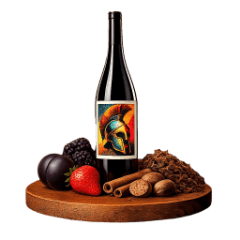
Often compared to Merlot but with a Mediterranean twist, Agiorgitiko delivers lush fruit and soft edges. It is the friendly face of Greek reds, inviting you in with spice and ripe berries rather than aggressive tannins.
Often compared to Merlot but with a Mediterranean twist, Agiorgitiko delivers lush fruit and soft edges. It is the friendly face of Greek reds, inviting you in with spice and ripe berries rather than aggressive tannins.
Often compared to Merlot but with a Mediterranean twist, Agiorgitiko delivers lush fruit and soft edges. It is the friendly face of Greek reds, inviting you in with spice and ripe berries rather than aggressive tannins.
LATEST REVIEWS