«
Austria

Kremstal
Kremstal
Kremstal
Historic Spicy Heartland
Centered around an ancient trading city, this area blends deep cultural roots with serious viticulture. It acts as a golden bridge where chilly northern winds high-five warm eastern breezes, creating wines with serious zip.
Centered around an ancient trading city, this area blends deep cultural roots with serious viticulture. It acts as a golden bridge where chilly northern winds high-five warm eastern breezes, creating wines with serious zip.
Centered around an ancient trading city, this area blends deep cultural roots with serious viticulture. It acts as a golden bridge where chilly northern winds high-five warm eastern breezes, creating wines with serious zip.



Why it's unique
Climatic crossroads
Loess terraces
Wine education
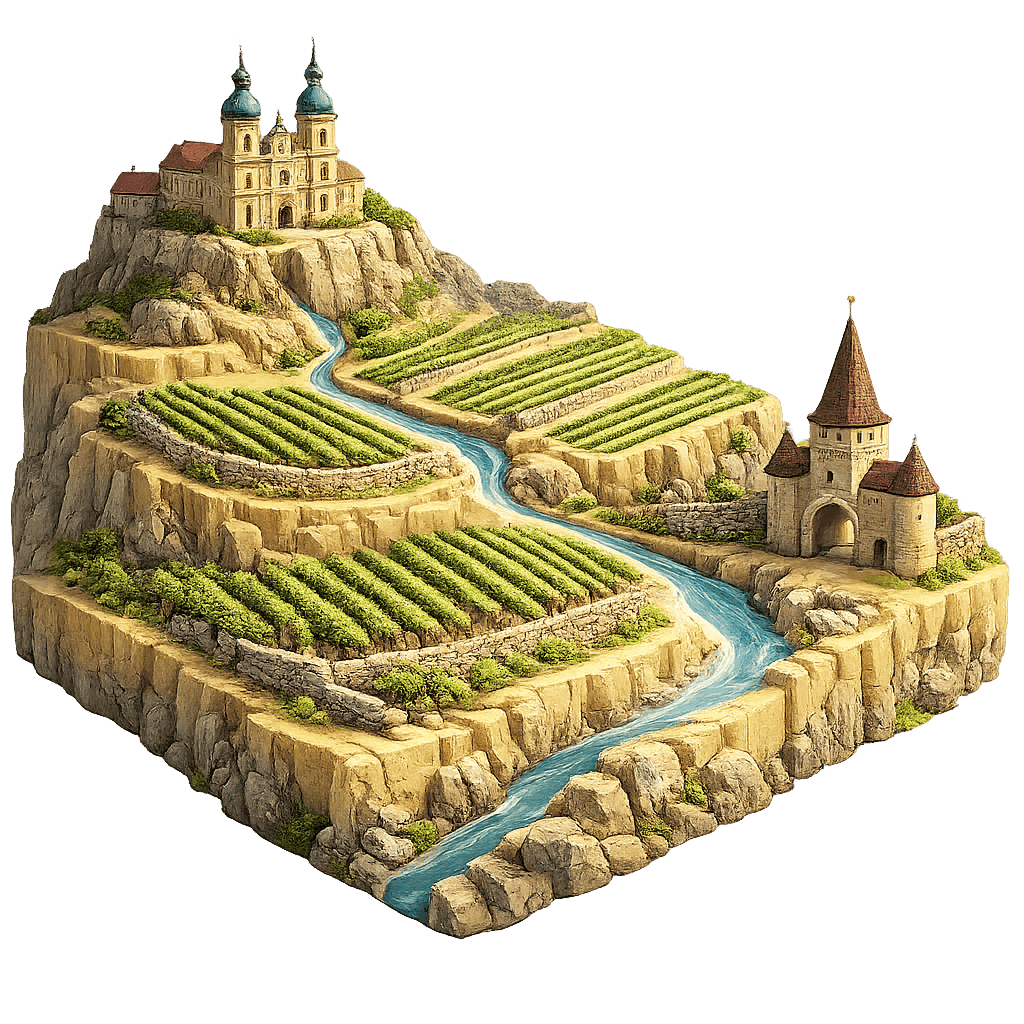
Krems isn't just a pretty postcard - it is the absolute crossroads of Austrian wine culture. Here, distinct climatic zones collide to produce bottles that manage to be both rich and refreshing. It is home to massive loess terraces that give Grüner Veltliner a distinct creaminess you won't find just anywhere else, plus it hosts a historic viticulture school where future winemakers learn the ropes.
Krems isn't just a pretty postcard - it is the absolute crossroads of Austrian wine culture. Here, distinct climatic zones collide to produce bottles that manage to be both rich and refreshing. It is home to massive loess terraces that give Grüner Veltliner a distinct creaminess you won't find just anywhere else, plus it hosts a historic viticulture school where future winemakers learn the ropes.
Krems isn't just a pretty postcard - it is the absolute crossroads of Austrian wine culture. Here, distinct climatic zones collide to produce bottles that manage to be both rich and refreshing. It is home to massive loess terraces that give Grüner Veltliner a distinct creaminess you won't find just anywhere else, plus it hosts a historic viticulture school where future winemakers learn the ropes.
Terroir
Wind-blown loess
Primary rock
River moderation
Mother Nature played a game of Tetris here. On one side, you have primary rock and gneiss on steep terraces perfect for jagged Riesling. On the other, deep, fluffy layers of wind-blown loess dominate, acting like a comfy duvet for Grüner Veltliner. This duality, combined with the Danube's temperature-moderating powers, creates a playground where coolness and ripeness coexist happily without ever fighting for dominance.
Mother Nature played a game of Tetris here. On one side, you have primary rock and gneiss on steep terraces perfect for jagged Riesling. On the other, deep, fluffy layers of wind-blown loess dominate, acting like a comfy duvet for Grüner Veltliner. This duality, combined with the Danube's temperature-moderating powers, creates a playground where coolness and ripeness coexist happily without ever fighting for dominance.
Mother Nature played a game of Tetris here. On one side, you have primary rock and gneiss on steep terraces perfect for jagged Riesling. On the other, deep, fluffy layers of wind-blown loess dominate, acting like a comfy duvet for Grüner Veltliner. This duality, combined with the Danube's temperature-moderating powers, creates a playground where coolness and ripeness coexist happily without ever fighting for dominance.
You gotta try
Single Vineyard
Peppery Grüner
Terraced Riesling
Start your journey with a single-vineyard Kremstal DAC Grüner Veltliner. These bottles are absolute powerhouses of white pepper and yellow apple that demand a schnitzel. If you prefer laser beams in liquid form, hunt down a Riesling from the rocky terraces. They possess a vibrating energy and peach notes that will wake up your palate faster than a double espresso.
Start your journey with a single-vineyard Kremstal DAC Grüner Veltliner. These bottles are absolute powerhouses of white pepper and yellow apple that demand a schnitzel. If you prefer laser beams in liquid form, hunt down a Riesling from the rocky terraces. They possess a vibrating energy and peach notes that will wake up your palate faster than a double espresso.
Start your journey with a single-vineyard Kremstal DAC Grüner Veltliner. These bottles are absolute powerhouses of white pepper and yellow apple that demand a schnitzel. If you prefer laser beams in liquid form, hunt down a Riesling from the rocky terraces. They possess a vibrating energy and peach notes that will wake up your palate faster than a double espresso.
LOCAL TALES
The Monk's Mountain View
The Monk's Mountain View
The Monk's Mountain View
Perched high atop a hill like a spiritual fortress, Stift Göttweig has been keeping an eye on the vines for roughly a thousand years. The Benedictine monks here weren't just praying - they were pioneering viticulture when most people were just trying to survive the Dark Ages. They realized early on that the steep slopes facing the river were goldmines for grapes. Today, the monastery still owns vast vineyards, proving that divine intervention might actually just be really good vineyard management. It is hard to argue with centuries of winemaking success, especially when the view from their terrace is beautiful enough to convert anyone into a wine lover immediately.
Perched high atop a hill like a spiritual fortress, Stift Göttweig has been keeping an eye on the vines for roughly a thousand years. The Benedictine monks here weren't just praying - they were pioneering viticulture when most people were just trying to survive the Dark Ages. They realized early on that the steep slopes facing the river were goldmines for grapes. Today, the monastery still owns vast vineyards, proving that divine intervention might actually just be really good vineyard management. It is hard to argue with centuries of winemaking success, especially when the view from their terrace is beautiful enough to convert anyone into a wine lover immediately.
Perched high atop a hill like a spiritual fortress, Stift Göttweig has been keeping an eye on the vines for roughly a thousand years. The Benedictine monks here weren't just praying - they were pioneering viticulture when most people were just trying to survive the Dark Ages. They realized early on that the steep slopes facing the river were goldmines for grapes. Today, the monastery still owns vast vineyards, proving that divine intervention might actually just be really good vineyard management. It is hard to argue with centuries of winemaking success, especially when the view from their terrace is beautiful enough to convert anyone into a wine lover immediately.
The original wine hub
The original wine hub
The original wine hub
Long before sommeliers were inventing fancy adjectives for fermented grape juice, the city of Krems was the Silicon Valley of the wine trade. Located right on the Danube, it was the perfect shipping port to send barrels up and down the river. In the Middle Ages, local merchants were rolling in coin because everyone wanted a taste of what grew on these terraces. The strict local wine laws date back centuries, ensuring that nobody tried to pass off vinegar as top-tier stuff. This legacy of commerce and quality control is why the region feels so established - they have been closing deals over glasses of Riesling since knights were still a thing.
Long before sommeliers were inventing fancy adjectives for fermented grape juice, the city of Krems was the Silicon Valley of the wine trade. Located right on the Danube, it was the perfect shipping port to send barrels up and down the river. In the Middle Ages, local merchants were rolling in coin because everyone wanted a taste of what grew on these terraces. The strict local wine laws date back centuries, ensuring that nobody tried to pass off vinegar as top-tier stuff. This legacy of commerce and quality control is why the region feels so established - they have been closing deals over glasses of Riesling since knights were still a thing.
Long before sommeliers were inventing fancy adjectives for fermented grape juice, the city of Krems was the Silicon Valley of the wine trade. Located right on the Danube, it was the perfect shipping port to send barrels up and down the river. In the Middle Ages, local merchants were rolling in coin because everyone wanted a taste of what grew on these terraces. The strict local wine laws date back centuries, ensuring that nobody tried to pass off vinegar as top-tier stuff. This legacy of commerce and quality control is why the region feels so established - they have been closing deals over glasses of Riesling since knights were still a thing.
Dust in the wind
Dust in the wind
Dust in the wind
While rocks get a lot of glory in the wine world, Kremstal is famous for dirt that literally flew in. During the Ice Ages, strong winds blew massive clouds of dust from the drying riverbeds, depositing them in thick layers around the valley. This dust compacted into loess, a yellow, porous soil that Grüner Veltliner absolutely adores. It holds water like a sponge and allows roots to dig deep without hitting a stone wall. If you taste a creamy, spicy texture in your glass, you can thank those prehistoric dust storms for doing the heavy lifting long before humans arrived to plant the first vine.
While rocks get a lot of glory in the wine world, Kremstal is famous for dirt that literally flew in. During the Ice Ages, strong winds blew massive clouds of dust from the drying riverbeds, depositing them in thick layers around the valley. This dust compacted into loess, a yellow, porous soil that Grüner Veltliner absolutely adores. It holds water like a sponge and allows roots to dig deep without hitting a stone wall. If you taste a creamy, spicy texture in your glass, you can thank those prehistoric dust storms for doing the heavy lifting long before humans arrived to plant the first vine.
While rocks get a lot of glory in the wine world, Kremstal is famous for dirt that literally flew in. During the Ice Ages, strong winds blew massive clouds of dust from the drying riverbeds, depositing them in thick layers around the valley. This dust compacted into loess, a yellow, porous soil that Grüner Veltliner absolutely adores. It holds water like a sponge and allows roots to dig deep without hitting a stone wall. If you taste a creamy, spicy texture in your glass, you can thank those prehistoric dust storms for doing the heavy lifting long before humans arrived to plant the first vine.
LOCAL WINE STYLES
Austrian Grüner Veltliner
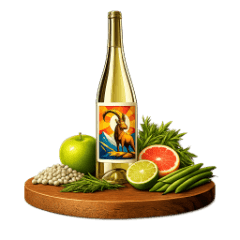
Austria's national treasure delivers a distinct punch of white pepper and green herbs. It acts like a crisp apple bite in a vegetable garden, offering a refreshing zest and savory snap that keeps the palate incredibly lively.
Austria's national treasure delivers a distinct punch of white pepper and green herbs. It acts like a crisp apple bite in a vegetable garden, offering a refreshing zest and savory snap that keeps the palate incredibly lively.
Austria's national treasure delivers a distinct punch of white pepper and green herbs. It acts like a crisp apple bite in a vegetable garden, offering a refreshing zest and savory snap that keeps the palate incredibly lively.
Austrian Riesling
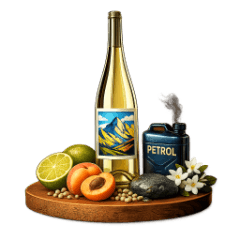
Imagine licking a wet rock while biting into a peach. This isn't the sweet German stuff your grandma kept in the fridge. It is bone-dry, fiercely elegant, and packs a punch of pure mineral energy.
Imagine licking a wet rock while biting into a peach. This isn't the sweet German stuff your grandma kept in the fridge. It is bone-dry, fiercely elegant, and packs a punch of pure mineral energy.
Imagine licking a wet rock while biting into a peach. This isn't the sweet German stuff your grandma kept in the fridge. It is bone-dry, fiercely elegant, and packs a punch of pure mineral energy.
LATEST REVIEWS