«
BROWSE ALL
Pennsylvania
Pennsylvania

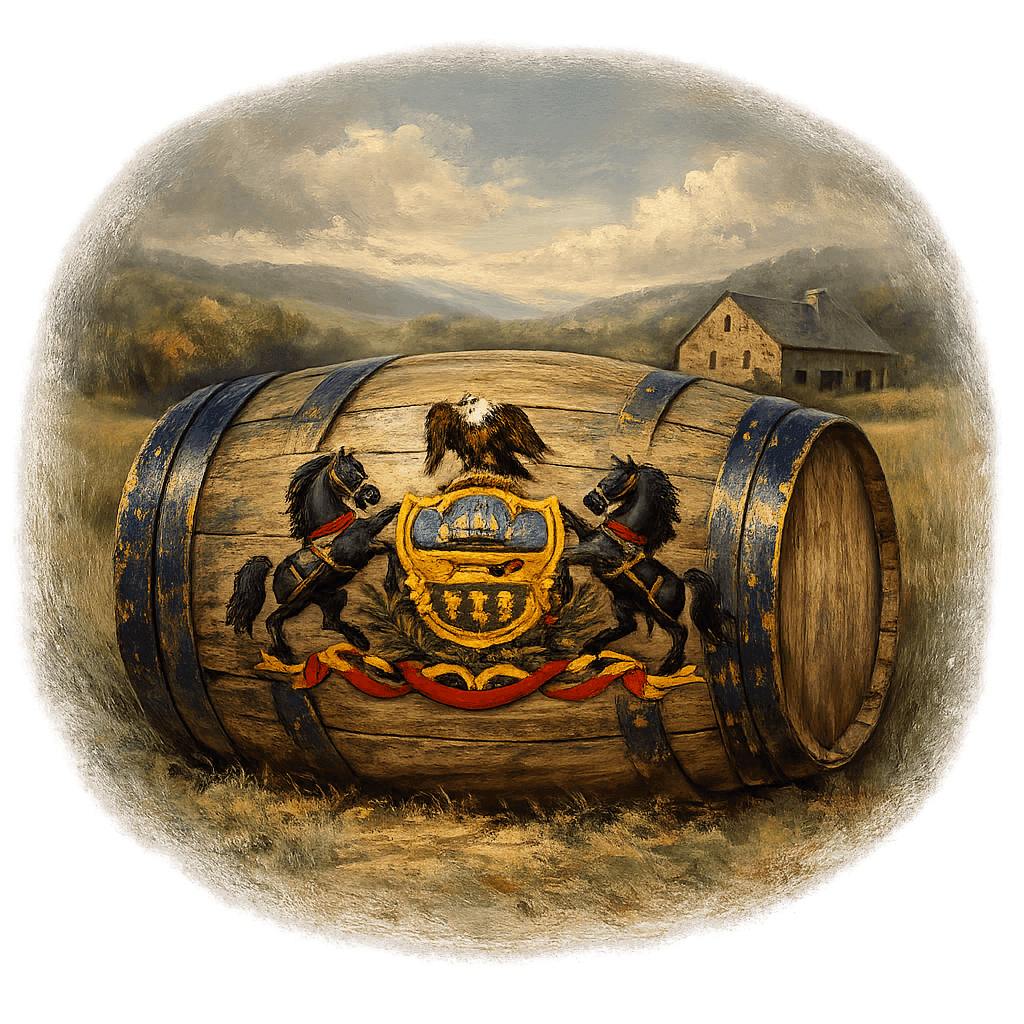
William Penn started it all here in 1683, kicking off a viticultural legacy that’s older than the country itself. Today, this state balances massive juice production with a serious, booming scene for high-quality dry wines across five diverse regions.
William Penn started it all here in 1683, kicking off a viticultural legacy that’s older than the country itself. Today, this state balances massive juice production with a serious, booming scene for high-quality dry wines across five diverse regions.
William Penn started it all here in 1683, kicking off a viticultural legacy that’s older than the country itself. Today, this state balances massive juice production with a serious, booming scene for high-quality dry wines across five diverse regions.
What it's about
Top Producer
Diverse Climates
Historic Roots
Ranking consistently among the top five wine producers in the United States, this commonwealth is a sleeping giant that wakes up every harvest with diverse offerings. From the massive cool-climate vineyards along Lake Erie to the sun-drenched hills of the southeast, production is split between native labrusca varieties for juice and serious European vinifera. It is a place where history meets modern experimentation, boasting over 300 wineries that serve a thirsty local population.
Ranking consistently among the top five wine producers in the United States, this commonwealth is a sleeping giant that wakes up every harvest with diverse offerings. From the massive cool-climate vineyards along Lake Erie to the sun-drenched hills of the southeast, production is split between native labrusca varieties for juice and serious European vinifera. It is a place where history meets modern experimentation, boasting over 300 wineries that serve a thirsty local population.
Ranking consistently among the top five wine producers in the United States, this commonwealth is a sleeping giant that wakes up every harvest with diverse offerings. From the massive cool-climate vineyards along Lake Erie to the sun-drenched hills of the southeast, production is split between native labrusca varieties for juice and serious European vinifera. It is a place where history meets modern experimentation, boasting over 300 wineries that serve a thirsty local population.
What they're proud of
Hybrid History
European Varietals
Lake Erie
Local vintners celebrated the Alexander grape here long before Cabernet became king, marking the birth of American hybridization. They take immense pride in their ability to grow challenging European grapes like Grüner Veltliner and Cabernet Franc in a climate that demands true farming grit. Furthermore, the Lake Erie region remains an agricultural powerhouse, preserving a viticultural heritage that sustained the area when alcohol was strictly off the menu.
Local vintners celebrated the Alexander grape here long before Cabernet became king, marking the birth of American hybridization. They take immense pride in their ability to grow challenging European grapes like Grüner Veltliner and Cabernet Franc in a climate that demands true farming grit. Furthermore, the Lake Erie region remains an agricultural powerhouse, preserving a viticultural heritage that sustained the area when alcohol was strictly off the menu.
Local vintners celebrated the Alexander grape here long before Cabernet became king, marking the birth of American hybridization. They take immense pride in their ability to grow challenging European grapes like Grüner Veltliner and Cabernet Franc in a climate that demands true farming grit. Furthermore, the Lake Erie region remains an agricultural powerhouse, preserving a viticultural heritage that sustained the area when alcohol was strictly off the menu.
WHAT'S TRENDING
Crisp Whites
Cool Reds
Sustainable Farming
Dry, crisp white wines are having a major moment, with Grüner Veltliner and Albariño proving that Pennsylvania acidity is a feature, not a bug. Winemakers are also leaning heavily into "cool climate reds" like Cabernet Franc and Blaufränkisch, moving away from sweet blends to showcase terroir-driven elegance. Additionally, younger producers are experimenting with pet-nat styles and sustainable farming to attract a hip, urban crowd from Philadelphia.
Dry, crisp white wines are having a major moment, with Grüner Veltliner and Albariño proving that Pennsylvania acidity is a feature, not a bug. Winemakers are also leaning heavily into "cool climate reds" like Cabernet Franc and Blaufränkisch, moving away from sweet blends to showcase terroir-driven elegance. Additionally, younger producers are experimenting with pet-nat styles and sustainable farming to attract a hip, urban crowd from Philadelphia.
Dry, crisp white wines are having a major moment, with Grüner Veltliner and Albariño proving that Pennsylvania acidity is a feature, not a bug. Winemakers are also leaning heavily into "cool climate reds" like Cabernet Franc and Blaufränkisch, moving away from sweet blends to showcase terroir-driven elegance. Additionally, younger producers are experimenting with pet-nat styles and sustainable farming to attract a hip, urban crowd from Philadelphia.
LOCAL TALES
Penn's Accidental Hybrid
Penn's Accidental Hybrid
Penn's Accidental Hybrid
It all began with William Penn, the guy on the oats box, who planted European vines in 1683 at his estate in Philadelphia. Like many early attempts in the colonies, the fancy French vines withered and died, victims of local pests and disease. But nature found a way. A few decades later, a gardener named James Alexander discovered a rogue vine growing near those old failed plantings. It wasn't European, but it wasn't wild American either - it was a natural, accidental cross between the two. Named the Alexander grape, this happy accident became the first commercially successful wine grape in America, proving that sometimes the best innovation is just nature cleaning up your mess.
It all began with William Penn, the guy on the oats box, who planted European vines in 1683 at his estate in Philadelphia. Like many early attempts in the colonies, the fancy French vines withered and died, victims of local pests and disease. But nature found a way. A few decades later, a gardener named James Alexander discovered a rogue vine growing near those old failed plantings. It wasn't European, but it wasn't wild American either - it was a natural, accidental cross between the two. Named the Alexander grape, this happy accident became the first commercially successful wine grape in America, proving that sometimes the best innovation is just nature cleaning up your mess.
The Founding Shareholders
The Founding Shareholders
The Founding Shareholders
While California's wine scene was limited to a few mission vines, Pennsylvania was trying to incorporate wine into the fabric of the nation. In 1787, a Frenchman named Pierre Legaux founded the Pennsylvania Vine Company just outside Philadelphia. This wasn't just some backyard hobby, it was a serious corporate endeavor. His list of shareholders read like a Who's Who of the early republic, including heavy hitters like Aaron Burr and Alexander Hamilton. They believed so strongly that America needed its own wine industry that they put their own money on the line. Although the company eventually folded due to vineyard struggles, it established the very first commercial vineyard charter in the United States.
While California's wine scene was limited to a few mission vines, Pennsylvania was trying to incorporate wine into the fabric of the nation. In 1787, a Frenchman named Pierre Legaux founded the Pennsylvania Vine Company just outside Philadelphia. This wasn't just some backyard hobby, it was a serious corporate endeavor. His list of shareholders read like a Who's Who of the early republic, including heavy hitters like Aaron Burr and Alexander Hamilton. They believed so strongly that America needed its own wine industry that they put their own money on the line. Although the company eventually folded due to vineyard struggles, it established the very first commercial vineyard charter in the United States.
The Juice That Saved the Vines
The Juice That Saved the Vines
The Juice That Saved the Vines
When Prohibition hit in 1920, most American vineyards were ripped out by the roots, but Pennsylvania had an ace up its sleeve: juice. Dr. Thomas Welch had already revolutionized the industry in the late 19th century by pasteurizing grape juice, preventing it from fermenting into wine. This process became the lifeline for the massive vineyards along Lake Erie. Instead of destroying their livelihoods, growers simply shifted focus to non-alcoholic grape juice and jams. This "holy" pivot allowed thousands of acres of Concord and Niagara vines to survive the dry years, keeping the state's viticultural infrastructure intact until wine could legally flow again.
When Prohibition hit in 1920, most American vineyards were ripped out by the roots, but Pennsylvania had an ace up its sleeve: juice. Dr. Thomas Welch had already revolutionized the industry in the late 19th century by pasteurizing grape juice, preventing it from fermenting into wine. This process became the lifeline for the massive vineyards along Lake Erie. Instead of destroying their livelihoods, growers simply shifted focus to non-alcoholic grape juice and jams. This "holy" pivot allowed thousands of acres of Concord and Niagara vines to survive the dry years, keeping the state's viticultural infrastructure intact until wine could legally flow again.

LATEST REVIEWS