«
BROWSE ALL
Oregon
Oregon

This is a rebellious, flannel-wearing younger sibling to France's Burgundy. It is a wet, green sanctuary where small-scale farmers obsess over fickle grapes in a cool climate, creating wines of incredible elegance.
This is a rebellious, flannel-wearing younger sibling to France's Burgundy. It is a wet, green sanctuary where small-scale farmers obsess over fickle grapes in a cool climate, creating wines of incredible elegance.
This is a rebellious, flannel-wearing younger sibling to France's Burgundy. It is a wet, green sanctuary where small-scale farmers obsess over fickle grapes in a cool climate, creating wines of incredible elegance.
What it's about
Boutique Farming
Cool Climate
Anti-Corporate
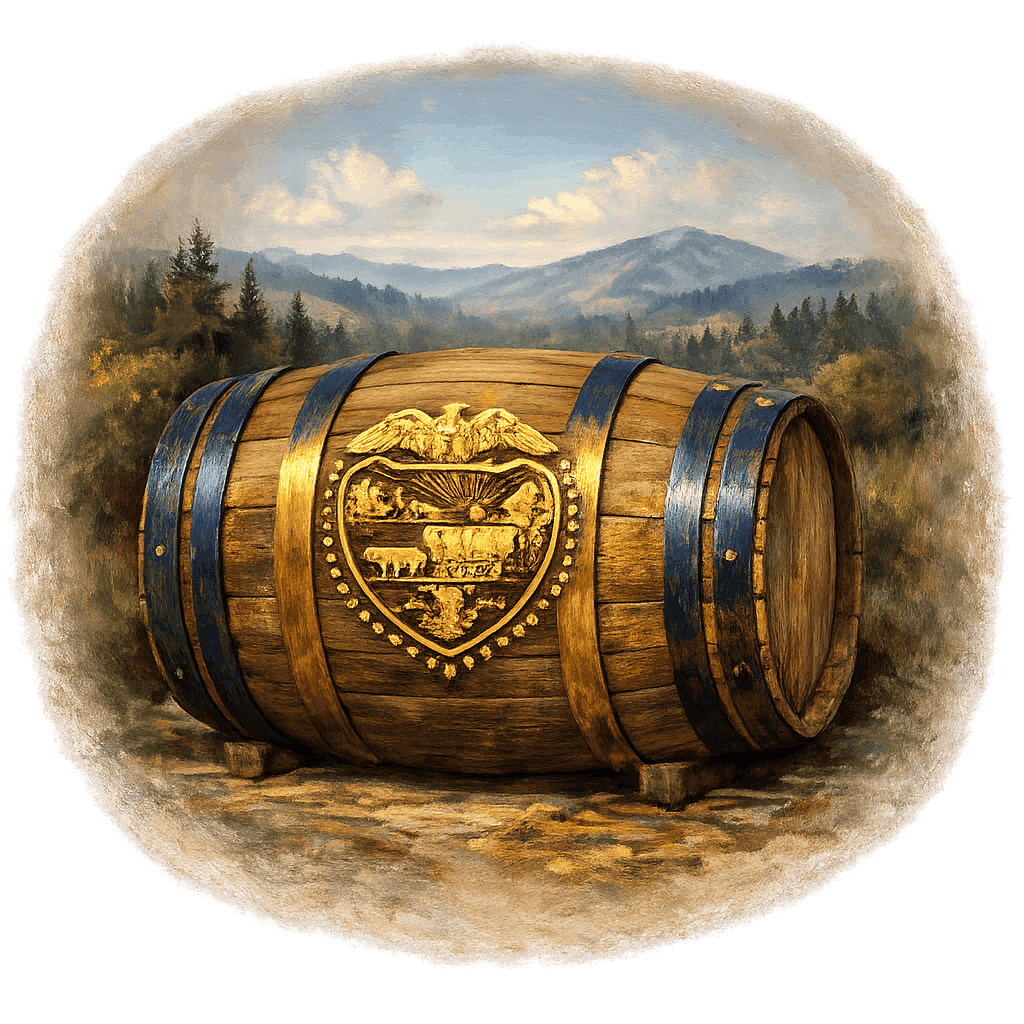
Nestled in the damp, cool corner of the Pacific Northwest, this region is the antithesis of corporate, mass-produced wine. Here, production is dominated by boutique, family-run estates rather than industrial giants. While California chases sunshine and power, Oregon embraces the rain and subtlety, dedicating nearly 60% of its vineyards to a single, heartbreakingly difficult red grape that thrives in the misty valleys.
Nestled in the damp, cool corner of the Pacific Northwest, this region is the antithesis of corporate, mass-produced wine. Here, production is dominated by boutique, family-run estates rather than industrial giants. While California chases sunshine and power, Oregon embraces the rain and subtlety, dedicating nearly 60% of its vineyards to a single, heartbreakingly difficult red grape that thrives in the misty valleys.
Nestled in the damp, cool corner of the Pacific Northwest, this region is the antithesis of corporate, mass-produced wine. Here, production is dominated by boutique, family-run estates rather than industrial giants. While California chases sunshine and power, Oregon embraces the rain and subtlety, dedicating nearly 60% of its vineyards to a single, heartbreakingly difficult red grape that thrives in the misty valleys.
What they're proud of
Pinot Noir
Eco-Friendly
Collaboration
Their world-class Pinot Noir is the obvious headliner, but the real pride lies in their unwavering commitment to the land. This state leads the charge in sustainable and biodynamic farming, treating the vineyard as a living ecosystem rather than a factory. Locals famously value collaboration over competition, often sharing tractors and secrets to ensure the entire region - not just individual wineries - succeeds on the global stage.
Their world-class Pinot Noir is the obvious headliner, but the real pride lies in their unwavering commitment to the land. This state leads the charge in sustainable and biodynamic farming, treating the vineyard as a living ecosystem rather than a factory. Locals famously value collaboration over competition, often sharing tractors and secrets to ensure the entire region - not just individual wineries - succeeds on the global stage.
Their world-class Pinot Noir is the obvious headliner, but the real pride lies in their unwavering commitment to the land. This state leads the charge in sustainable and biodynamic farming, treating the vineyard as a living ecosystem rather than a factory. Locals famously value collaboration over competition, often sharing tractors and secrets to ensure the entire region - not just individual wineries - succeeds on the global stage.
WHAT'S TRENDING
Crisp Chardonnay
Sparkling Boom
Obscure Varieties
Beyond the endless sea of red, a white revolution is brewing. Winemakers are finally figuring out Chardonnay, ditching the butter-heavy style for crisp, acid-driven versions that vibrate with tension. Sparkling wine is also exploding, with producers realizing their cool weather is perfect for bubbles. You will also see a rise in experimental varieties like Gamay and Trousseau, proving there is life beyond the famous Pinot.
Beyond the endless sea of red, a white revolution is brewing. Winemakers are finally figuring out Chardonnay, ditching the butter-heavy style for crisp, acid-driven versions that vibrate with tension. Sparkling wine is also exploding, with producers realizing their cool weather is perfect for bubbles. You will also see a rise in experimental varieties like Gamay and Trousseau, proving there is life beyond the famous Pinot.
Beyond the endless sea of red, a white revolution is brewing. Winemakers are finally figuring out Chardonnay, ditching the butter-heavy style for crisp, acid-driven versions that vibrate with tension. Sparkling wine is also exploding, with producers realizing their cool weather is perfect for bubbles. You will also see a rise in experimental varieties like Gamay and Trousseau, proving there is life beyond the famous Pinot.
LOCAL TALES
The Madness of Papa Pinot
The Madness of Papa Pinot
The Madness of Papa Pinot
In 1965, a young man named David Lett packed his car with 3,000 grape cuttings and a wild idea. He drove north from California, ignoring every professor and expert who told him Oregon was too cold, too wet, and totally unsuitable for wine. They basically told him he was planting a vineyard in a mud puddle. Undeterred, he planted the first Pinot Noir in the Willamette Valley, earning him the nickname 'Papa Pinot.' For years, he toiled in obscurity, battling birds and rain. But his stubbornness paid off when his wines started stunning critics, proving that you didn't need French soil to make world-class Burgundy-style wine - just a lot of grit and a good raincoat.
In 1965, a young man named David Lett packed his car with 3,000 grape cuttings and a wild idea. He drove north from California, ignoring every professor and expert who told him Oregon was too cold, too wet, and totally unsuitable for wine. They basically told him he was planting a vineyard in a mud puddle. Undeterred, he planted the first Pinot Noir in the Willamette Valley, earning him the nickname 'Papa Pinot.' For years, he toiled in obscurity, battling birds and rain. But his stubbornness paid off when his wines started stunning critics, proving that you didn't need French soil to make world-class Burgundy-style wine - just a lot of grit and a good raincoat.
The French Invasion
The French Invasion
The French Invasion
Nothing annoys the French more than losing at their own game. In 1979, a prestigious wine competition in Paris - the Gault-Millau Wine Olympics - blind-tasted hundreds of wines. To everyone's horror, a 1975 vintage from Oregon placed in the top tier, beating out legendary French estates. The French judges were so shocked they demanded a rematch. In the second tasting, the Oregon wine did even better, placing second just behind a ridiculously expensive Burgundy. This terrified the famous Drouhin family so much that instead of fighting the trend, they bought land in Oregon. It was the ultimate 'if you can't beat them, join them' moment in wine history.
Nothing annoys the French more than losing at their own game. In 1979, a prestigious wine competition in Paris - the Gault-Millau Wine Olympics - blind-tasted hundreds of wines. To everyone's horror, a 1975 vintage from Oregon placed in the top tier, beating out legendary French estates. The French judges were so shocked they demanded a rematch. In the second tasting, the Oregon wine did even better, placing second just behind a ridiculously expensive Burgundy. This terrified the famous Drouhin family so much that instead of fighting the trend, they bought land in Oregon. It was the ultimate 'if you can't beat them, join them' moment in wine history.
The Great Ice Age Delivery
The Great Ice Age Delivery
The Great Ice Age Delivery
Geologically speaking, Oregon won the soil lottery, but the ticket was delivered violently. Thousands of years ago, massive ice dams in Montana burst, unleashing the Missoula Floods - cataclysmic walls of water 400 feet high that thundered across the Pacific Northwest. These floods didn't just destroy everything in their path, they stripped nutrient-rich topsoil from states away and dumped it all into the Willamette Valley. Today, winemakers brag about their fancy 'Jory' volcanic soils, but they often forget to mention that a lot of their dirt was essentially stolen from Montana by an angry Ice Age river. It is arguably the most successful geological heist in agricultural history.
Geologically speaking, Oregon won the soil lottery, but the ticket was delivered violently. Thousands of years ago, massive ice dams in Montana burst, unleashing the Missoula Floods - cataclysmic walls of water 400 feet high that thundered across the Pacific Northwest. These floods didn't just destroy everything in their path, they stripped nutrient-rich topsoil from states away and dumped it all into the Willamette Valley. Today, winemakers brag about their fancy 'Jory' volcanic soils, but they often forget to mention that a lot of their dirt was essentially stolen from Montana by an angry Ice Age river. It is arguably the most successful geological heist in agricultural history.
REGIONS
Willamette Valley
Grab your flannel shirt and prepare for cool-climate perfection. This massive stretch of land proves that you don't need French citizenship to make world-class wine, just a lot of patience and a high tolerance for drizzle.
Grab your flannel shirt and prepare for cool-climate perfection. This massive stretch of land proves that you don't need French citizenship to make world-class wine, just a lot of patience and a high tolerance for drizzle.

Southern Oregon
Forget everything you know about Oregon rain. This huge area encompasses warm river valleys and rugged mountains, acting like a bridge between the cool north and sunny California. It is a playground for practically every wine style imaginable.
Forget everything you know about Oregon rain. This huge area encompasses warm river valleys and rugged mountains, acting like a bridge between the cool north and sunny California. It is a playground for practically every wine style imaginable.
SUB-REGIONS
Dundee Hills
(
Willamette Valley
)
You literally can't miss this place because the ground is aggressively red. Regarded as the birthplace of the modern Oregon wine scene, this area sits high and mighty, churning out the most elegant Pinot Noir you'll ever meet.
You literally can't miss this place because the ground is aggressively red. Regarded as the birthplace of the modern Oregon wine scene, this area sits high and mighty, churning out the most elegant Pinot Noir you'll ever meet.
Eola-Amity Hills
(
Willamette Valley
)
Strap yourself in because the Van Duzer Corridor blasts through here like an air conditioner set to arctic. This constant gale creates thicker skins on Pinot Noir, resulting in wines that have serious backbone and grit.
Strap yourself in because the Van Duzer Corridor blasts through here like an air conditioner set to arctic. This constant gale creates thicker skins on Pinot Noir, resulting in wines that have serious backbone and grit.
WINE STYLES
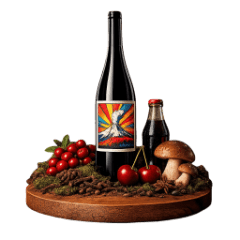
Oregon Pinot Noir
Think of a rainy forest walk ending in a berry patch. It balances delicate fruit with savory soil notes, offering a cooler, more restrained alternative to warmer regions while keeping plenty of juicy charm.
Think of a rainy forest walk ending in a berry patch. It balances delicate fruit with savory soil notes, offering a cooler, more restrained alternative to warmer regions while keeping plenty of juicy charm.
Think of a rainy forest walk ending in a berry patch. It balances delicate fruit with savory soil notes, offering a cooler, more restrained alternative to warmer regions while keeping plenty of juicy charm.
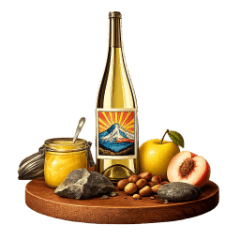
Oregon Chardonnay
Often overshadowed by its famous red sibling, this white wine is staging a massive coup. Expect a dazzling balance of crisp minerality and ripe fruit that proves the West Coast doesn't always mean butter bombs.
Often overshadowed by its famous red sibling, this white wine is staging a massive coup. Expect a dazzling balance of crisp minerality and ripe fruit that proves the West Coast doesn't always mean butter bombs.
Often overshadowed by its famous red sibling, this white wine is staging a massive coup. Expect a dazzling balance of crisp minerality and ripe fruit that proves the West Coast doesn't always mean butter bombs.
LATEST REVIEWS