«
BROWSE ALL
North Carolina
North Carolina

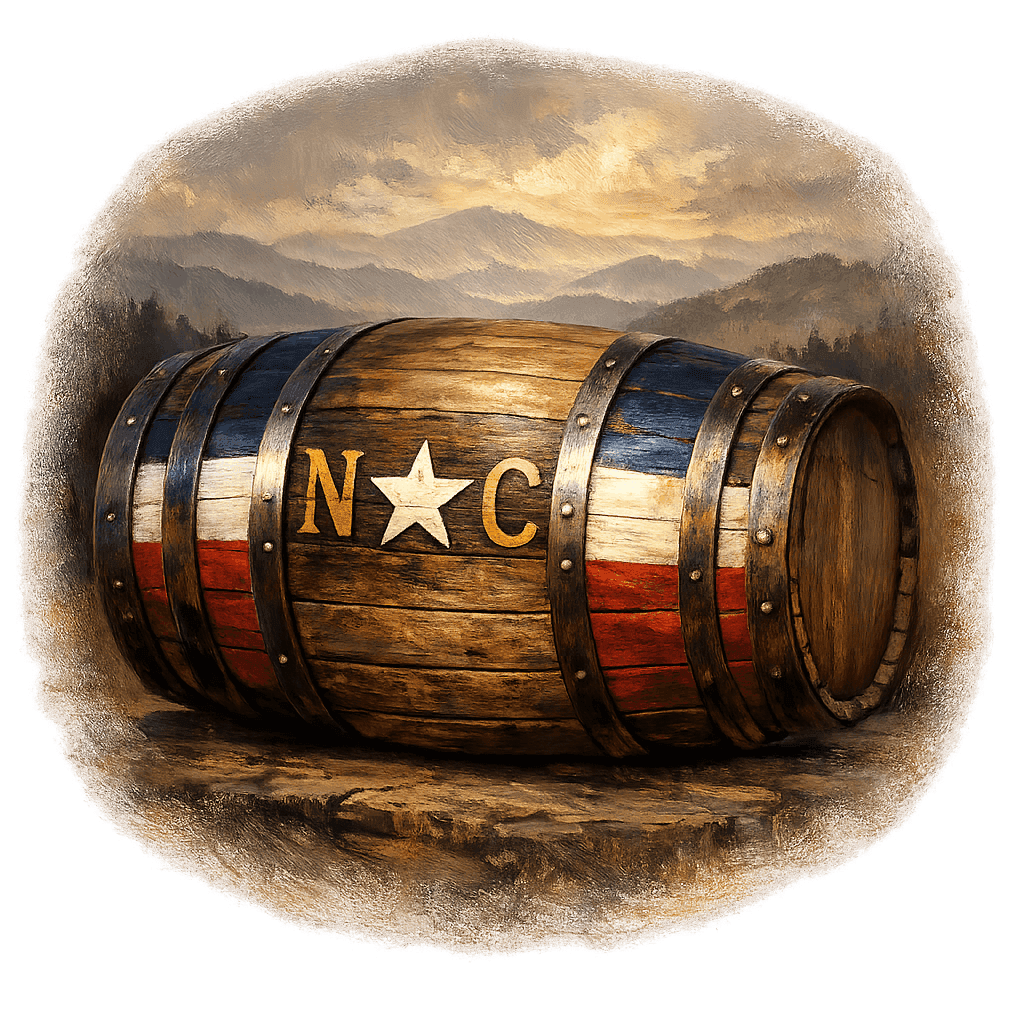
Before California even planted a seed, this state was fermenting history. Home to the oldest living cultivated vine in the United States, it now balances sweet coastal nostalgia with serious, high-elevation European styles in the west.
Before California even planted a seed, this state was fermenting history. Home to the oldest living cultivated vine in the United States, it now balances sweet coastal nostalgia with serious, high-elevation European styles in the west.
Before California even planted a seed, this state was fermenting history. Home to the oldest living cultivated vine in the United States, it now balances sweet coastal nostalgia with serious, high-elevation European styles in the west.
What it's about
Two Worlds
Mountain Elevation
Coastal Sweet
Boasting nearly 200 wineries, production here is a tale of two distinct worlds. In the sandy eastern coastal plains, native Muscadine dominates, producing sweet wines that fuel local tradition. Head west to the Yadkin Valley and Blue Ridge Mountains, however, and the narrative shifts dramatically to European classics. Here, high elevation and clay soils nurture Cabernet Franc and Chardonnay, proving this region is far more than just sweet juice.
Boasting nearly 200 wineries, production here is a tale of two distinct worlds. In the sandy eastern coastal plains, native Muscadine dominates, producing sweet wines that fuel local tradition. Head west to the Yadkin Valley and Blue Ridge Mountains, however, and the narrative shifts dramatically to European classics. Here, high elevation and clay soils nurture Cabernet Franc and Chardonnay, proving this region is far more than just sweet juice.
Boasting nearly 200 wineries, production here is a tale of two distinct worlds. In the sandy eastern coastal plains, native Muscadine dominates, producing sweet wines that fuel local tradition. Head west to the Yadkin Valley and Blue Ridge Mountains, however, and the narrative shifts dramatically to European classics. Here, high elevation and clay soils nurture Cabernet Franc and Chardonnay, proving this region is far more than just sweet juice.
What they're proud of
Mother Vine
First Cultivated
Biltmore Estate
Scuppernong reigns supreme here as the first native grape ever cultivated in the United States. Locals revere the legendary "Mother Vine" on Roanoke Island, a massive 400-year-old plant that still produces fruit today. Beyond this ancient history, they boast the Biltmore Estate in Asheville, which isn't just a castle but the most visited winery in the entire country, bringing massive tourism numbers to the state's industry.
Scuppernong reigns supreme here as the first native grape ever cultivated in the United States. Locals revere the legendary "Mother Vine" on Roanoke Island, a massive 400-year-old plant that still produces fruit today. Beyond this ancient history, they boast the Biltmore Estate in Asheville, which isn't just a castle but the most visited winery in the entire country, bringing massive tourism numbers to the state's industry.
Scuppernong reigns supreme here as the first native grape ever cultivated in the United States. Locals revere the legendary "Mother Vine" on Roanoke Island, a massive 400-year-old plant that still produces fruit today. Beyond this ancient history, they boast the Biltmore Estate in Asheville, which isn't just a castle but the most visited winery in the entire country, bringing massive tourism numbers to the state's industry.
WHAT'S TRENDING
Petit Manseng
Dry Rosé
Yadkin Tourism
Petit Manseng is rapidly becoming the darling of the industry, thriving in the humid climate where other whites struggle. Vintners are also leaning heavily into drier styles of Rosé and sparkling wines to combat the "sweet only" stereotype. Wine tourism is exploding in the Yadkin Valley, where the winery density allows for Napa-style hopping, attracting serious drinkers looking for legitimate Cabernet Franc and complex blends.
Petit Manseng is rapidly becoming the darling of the industry, thriving in the humid climate where other whites struggle. Vintners are also leaning heavily into drier styles of Rosé and sparkling wines to combat the "sweet only" stereotype. Wine tourism is exploding in the Yadkin Valley, where the winery density allows for Napa-style hopping, attracting serious drinkers looking for legitimate Cabernet Franc and complex blends.
Petit Manseng is rapidly becoming the darling of the industry, thriving in the humid climate where other whites struggle. Vintners are also leaning heavily into drier styles of Rosé and sparkling wines to combat the "sweet only" stereotype. Wine tourism is exploding in the Yadkin Valley, where the winery density allows for Napa-style hopping, attracting serious drinkers looking for legitimate Cabernet Franc and complex blends.
LOCAL TALES
The Mother of All Vines
The Mother of All Vines
The Mother of All Vines
Imagine a vine so old it might have waved hello to the Lost Colony of Roanoke before they vanished. That is the Mother Vine, a massive Scuppernong plant on Roanoke Island that has been growing for over 400 years. It sprawls beneath a massive arbor and has survived hurricanes, wars, and centuries of changing ownership. Legend says it was planted by Croatoan Native Americans or perhaps the very first English settlers. Today, it still yields grapes, and you can actually drink wine made from its clippings. It is a living, photosynthesizing monument to the fact that North Carolina was making wine while the rest of the country was just a glint in a mapmaker's eye.
Imagine a vine so old it might have waved hello to the Lost Colony of Roanoke before they vanished. That is the Mother Vine, a massive Scuppernong plant on Roanoke Island that has been growing for over 400 years. It sprawls beneath a massive arbor and has survived hurricanes, wars, and centuries of changing ownership. Legend says it was planted by Croatoan Native Americans or perhaps the very first English settlers. Today, it still yields grapes, and you can actually drink wine made from its clippings. It is a living, photosynthesizing monument to the fact that North Carolina was making wine while the rest of the country was just a glint in a mapmaker's eye.
From Milk to Merlot
From Milk to Merlot
From Milk to Merlot
George Vanderbilt built the Biltmore Estate to be a self-sustaining European-style manor, but he probably didn't envision his dairy barn becoming a tourist mecca for drinkers. In the 1970s, his grandson William Cecil decided the estate needed a winery. He planted vines, but the initial results were... let's say, character building. Not easily discouraged, he moved the operation into the estate's massive dairy barn. It turns out that a space designed for cows is surprisingly excellent for fermentation tanks. Today, the Biltmore Winery welcomes more visitors than any other winery in the United States. Guests sip Cabernet where Holsteins once stood, proving that with enough money and vision, you can turn literally anything into a wine destination.
George Vanderbilt built the Biltmore Estate to be a self-sustaining European-style manor, but he probably didn't envision his dairy barn becoming a tourist mecca for drinkers. In the 1970s, his grandson William Cecil decided the estate needed a winery. He planted vines, but the initial results were... let's say, character building. Not easily discouraged, he moved the operation into the estate's massive dairy barn. It turns out that a space designed for cows is surprisingly excellent for fermentation tanks. Today, the Biltmore Winery welcomes more visitors than any other winery in the United States. Guests sip Cabernet where Holsteins once stood, proving that with enough money and vision, you can turn literally anything into a wine destination.
The Virginia Dare Empire
The Virginia Dare Empire
The Virginia Dare Empire
Long before Napa was even a blip, North Carolina was the nation's leading wine producer (back in 1840). This legacy continued with Paul Garrett in the early 1900s. This marketing genius created "Virginia Dare," a Scuppernong wine named after the first English child born in the New World. It was an absolute juggernaut, becoming the most popular wine in the country, and his wines even won the Grand Prize at the 1904 Louisiana Purchase Exposition. Garrett was so successful he had to source grapes from other states just to keep up with demand. Prohibition eventually dismantled his empire, but for a brief, glorious moment, the entire nation was toasting with a sweet, musky wine from North Carolina, cementing the state's legacy in liquid history.
Long before Napa was even a blip, North Carolina was the nation's leading wine producer (back in 1840). This legacy continued with Paul Garrett in the early 1900s. This marketing genius created "Virginia Dare," a Scuppernong wine named after the first English child born in the New World. It was an absolute juggernaut, becoming the most popular wine in the country, and his wines even won the Grand Prize at the 1904 Louisiana Purchase Exposition. Garrett was so successful he had to source grapes from other states just to keep up with demand. Prohibition eventually dismantled his empire, but for a brief, glorious moment, the entire nation was toasting with a sweet, musky wine from North Carolina, cementing the state's legacy in liquid history.

LATEST REVIEWS