«
BROWSE ALL
Maryland
Maryland

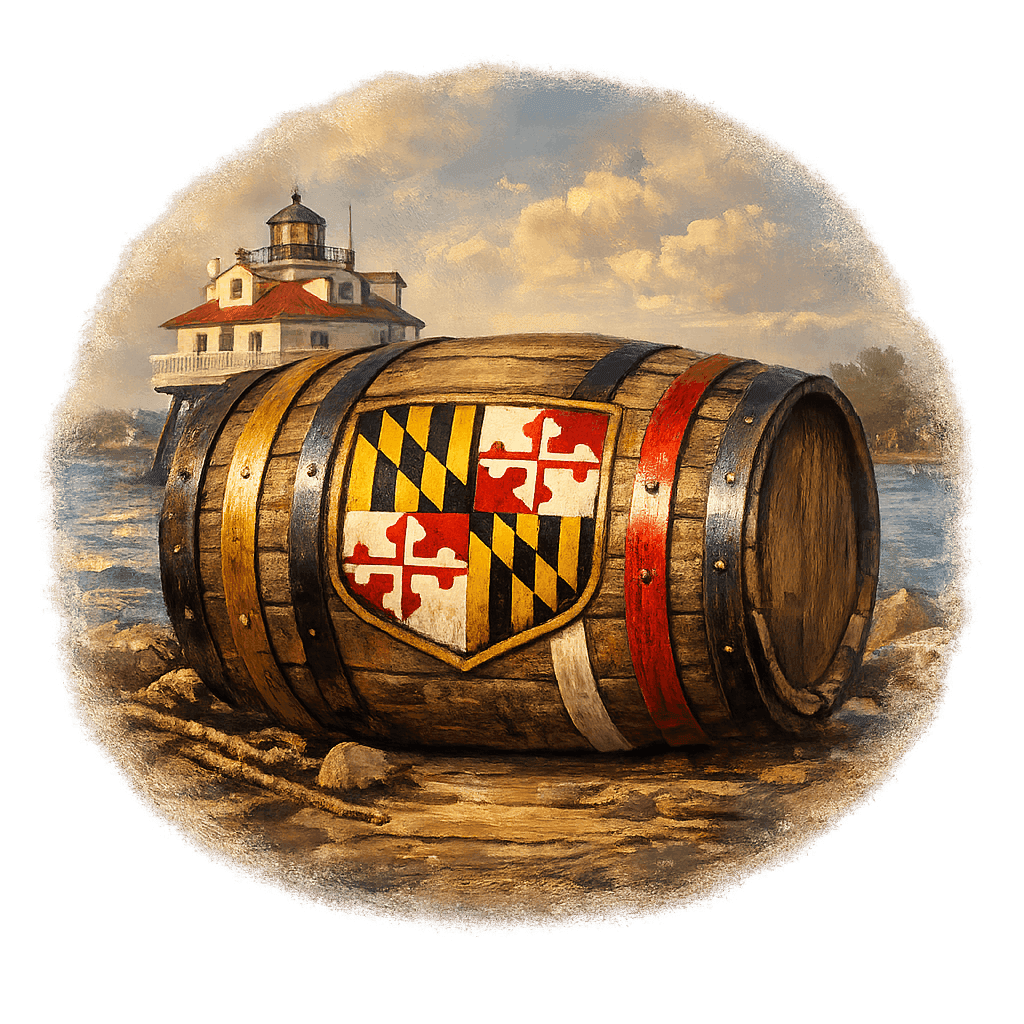
Maryland has brilliantly swapped its cash crop legacy for corks, transforming historic farmland into a thriving viticultural hub that pairs surprisingly well with its famous seafood obsession.
Maryland has brilliantly swapped its cash crop legacy for corks, transforming historic farmland into a thriving viticultural hub that pairs surprisingly well with its famous seafood obsession.
Maryland has brilliantly swapped its cash crop legacy for corks, transforming historic farmland into a thriving viticultural hub that pairs surprisingly well with its famous seafood obsession.
What it's about
historic winemaking
Diverse microclimates
tobacco shift
While it might look small on a map, this state packs a punch with over 100 wineries and a history stretching back to 1634. It is effectively America in miniature, boasting diverse microclimates from the sandy Eastern Shore to the rocky Piedmont Plateau. Once dominated by tobacco farming, the agricultural landscape has undergone a radical makeover, with rows of Cabernet Franc and Albariño now replacing broadleaf plants.
While it might look small on a map, this state packs a punch with over 100 wineries and a history stretching back to 1634. It is effectively America in miniature, boasting diverse microclimates from the sandy Eastern Shore to the rocky Piedmont Plateau. Once dominated by tobacco farming, the agricultural landscape has undergone a radical makeover, with rows of Cabernet Franc and Albariño now replacing broadleaf plants.
While it might look small on a map, this state packs a punch with over 100 wineries and a history stretching back to 1634. It is effectively America in miniature, boasting diverse microclimates from the sandy Eastern Shore to the rocky Piedmont Plateau. Once dominated by tobacco farming, the agricultural landscape has undergone a radical makeover, with rows of Cabernet Franc and Albariño now replacing broadleaf plants.
What they're proud of
their Albariño
Philip Wagner
Reds work
Locals absolutely adore their signature white grape, Albariño, which cuts through the richness of crab cakes like a laser beam. They also champion the legacy of Philip Wagner, a newspaperman who essentially saved East Coast winemaking by popularizing French-American hybrids. Recently, the rise of serious, award-winning Cabernet Franc and Petit Verdot has given them serious bragging rights in national competitions.
Locals absolutely adore their signature white grape, Albariño, which cuts through the richness of crab cakes like a laser beam. They also champion the legacy of Philip Wagner, a newspaperman who essentially saved East Coast winemaking by popularizing French-American hybrids. Recently, the rise of serious, award-winning Cabernet Franc and Petit Verdot has given them serious bragging rights in national competitions.
Locals absolutely adore their signature white grape, Albariño, which cuts through the richness of crab cakes like a laser beam. They also champion the legacy of Philip Wagner, a newspaperman who essentially saved East Coast winemaking by popularizing French-American hybrids. Recently, the rise of serious, award-winning Cabernet Franc and Petit Verdot has given them serious bragging rights in national competitions.
WHAT'S TRENDING
ditching crops
Piedmont plateau
Sparkling wine
Farmers are ditching traditional crops for vines at an accelerated rate, fueled by state incentives to preserve agricultural land. The Piedmont Plateau is emerging as the premier sub-region for high-quality wine, drawing talent that wants to prove the Mid-Atlantic can rival world-class districts. Sparkling wines are also having a moment, with producers realizing their cool-climate acidity is perfect for bubbles.
Farmers are ditching traditional crops for vines at an accelerated rate, fueled by state incentives to preserve agricultural land. The Piedmont Plateau is emerging as the premier sub-region for high-quality wine, drawing talent that wants to prove the Mid-Atlantic can rival world-class districts. Sparkling wines are also having a moment, with producers realizing their cool-climate acidity is perfect for bubbles.
Farmers are ditching traditional crops for vines at an accelerated rate, fueled by state incentives to preserve agricultural land. The Piedmont Plateau is emerging as the premier sub-region for high-quality wine, drawing talent that wants to prove the Mid-Atlantic can rival world-class districts. Sparkling wines are also having a moment, with producers realizing their cool-climate acidity is perfect for bubbles.
LOCAL TALES
The Journalist's Juice
The Journalist's Juice
The Journalist's Juice
Before modern viticulture took root, a Baltimore Sun editor named Philip Wagner decided to rewrite the rules. In the 1930s, while Prohibition was just ending, Wagner began experimenting with French-American hybrid grapes in his backyard, convinced that the delicate European vines were doomed in the humid East. He didn't just make wine, he literally wrote the book on it - "American Wines and How to Make Them" - which became the bible for struggling vintners across the country. His nursery at Boordy Vineyards supplied the starter vines for countless wineries nationwide, effectively making him the grandfather of the entire East Coast wine industry. He proved you could make good wine here if you just picked the right fight.
Before modern viticulture took root, a Baltimore Sun editor named Philip Wagner decided to rewrite the rules. In the 1930s, while Prohibition was just ending, Wagner began experimenting with French-American hybrid grapes in his backyard, convinced that the delicate European vines were doomed in the humid East. He didn't just make wine, he literally wrote the book on it - "American Wines and How to Make Them" - which became the bible for struggling vintners across the country. His nursery at Boordy Vineyards supplied the starter vines for countless wineries nationwide, effectively making him the grandfather of the entire East Coast wine industry. He proved you could make good wine here if you just picked the right fight.
The Great Leaf Swap
The Great Leaf Swap
The Great Leaf Swap
For centuries, Maryland's economy was addicted to tobacco. It was the currency of the colony and the king of the field. But by the late 90s, the state decided it was time for an intervention. They launched a massive Tobacco Buyout program, paying farmers cold hard cash to stop growing tobacco - but with a catch: they had to keep the land in agriculture. Enter that specific berry. Many farmers used that buyout money to plant vineyards, swapping golden leaves for purple clusters. It was one of the most successful state-sponsored agricultural shifts in history, turning a declining industry into a booming wine culture that now defines the countryside.
For centuries, Maryland's economy was addicted to tobacco. It was the currency of the colony and the king of the field. But by the late 90s, the state decided it was time for an intervention. They launched a massive Tobacco Buyout program, paying farmers cold hard cash to stop growing tobacco - but with a catch: they had to keep the land in agriculture. Enter that specific berry. Many farmers used that buyout money to plant vineyards, swapping golden leaves for purple clusters. It was one of the most successful state-sponsored agricultural shifts in history, turning a declining industry into a booming wine culture that now defines the countryside.
The Jesuit's Jug
The Jesuit's Jug
The Jesuit's Jug
Long before Thomas Jefferson was tinkering with vines in Virginia, a Jesuit priest named Father Andrew White was already making moves in Maryland. Upon arriving on the *Ark* and the *Dove* in 1634, he celebrated the first Catholic Mass in the colonies, likely crafting the necessary wine from native grapes. While the resulting liquid was a sacramental necessity rather than a reserve vintage, it established a precedent that predates almost everyone else. It implies that Maryland has been in the wine game for nearly 400 years, even if they took a few centuries off to focus on oysters and legislation. That single historical footnote gives local vintners the right to claim they were technically here first.
Long before Thomas Jefferson was tinkering with vines in Virginia, a Jesuit priest named Father Andrew White was already making moves in Maryland. Upon arriving on the *Ark* and the *Dove* in 1634, he celebrated the first Catholic Mass in the colonies, likely crafting the necessary wine from native grapes. While the resulting liquid was a sacramental necessity rather than a reserve vintage, it established a precedent that predates almost everyone else. It implies that Maryland has been in the wine game for nearly 400 years, even if they took a few centuries off to focus on oysters and legislation. That single historical footnote gives local vintners the right to claim they were technically here first.

LATEST REVIEWS