«
BROWSE ALL
Arizona
Arizona

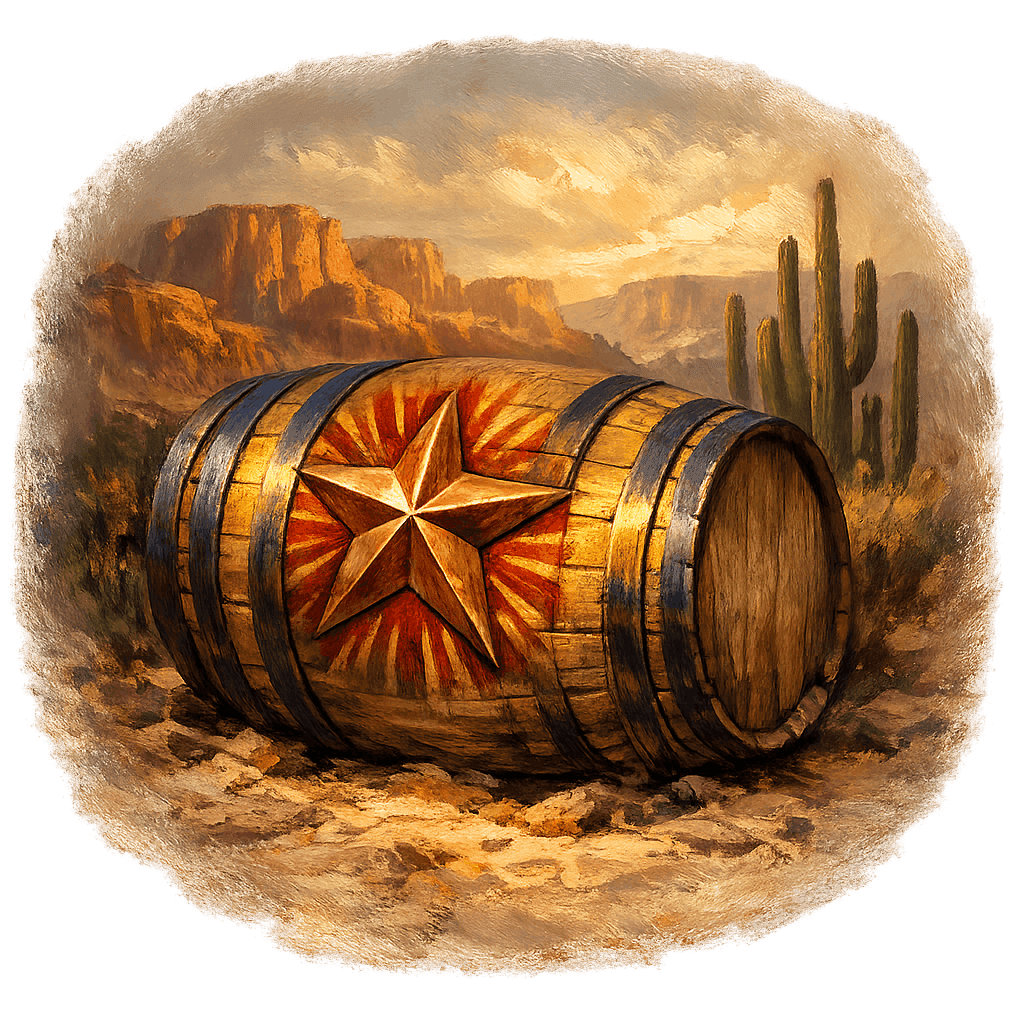
Beyond the tumbleweeds and scorching pavement, this place is actually a high-altitude viticultural miracle where vines thrive thousands of feet above sea level.
Beyond the tumbleweeds and scorching pavement, this place is actually a high-altitude viticultural miracle where vines thrive thousands of feet above sea level.
Beyond the tumbleweeds and scorching pavement, this place is actually a high-altitude viticultural miracle where vines thrive thousands of feet above sea level.
What it's about
High Elevation
Three AVAs
Diurnal Shifts
Most outsiders assume this region is just a giant sandbox for saguaros, but the local industry is built entirely on elevation. With vineyards sitting between 4,000 and 5,000 feet in areas like Willcox and Sonoita, the vines enjoy massive diurnal temperature shifts that lock in acidity. It is a boutique industry dominated by small, passionate producers who are fighting frost and monsoons to prove that the desert can produce world-class Rhone and Italian distinct reds.
Most outsiders assume this region is just a giant sandbox for saguaros, but the local industry is built entirely on elevation. With vineyards sitting between 4,000 and 5,000 feet in areas like Willcox and Sonoita, the vines enjoy massive diurnal temperature shifts that lock in acidity. It is a boutique industry dominated by small, passionate producers who are fighting frost and monsoons to prove that the desert can produce world-class Rhone and Italian distinct reds.
Most outsiders assume this region is just a giant sandbox for saguaros, but the local industry is built entirely on elevation. With vineyards sitting between 4,000 and 5,000 feet in areas like Willcox and Sonoita, the vines enjoy massive diurnal temperature shifts that lock in acidity. It is a boutique industry dominated by small, passionate producers who are fighting frost and monsoons to prove that the desert can produce world-class Rhone and Italian distinct reds.
What they're proud of
Rhone Blends
Italian Varieties
Documentary Fame
While neighboring California obsesses over Cabernet, these producers hang their hats on Mediterranean varieties that actually make sense for the terroir. They are incredibly confident in their Syrah, Grenache, and Mourvèdre blends, alongside Italian heavy hitters like Sangiovese. They also take immense pride in the "Blood Into Wine" documentary era, which helped transition the state from a viticultural punchline into a serious destination for adventurous oenophiles.
While neighboring California obsesses over Cabernet, these producers hang their hats on Mediterranean varieties that actually make sense for the terroir. They are incredibly confident in their Syrah, Grenache, and Mourvèdre blends, alongside Italian heavy hitters like Sangiovese. They also take immense pride in the "Blood Into Wine" documentary era, which helped transition the state from a viticultural punchline into a serious destination for adventurous oenophiles.
While neighboring California obsesses over Cabernet, these producers hang their hats on Mediterranean varieties that actually make sense for the terroir. They are incredibly confident in their Syrah, Grenache, and Mourvèdre blends, alongside Italian heavy hitters like Sangiovese. They also take immense pride in the "Blood Into Wine" documentary era, which helped transition the state from a viticultural punchline into a serious destination for adventurous oenophiles.
WHAT'S TRENDING
Mediterranean Grapes
Verde Valley
Virtual Wineries
Mediterranean varieties are completely taking over the conversation, with obscure grapes like Aglianico, Picpoul, and Malvasia Bianca gaining serious traction in tasting rooms. The newest official region, Verde Valley, is seeing an explosion of tourism and "virtual wineries" - brands that source fruit from the massive Willcox growing region but set up hip tasting rooms closer to Sedona's red rocks to catch the tourist overflow.
Mediterranean varieties are completely taking over the conversation, with obscure grapes like Aglianico, Picpoul, and Malvasia Bianca gaining serious traction in tasting rooms. The newest official region, Verde Valley, is seeing an explosion of tourism and "virtual wineries" - brands that source fruit from the massive Willcox growing region but set up hip tasting rooms closer to Sedona's red rocks to catch the tourist overflow.
Mediterranean varieties are completely taking over the conversation, with obscure grapes like Aglianico, Picpoul, and Malvasia Bianca gaining serious traction in tasting rooms. The newest official region, Verde Valley, is seeing an explosion of tourism and "virtual wineries" - brands that source fruit from the massive Willcox growing region but set up hip tasting rooms closer to Sedona's red rocks to catch the tourist overflow.
LOCAL TALES
The Padre and the Prohibition
The Padre and the Prohibition
The Padre and the Prohibition
Long before Napa was even a glint in a gold miner’s eye, a Jesuit missionary named Father Eusebio Francisco Kino was trekking through the Pimería Alta in the late 1600s. He wasn’t just saving souls, he was planting Mission grapes to ensure he had wine for Mass. For centuries, small-scale viticulture quietly hummed along until Prohibition arrived in 1915 - years before the federal ban - and absolutely nuked the industry. It stayed dead until the 1970s, when a soil scientist named Dr. Gordon Dutt analyzed the local red clay and realized its chemical composition was nearly identical to Burgundy. He planted an experimental plot, proved the naysayers wrong, and effectively resurrected the entire state's wine scene from the grave.
Long before Napa was even a glint in a gold miner’s eye, a Jesuit missionary named Father Eusebio Francisco Kino was trekking through the Pimería Alta in the late 1600s. He wasn’t just saving souls, he was planting Mission grapes to ensure he had wine for Mass. For centuries, small-scale viticulture quietly hummed along until Prohibition arrived in 1915 - years before the federal ban - and absolutely nuked the industry. It stayed dead until the 1970s, when a soil scientist named Dr. Gordon Dutt analyzed the local red clay and realized its chemical composition was nearly identical to Burgundy. He planted an experimental plot, proved the naysayers wrong, and effectively resurrected the entire state's wine scene from the grave.
Rock Star in the Cellar
Rock Star in the Cellar
Rock Star in the Cellar
You can’t talk about this state's modern wine identity without mentioning Maynard James Keenan. The reclusive frontman of the metal band Tool didn’t just buy a winery as a vanity project, he moved to the tiny, haunted hillside town of Jerome and got his hands dirty. When he started planting vines on steep terraces, people thought he was insane. But his dedication to the craft - and his documentary "Blood Into Wine" - shined a massive spotlight on the region's potential. He famously named his first serious Cabernet "Nagual del Judith" after his late mother, proving that for him, making wine in the high desert was just as emotional and complex as writing a prog-metal anthem.
You can’t talk about this state's modern wine identity without mentioning Maynard James Keenan. The reclusive frontman of the metal band Tool didn’t just buy a winery as a vanity project, he moved to the tiny, haunted hillside town of Jerome and got his hands dirty. When he started planting vines on steep terraces, people thought he was insane. But his dedication to the craft - and his documentary "Blood Into Wine" - shined a massive spotlight on the region's potential. He famously named his first serious Cabernet "Nagual del Judith" after his late mother, proving that for him, making wine in the high desert was just as emotional and complex as writing a prog-metal anthem.
When Pigs Finally Flew
When Pigs Finally Flew
When Pigs Finally Flew
In the rolling hills of Sonoita, two sisters named Megan and Shannon decided to start a winery that was the antithesis of snobby. When they told locals about their plan to combine chaotic family life with serious winemaking, the skeptics rolled their eyes and said it would succeed "when pigs fly." Taking that as a direct challenge, they launched Arizona Hops and Vines and plastered winged pigs all over their branding. Their tasting room became famous not just for the wine, but for pairing it with Cheetos and Cocoa Puffs, proving that you can make serious booze without taking yourself too seriously. Today, those flying pigs are a beloved symbol of the region's rebellious spirit.
In the rolling hills of Sonoita, two sisters named Megan and Shannon decided to start a winery that was the antithesis of snobby. When they told locals about their plan to combine chaotic family life with serious winemaking, the skeptics rolled their eyes and said it would succeed "when pigs fly." Taking that as a direct challenge, they launched Arizona Hops and Vines and plastered winged pigs all over their branding. Their tasting room became famous not just for the wine, but for pairing it with Cheetos and Cocoa Puffs, proving that you can make serious booze without taking yourself too seriously. Today, those flying pigs are a beloved symbol of the region's rebellious spirit.
WINE STYLES
Arizona Sangiovese
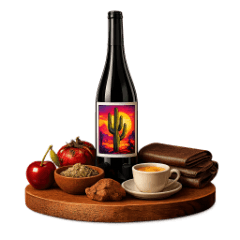
Imagine Tuscany decided to put on a Stetson and move to the high desert. This red captures the sun-baked intensity of the Southwest while keeping that classic Italian tartness and savory herbal kick intact.
Imagine Tuscany decided to put on a Stetson and move to the high desert. This red captures the sun-baked intensity of the Southwest while keeping that classic Italian tartness and savory herbal kick intact.
Imagine Tuscany decided to put on a Stetson and move to the high desert. This red captures the sun-baked intensity of the Southwest while keeping that classic Italian tartness and savory herbal kick intact.
Arizona GSM Blend
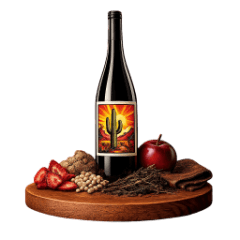
Think of this as the cowboy cousin to French wine. While the climate in Arizona is brutal, these blends channel the heat into rich flavors rather than getting cooked. It creates a dusty, sun-baked profile perfect for BBQ.
Think of this as the cowboy cousin to French wine. While the climate in Arizona is brutal, these blends channel the heat into rich flavors rather than getting cooked. It creates a dusty, sun-baked profile perfect for BBQ.
Think of this as the cowboy cousin to French wine. While the climate in Arizona is brutal, these blends channel the heat into rich flavors rather than getting cooked. It creates a dusty, sun-baked profile perfect for BBQ.
LATEST REVIEWS